



House panel flags weak returns from regional assets
JAKARTA, TheKabarNews.com—Indonesia’s House of Representatives (DPR) has urged regional governments to turn publicly owned assets into well-managed resources that support services and local...


JAKARTA, TheKabarNews.com—Indonesia’s House of Representatives (DPR) has urged regional governments to turn publicly owned assets into well-managed resources that support services and local development. This comes after scrutiny of idle property, unresolved land status and weak returns from regional enterprises.
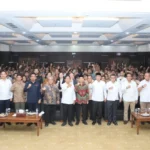
House Commission II raised the issue during a working meeting and hearing in Senayan, Jakarta, on September 15. The forum brought together the Home Affairs Minister, the Agrarian Affairs and Spatial Planning Minister, the Land Bank Authority and regional leaders from across Indonesia.
Commission II Chair Rifqinizamy Karsayuda said regional property, known as barang milik daerah (BMD), should not remain a bookkeeping entry without clear legal status or a plan for its use.
“Regional assets must not remain merely figures on a balance sheet. Officials must be able to clearly account for every asset: what it is, where it is located, its value, legal status, who controls it, whether it has been certified, whether it is used, whether a third party occupies it, whether it is disputed and, if unused, how the government plans to utilize it,” Rifqinizamy said.
The commission wants local administrations to shift from basic asset administration toward professional asset management.
That process includes securing ownership, maintaining physical assets and ensuring that their use serves a defined public purpose.
Official figures cited by Commission II showed that Indonesia had 1,092 region-owned enterprises (BUMDs), as of June 1, 2026.
About 300 (27.5 percent) were operating at a loss. Net profit was equivalent to around 1.9 percent of total assets. Meanwhile, dividend payments amounted to roughly 1 percent, according to the House’s official report.
For comparison, Home Affairs Ministry data covering 2024 performance placed the combined assets of 1,091 BUMDs at approximately Rp1,240 trillion. The companies recorded Rp24.1 trillion in aggregate net profit and paid Rp13.02 trillion in dividends.
The ministry also found that 342 BUMDs lacked internal audit units, a sign of persisting governance gaps. Officials presented those figures in July 2025, so readers should not interpret them as a newly audited 2026 balance sheet.
Riau illustrates the challenge. Commission II said the province held regional property valued at Rp50.17 trillion, but its utilization contributed only 0.088 percent to locally generated revenue. Lawmakers also identified inconsistent records, third-party occupation and overlapping land claims.
During a September visit, the commission found that some local government facilities stood on land affected by forest-area boundaries or unresolved certification issues. This information comes from a separate House report.
“After a certificate is issued, officials must ensure that boundaries, physical control, documentation, records and utilization are properly managed,” Rifqinizamy said.
Commission II member Longki Djanggola also stressed maintenance. “Asset procurement must be accompanied by maintenance so the assets retain their economic value,” he said.
The commission acknowledged that authorities should not assess public-service BUMDs solely by their dividends. Commercial enterprises, however, must demonstrate viable business plans and measurable returns before receiving additional public capital.
Better records and certification can protect regional assets. Ultimately, public value will depend on how governments maintain and use them.
Commission II’s review therefore places the focus on outcomes: stronger services, accountable investment and tangible benefits for residents.




No Comment! Be the first one.