



Asset forfeiture bill enters eight-week final push
JAKARTA, thekabarnews.com—The House of Representatives Commission III is accelerating deliberations on Indonesia’s asset forfeiture bill. It aims to bring the long-awaited legislation to a plenary...

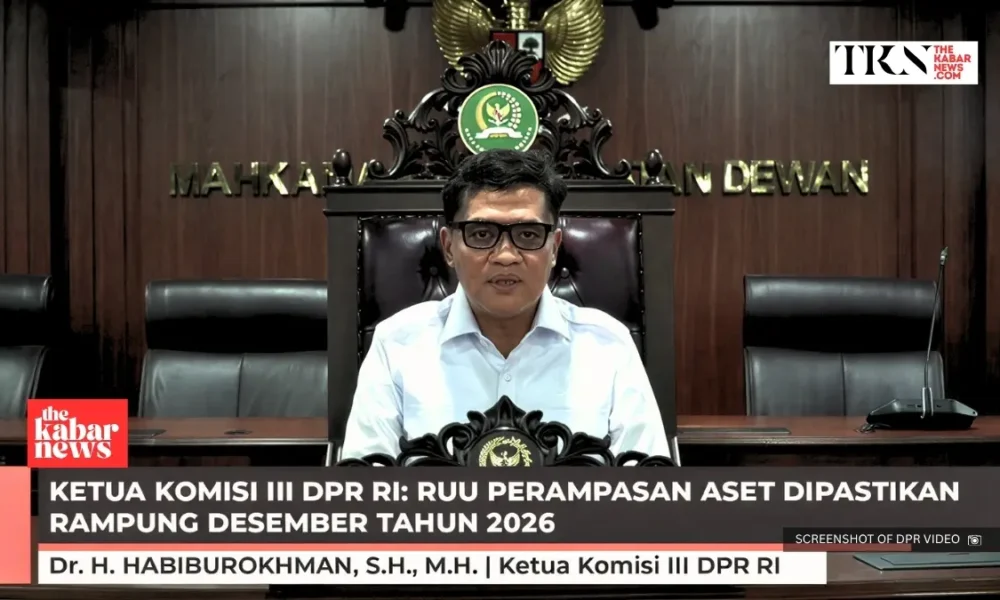
JAKARTA, thekabarnews.com—The House of Representatives Commission III is accelerating deliberations on Indonesia’s asset forfeiture bill. It aims to bring the long-awaited legislation to a plenary vote no later than December 2026.
House of Representatives Commission III chair Habiburokhman said lawmakers have approximately eight effective sitting weeks to complete the remaining legislative stages.
These include further public consultation, harmonization, a working meeting with the government, discussion of the problem inventory list, and first- and second-level decision-making.
“During those eight sitting weeks, Commission III will hold public hearings, conduct harmonization, and meet with the government. We will discuss the problem inventory list, approve the bill at the first level and seek second-level approval at a plenary session in December 2026,” Habiburokhman said in a statement published Tuesday, August 25.
Commission III has conducted 35 public hearings and three regional working visits to gather feedback on the bill, according to an official DPR report. The commission has also received written submissions from civil society organizations and other stakeholders.
The regional visits took lawmakers to Central Papua, North Maluku and North Kalimantan. There they collected recommendations from local governments, academics, law enforcement agencies, and community representatives.
“Because little time remains, members of the public who still want to express their views can submit written proposals,” Habiburokhman said.
The commission said most participants in its consultations supported stronger asset-recovery legislation. However, that assessment reflects the consultation process and should not be interpreted as a statistically representative national survey.
The proposed law seeks to establish a comprehensive legal framework for tracing, freezing, seizing, forfeiting, managing and returning assets allegedly linked to criminal activity.
A government academic paper supporting the proposal discusses non-conviction-based forfeiture. This mechanism allows courts to consider confiscating assets without first securing a criminal conviction under limited circumstances. For example, such circumstances could include cases in which an alleged offender dies, disappears or evades prosecution.
The final provisions remain subject to negotiation. Lawmakers must determine the required evidentiary threshold, the scope of judicial supervision and the procedures available to property owners who challenge a forfeiture request.
Commission III has identified several sensitive issues. These include the protection of legitimate third parties, the possible use of a reversed burden of proof and the division of authority among law enforcement agencies.
Commission III said the law must prevent officials from abusing forfeiture powers. At the same time, it must allow the state to recover proceeds of crime effectively.
Judicial authorization, clear evidence, objection mechanisms, and transparent asset management and protection for good-faith owners will therefore remain central to the debate.
The December deadline represents a legislative target rather than guaranteed enactment.
The DPR and government must agree on the bill’s final wording before lawmakers can approve it during a plenary session. Negotiations, revisions or scheduling changes could still affect the timeline.




No Comment! Be the first one.