



Business families channel wealth into social programs
JAKARTA, thekabarnews.com—Foundations associated with some of Indonesia’s largest business families are expanding their social programs at home and abroad. They are directing funds toward education,...

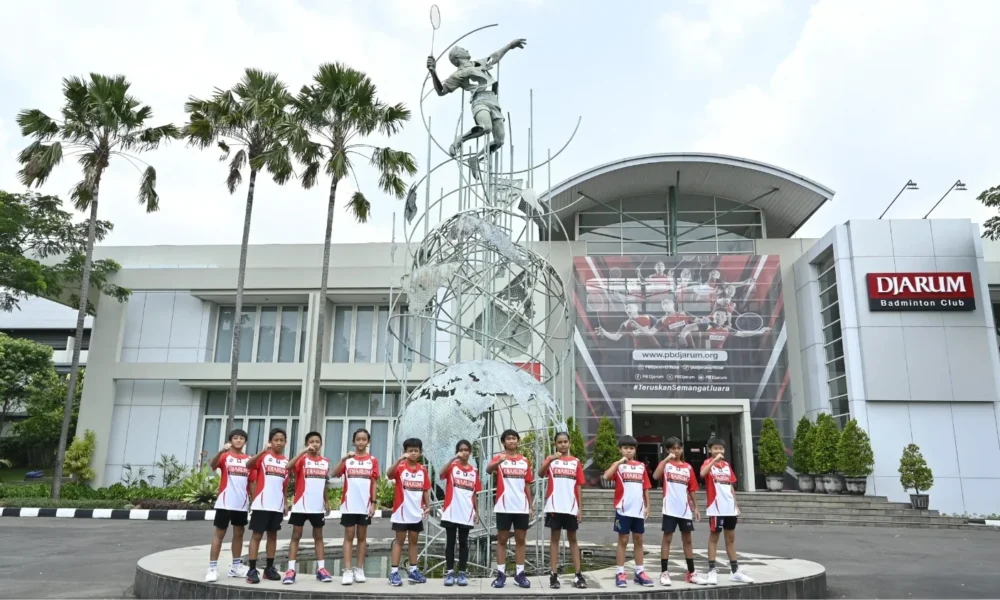
JAKARTA, thekabarnews.com—Foundations associated with some of Indonesia’s largest business families are expanding their social programs at home and abroad. They are directing funds toward education, healthcare, environmental protection and humanitarian assistance for Palestinians.
The programs vary considerably in scale and purpose. Recent disclosures from the foundations and recipient institutions show support ranging from scholarships and vocational training to tree planting and hospital services.
Djarum Foundation, associated with brothers Robert Budi Hartono and Michael Bambang Hartono, operates through five program areas. These areas cover social services, sports, environmental conservation, education and culture. The foundation reports that it has awarded its Djarum Beasiswa Plus scholarship to 13,930 students since 1984.
It also says its environmental program has planted more than 2.3 million trees since 1979. Moreover, over 2,000 artists have received support through its cultural initiatives.
Read also: LPDP alumni to repay scholarship with interest after controversial video
During the COVID-19 pandemic, the foundation helped administer more than 439,000 vaccine doses in Kudus, Semarang and Rembang, according to djarumfoundation.org.
Bakti Barito, founded by the family of businessman Prajogo Pangestu, organizes its work around education, environmental conservation, economic empowerment and social assistance. Its 2025 annual report records 4,575 scholarship recipients. In addition, it reports support for 6,467 schools through the end of that year.
The report also lists 667,125 trees planted and 13,396 tonnes of waste managed. Bakti Barito said its recorded contributions from 2019 to 2025 reached Rp229.81 billion.
The organization noted that these figures combine programs run by the foundation and affiliated Barito Pacific companies. They also rely on internal monitoring.
Read also: Lawyer reveals alleged foundation changes in MBG program corruption investigation
Education is also the central focus of the Widjaja family’s Eka Tjipta Foundation. The foundation’s published records show that, by 2025, 4,304 students had received scholarships, from secondary school to doctoral level. Its vocational-school programs have reached 5,258 students, according to its education portfolio.
Low Tuck Kwong Foundation, meanwhile, has funded higher education both in Indonesia and Singapore. In 2023, it donated S$101 million to the National University of Singapore’s Lee Kuan Yew School of Public Policy. According to an NUS announcement, this donation established a leadership fund and scholarship program for prospective public-sector leaders in Asia.
The foundation followed that commitment with an S$8 million pledge to Nanyang Technological University in 2025. NTU said S$6 million would finance bursaries expected to benefit about 60 students annually. Furthermore, the remainder would support scholarships for Indonesian postgraduate students.
Tahir Foundation has combined domestic education programs with international humanitarian assistance. In September 2025, it donated US$500,000, equivalent to about Rp8.3 billion at the time. This contribution was to support An-Najah National University Hospital in the occupied West Bank.
Read also: BANSA Foundation Indonesia achieves “Partner of the Year” Award at PTE Asia 2025 in Vietnam
“This donation is allocated to support essential health services at An-Najah National University Hospital, one of Palestine’s leading medical institutions,” Palestinian Ambassador to Indonesia Zuhair Al-Shun said, as reported by Antara.
The foundation had previously donated Rp10 billion to the University of Indonesia in 2020 for education, research and community service, according to tahirfoundation.or.id.
Together, these initiatives illustrate the growing role of private foundations in addressing public needs. However, their reported totals are not directly comparable. This is because each organization uses different periods and methods to measure beneficiaries and social impact.



No Comment! Be the first one.