



BNPB and BMKG strengthen data-driven disaster response
JAKARTA, thekabarnews.com—Indonesia’s disaster and weather agencies have agreed to strengthen data sharing and operational coordination. This comes as the country simultaneously faces forest fires,...

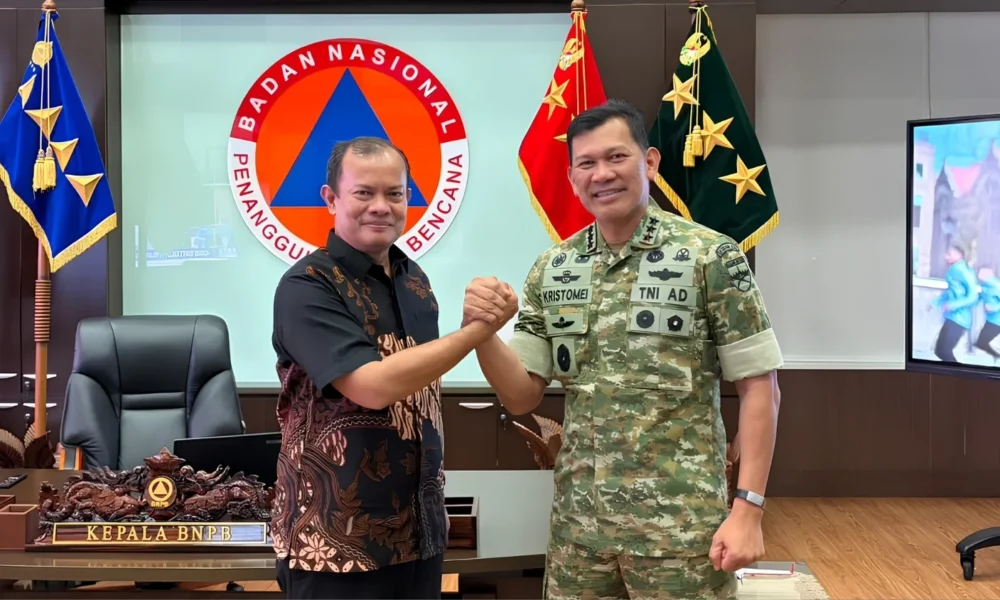
JAKARTA, thekabarnews.com—Indonesia’s disaster and weather agencies have agreed to strengthen data sharing and operational coordination. This comes as the country simultaneously faces forest fires, haze and growing risks of floods and landslides.
Newly appointed National Disaster Mitigation Agency (BNPB) head Lt. Gen. Kristomei Sianturi met Meteorology, Climatology and Geophysics Agency (BMKG) head Teuku Faisal Fathani at Graha BNPB in Jakarta on Saturday, Oct. 17. Notably, the talks took place two days after President Prabowo Subianto inaugurated Kristomei at the State Palace.
The meeting focused on improving the use of weather forecasts, early warnings and atmospheric analysis in disaster preparedness and emergency operations. BNPB also expects BMKG data to guide field teams during forest and land fire (karhutla) suppression. It will also be used in weather-modification operations.
“Disaster management is not the responsibility of a single institution,” Kristomei said. “Cooperation is essential to optimize our joint efforts to protect the public.”
Kristomei described accurate weather information as a compass for disaster authorities. It allows them to determine where personnel and equipment should be deployed. The agencies also discussed strengthening the flow of information from national institutions to regional disaster mitigation agencies (BPBDs).
The coordination follows Kristomei’s pledge after his inauguration to accelerate disaster response and synchronize policies among national agencies and regional governments. Additionally, he identified cooperation with BMKG as an important part of that effort, according to an official presidential statement.
The talks came as several provinces continued to tackle forest-fire haze while other regions began preparing for wet hydrometeorological disasters. This overlap requires authorities to maintain resources for fire suppression while monitoring rainfall that could trigger flooding or landslides.
The BNPB data show just how quickly Indonesia’s risk profile can change. More than 90 percent of the disasters recorded in June 2026 were hydrometeorological. Thirty-seven forest and land fires, 25 floods and 20 droughts.
Read also: Five suspects in BNPB corruption case as haze leaves 283,270 people with ISPA
In July, BNPB recorded 165 forest and land fires, representing 71.12 percent of all disasters during the month. Floods and landslides were also reported. This shows that dry- and wet-weather emergencies can occur during the same period in different parts of the archipelago.
BMKG supplies forecasts and warnings through more than 10,800 primary observation instruments nationwide. Additionally, more than 2,000 monitor earthquakes and tsunamis. The Indonesia Tsunami Early Warning System can issue information in less than three minutes, according to BMKG.
“Preparedness must not increase only after a disaster occurs,” Faisal said at a disaster coordination meeting earlier in October. “Mitigation awareness must be continuously developed.”
The BNPB-BMKG partnership is expected to support faster decisions before emergencies and more precise deployments during response operations. However, its effectiveness will depend on whether timely scientific information reaches local authorities and communities in a form they can act on.



No Comment! Be the first one.