



Fuel stocks remain safe as Indonesian crude tops $100
JAKARTA, thekabarnews.com—The Indonesian government is strengthening fuel distribution and monitoring national reserves. This comes after the Indonesian Crude Price (ICP) climbed above US$100 per...

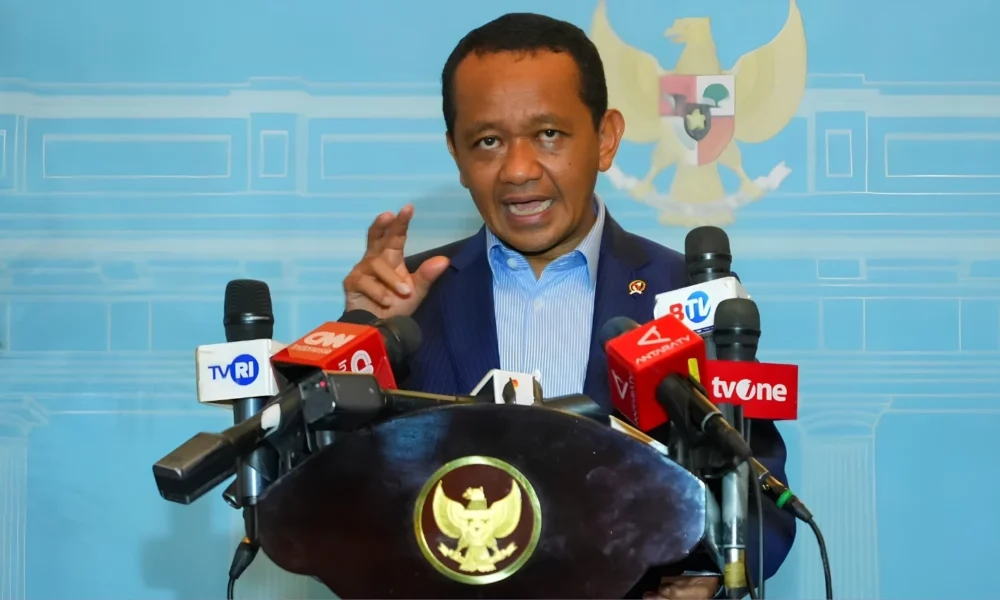
JAKARTA, thekabarnews.com—The Indonesian government is strengthening fuel distribution and monitoring national reserves. This comes after the Indonesian Crude Price (ICP) climbed above US$100 per barrel amid global supply uncertainty.
Energy and Mineral Resources Minister Bahlil Lahadalia reported the situation during a limited meeting led by President Prabowo Subianto at the Merdeka Palace in Jakarta on Monday, Oct. 19. The meeting reviewed fuel availability, commodity production and the government’s downstream industrial projects.
“We know that global conditions remain increasingly uncertain, and today the ICP has exceeded $100 per barrel, reaching around $105 to $106,” Bahlil said after the meeting.
The Energy Ministry’s website reported an ICP of $106.56 per barrel on Monday. Separately, the ministry set the official September monthly average at $112.81, up $23.38 from August.
Read also: Prabowo reviews energy security with Minister Bahlil as global tensions rise
It attributed the increase to geopolitical tensions and risks of disruption to global oil supplies. The ministry expects prices to moderate but remain high in October. Its projection placed October ICP at $98 to $103 per barrel.
Bahlil said the average ICP from January through October remained between $91 and $92 per barrel. That level is substantially higher than the $70 assumption used in the 2026 state budget. Therefore, monitoring energy subsidies and government spending is increasingly important.
The Finance Ministry allocated Rp402.4 trillion for energy security measures in 2026, including subsidies and electricity access, according to its overview of the state budget.
Bahlil said the national Pertalite reserve could meet demand for approximately 16 to 20 days. An Energy Ministry operational update issued on the same day gave a narrower estimate of 16 to 18 days. Other fuels, including Pertamax variants and diesel, had stocks covering more than 20 days.
Read also: President Prabowo reviews global oil prices and mining reform with minister Bahlil
“For the fuel sector, I can confirm that our national reserves are generally secure,” Bahlil said in the official presidential statement.
Pertalite stocks had previously exceeded 20 days. The government linked the decline partly to consumers shifting from nonsubsidized fuel to the cheaper RON 90 product. Authorities expect the reserve level to recover as Pertamina accelerates distribution.
In Bali, delayed fuel shipments from Java had reduced reserves to as little as three or four days. The supply has since recovered to about 11 or 12 days. The government aims to reach 15 days within a week.
The Energy Ministry said seven vessels were being deployed to reinforce the island’s supply. Pertamina is coordinating with the Bali administration and security authorities to normalize deliveries.
Distribution in several parts of East Java has also begun returning to normal. The ministry said the disruptions resulted from shipping delays rather than a national shortage.
Read also: Bamsoet: Managing Indonesia’s capital market with professionalism and integrity
The government is also considering a limited relaxation of coal-production quotas after high-grade coal prices reached about $154 per tonne. Bahlil said any increase would remain subject to supply-and-demand conditions while seeking higher export earnings.
Downstream projects remain part of the government’s energy strategy. Indonesia recently shipped its first electric-vehicle battery products from Weda Bay in North Maluku.
The government also plans to inaugurate an integrated battery facility in Karawang, West Java, developed through cooperation between China’s CATL and Indonesian state-owned enterprises.
The latest measures address immediate fuel-distribution pressures while advancing longer-term industrial policy. Their effectiveness will depend on whether Pertamina restores regional reserves and the government manages the fiscal impact of oil prices that remain well above the state-budget assumption.





No Comment! Be the first one.