



President Prabowo reviews global oil prices and mining reform with minister Bahlil
JAKARTA, Thekabarnews.com—Indonesian President Prabowo Subianto meets with Energy and Mineral Resources Minister Bahlil Lahadalia at the Presidential Palace in Jakarta on Tuesday, May 5, 2026. They...

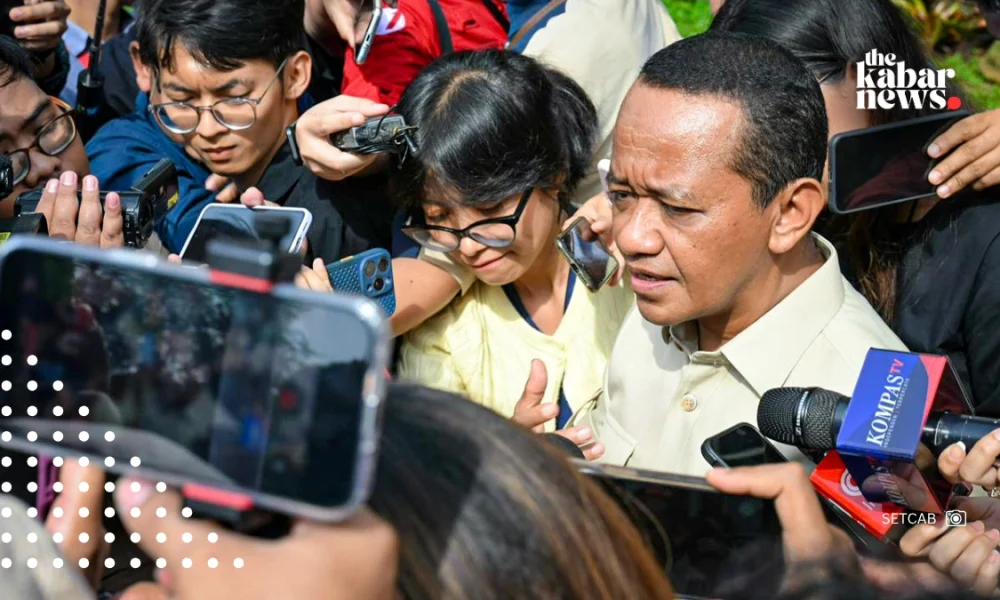
JAKARTA, Thekabarnews.com—Indonesian President Prabowo Subianto meets with Energy and Mineral Resources Minister Bahlil Lahadalia at the Presidential Palace in Jakarta on Tuesday, May 5, 2026. They discussed strategic developments in the energy and mining sectors.
Bahlil said after the meeting that one of the main subjects discussed was the effect of global crude oil prices on Indonesia’s crude price (ICP). This greatly influences the formulation of national energy policy and state revenue.
“International oil price changes directly affect the planning of fuel subsidies, fiscal management, and the economy as a whole,” he said.
“The first thing we talked about was the price of crude oil and how it affects ICP. Second, there will be a restructuring of the mining sector ahead. The majority of ownership must be held by the state in accordance with the mandate of Article 33 of the 1945 Constitution,” said Bahlil.
The Indonesian government is also considering reforms in the mining sector in the longer term. There will be a greater emphasis on boosting state ownership and keeping natural resources in national hands.
According to Bahlil Lahadalia, the policy reflects Article 33 of the Constitution, which mandates state control over strategic sectors and natural resources for public welfare.
The government wants future management of the mining industry to consider not just the volume of production but also national sovereignty and a fairer distribution of economic benefits, he said. Therefore, they aim for a holistic approach.
Officials said the government will work to maximize state income from ongoing mining operations. It also wants more from new resource development projects, he said.
For this purpose, the government will seek to strengthen more adaptive and profitable schemes of cooperation between state and private sector players.
Bahlil said the government is considering several models used in Indonesia’s oil and gas sector. These include cost recovery and gross split systems.
Such mechanisms could serve as models for future partnerships in mining and other extractive industries.
“We will do our best to maximize state revenues and learn from the profit sharing in oil and gas management. Furthermore, we have introduced cost recovery and gross split models in the oil and gas sector. Moreover, we have built collaboration with private companies in the same way,” he explained.
The government’s approach is part of a broader strategy to balance investment attractiveness with tighter national control of strategic resources.
As global commodity markets remain volatile, resource wealth pressures policymakers to translate it into sustainable economic resilience. Long-term sustainability is preferred rather than short-term benefits.
President Prabowo said this policy approach demonstrates that energy and mining management in the future is about sovereignty, value added, and public welfare. Additionally, it is not only about production and export.
The administration regards control of natural resources as a basic foundation of the strength of the national economy. Furthermore, it regards these resources as important for long-term prosperity.



No Comment! Be the first one.