



Prabowo reviews energy security with minister Bahlil as global tensions rise
Thekabarnews.com—President Prabowo Subianto convened a high-level meeting with Energy and Mineral Resources Minister Bahlil Lahadalia at the Merdeka Palace on April 27 to discuss the country’s energy...

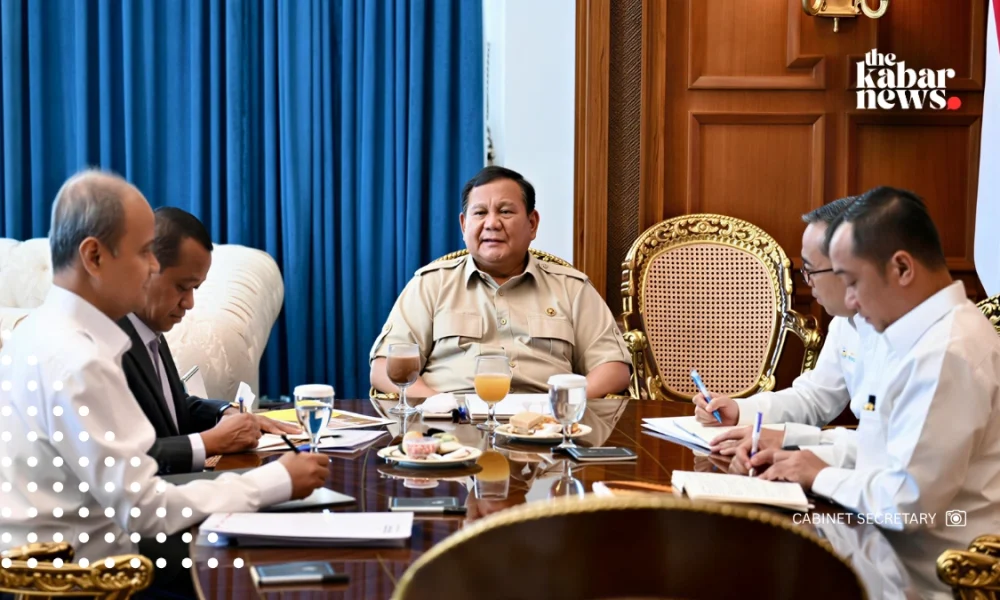
Thekabarnews.com—President Prabowo Subianto convened a high-level meeting with Energy and Mineral Resources Minister Bahlil Lahadalia at the Merdeka Palace on April 27 to discuss the country’s energy security in the face of rising geopolitical tensions in the Middle East.
At the meeting, the government stressed the stability of the country’s energy situation and that the availability and quality of fuels were above the required national standards, notwithstanding concerns about the impact of disruptions in global supply chains.
Bahlil said the stocks of fuel in the country, including diesel and gasoline, are safe. Crude supplies for domestic refineries are still flowing, while tensions are threatening key global shipping routes such as the Strait of Hormuz.
“We have secured fuel quality, secured stock levels, and intact supply lines,” Bahlil said after the meeting.
The government has intensified its efforts to secure alternative sources of energy to overcome structural problems in the energy sector, in particular, its dependence on imported liquefied petroleum gas (LPG).
Indonesia uses around 8.6 million tonnes of LPG a year but produces only 1.6 to 1.7 million tonnes locally.
Against this backdrop, the government plans to promote the use of Compressed Natural Gas (CNG) as an alternative to LPG. The move could reduce dependence on imports and boost energy efficiency dramatically, officials say.
The administration also has identified three broad approaches to handling uncertainties in the world energy market.
These include lifting oil and gas production, expanding the B50 biodiesel program to reduce diesel imports, and producing E20 bioethanol fuel to support the use of petrol.
The moves are a reflection of Indonesia’s bid for short-term supplies but also to push for a fundamental reform of its energy industry. The government is effectively balancing immediate needs with fundamental changes for energy resilience.
The summit reasserted the government’s commitment to securing the nation’s energy in an age of global uncertainty. As geopolitical tensions rise, particularly in oil-producing nations, several governments are reconsidering their energy policies.
Indonesia is seeking alternatives to secure its supply and enhance energy independence through diversification and innovation.
Officials said boosting domestic energy production and renewable alternatives are top priorities to lessen vulnerability to external shocks.
The government wants to make Indonesia more independent on the world energy stage with the supply and forward-thinking policies.
In the current era of global uncertainty, Indonesia’s energy strategy will be crucial to economic stability and national development.


No Comment! Be the first one.