



Indonesia launches domestic credit card linked to QRIS
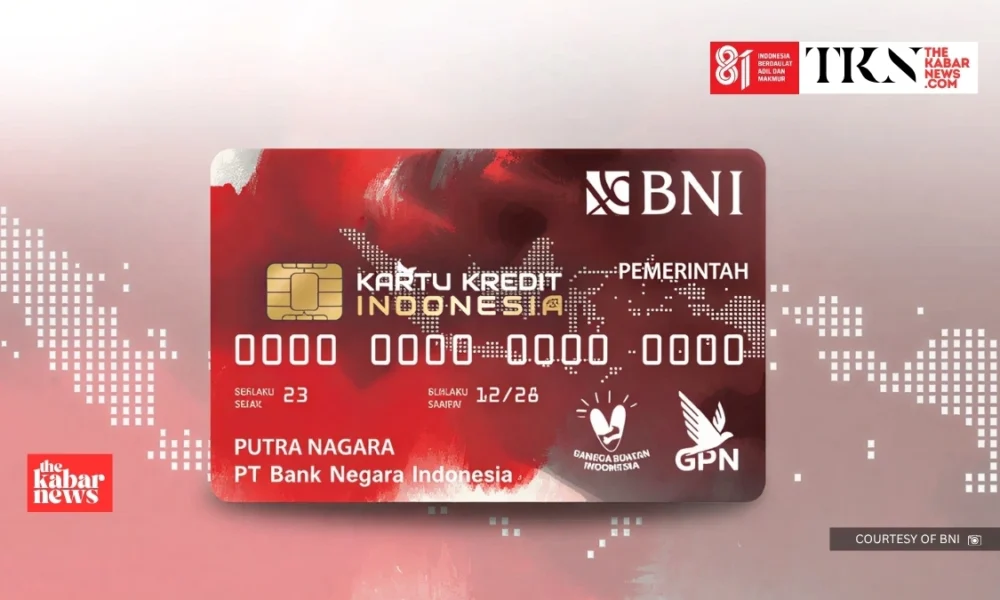
JAKARTA, thekabarnews.com—Bank Indonesia (BI) and the Indonesian Payment System Association (ASPI) launched a consumer-focused Indonesia Credit Card (Kartu Kredit Indonesia/KKI) on Monday, August 17....

News Summary
- Bank Indonesia launched the Indonesia Credit Card (Kartu Kredit Indonesia/KKI) linked to QRIS on August 17, expanding the domestic payment infrastructure.
- The card, known as KKI, offers deferred payment options and allows QRIS payments through participating banking apps.
- Eight banks began issuing the card, including Bank Central Asia and Bank Mandiri, with consideration for younger consumers like millennials and Gen Z.
- The rollout aims to integrate more domestic credit spending into Indonesia’s national payment system and supports an expanded zero-percent MDR for certain merchants from 2026.
- QRIS reached 65.77 million users and processed 12.55 billion transactions with significant annual growth by June 2026.
JAKARTA, thekabarnews.com—Bank Indonesia (BI) and the Indonesian Payment System Association (ASPI) launched a consumer-focused Indonesia Credit Card (Kartu Kredit Indonesia/KKI) on Monday, August 17. This move expands the country’s domestically processed payment infrastructure.
KKI, the card, provides deferred payment facilities. It also allows customers to use an approved credit line for domestic transactions.
Users can also select KKI as a funding source when making QRIS payments through scan- or tap-based methods. This feature applies to participating banking applications.
Eight banks began issuing the card at launch: Bank Central Asia, Bank Mandiri, Bank Negara Indonesia, Bank Rakyat Indonesia, CIMB Niaga, Bank Permata, Bank Mega and Bank Syariah Indonesia. BSI offers a version based on Islamic financing principles.
Bank Indonesia said the product could provide another domestic credit option for consumers. This option includes younger customers such as millennials and Gen Z.
Individual banks will determine eligibility, credit limits, fees and other conditions through their respective risk-assessment procedures.
The 2026 rollout expands KKI beyond its earlier government-focused implementation. Indonesia initially introduced the government segment KKI with QRIS functionality in August 2022. This introduction aimed to promote domestic transaction processing, improve data sovereignty and reduce processing costs.
Bank Indonesia developed the earlier program with government agencies, ASPI, state-owned banks and regional development banks.
Its first phase allowed government users to make QRIS payments at participating merchants, according to Bank Indonesia’s payment-instrument information.
The new consumer offering supports Indonesia’s broader effort to strengthen its national payment system.
QRIS already accepts funding from bank deposits, debit and credit cards, credit facilities and server-based electronic money. This acceptance is subject to approval and support from participating payment providers.
Bank Indonesia currently limits individual QRIS transactions to Rp10 million. Issuers may impose lower daily or monthly limits based on risk management policies.
Alongside the KKI launch, Bank Indonesia announced an expansion of its zero-percent QRIS merchant discount rate, or MDR. This expansion will start on October 1, 2026.
Micro-enterprise merchants will continue receiving the zero-percent rate for transactions of up to Rp500,000. Small, medium and large merchants will also receive a zero-percent MDR for transactions of up to Rp100,000.
Before the change, regular transactions involving those three merchant categories carried a 0.7-percent MDR under the existing QRIS pricing structure.
Bank Indonesia reported that QRIS had reached 65.77 million users and 44.86 million merchants by June 2026. About 96.68 percent of those merchants were micro, small and medium enterprises.
The central bank also reported 12.55 billion QRIS transactions during the first half of 2026. Their combined value reached Rp1.12 quadrillion and recorded 93.92-percent annual growth.
By connecting domestic credit facilities to QRIS, Bank Indonesia and ASPI aim to move more domestic card spending onto Indonesia’s national payment infrastructure. They are expanding payment choices for consumers and merchants.






No Comment! Be the first one.