



Indonesia sanctions six firms over Kalimantan fires
JAKARTA, thekabarnews.com—The Forestry Ministry has imposed administrative sanctions on six forestry permit holders. Inspectors found a combined 1,511.55 hectares of burned land within their managed...

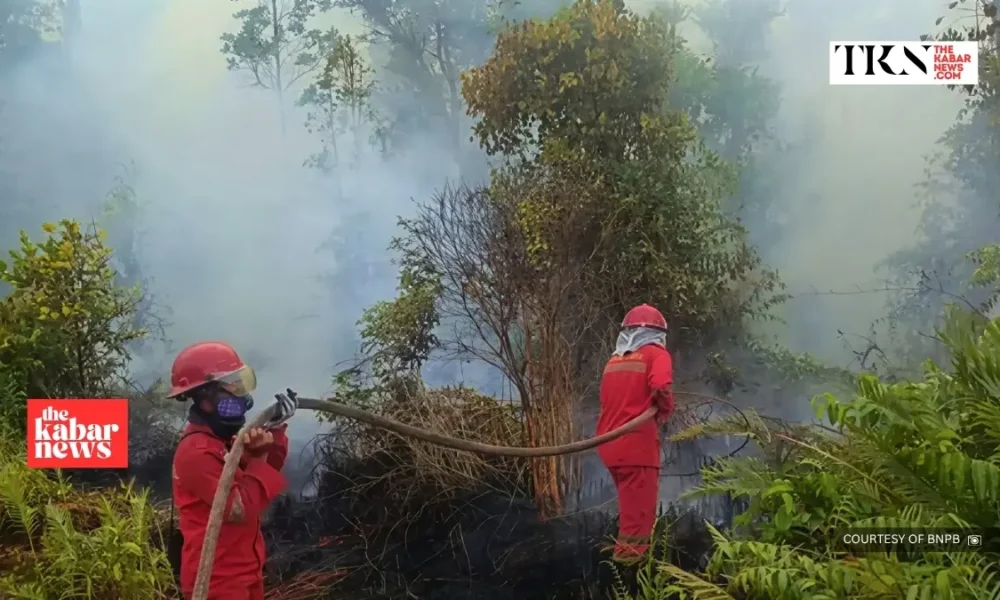
JAKARTA, thekabarnews.com—The Forestry Ministry has imposed administrative sanctions on six forestry permit holders. Inspectors found a combined 1,511.55 hectares of burned land within their managed areas across three Kalimantan provinces.
The ministry announced the penalties on Tuesday, August 25. This came after inspections of the companies’ compliance with forest and land fire prevention and control obligations.
The sanctioned companies are PT WEL, PT FI, PT MPK and PT WSP in West Kalimantan. Additionally, PT NES in Central Kalimantan and PT PSR in East Kalimantan were sanctioned, according to the Forestry Ministry press release.
Inspectors recorded the largest burned area on land managed by PT WEL, covering approximately 760.51 hectares. PT MPK followed with 394.83 hectares, while inspectors documented 107.70 hectares at PT WSP and 95.87 hectares at PT FI.
The ministry also recorded 82.26 hectares at PT PSR and 70.38 hectares at PT NES. The ministry placed five companies under government coercive measures, formally known as “Paksaan pemerintah.”
These measures require the permit holders to correct deficiencies in their fire-control systems. The companies must rehabilitate affected land within a specified period.
PT MPK received both a business-permit suspension and government coercive measures. Authorities described fires in its managed area as extensive and recurring.
“Government coercive measures require companies to fulfill the stipulated obligations, from improving their fire-control systems to restoring affected areas within the specified deadline,” Forestry Civil Sanctions and Litigation Director Ardi Risman said.
“We imposed a business-permit suspension and government coercive measures on PT MPK because fires occurred extensively and repeatedly. We will monitor and evaluate the implementation of all these obligations,” he added.
Ardi warned that the ministry could escalate the penalties, including revoking business permits, if the companies fail to comply.
The ministry inspected the four West Kalimantan companies between August 10 and 14. Officials examined their firefighting teams, equipment, water sources, monitoring towers, canal blocks and early fire-detection and response systems.
For burned peatland, companies may need to restore hydrological functions through water-management improvements, canal blocking, rewetting and groundwater-level monitoring.
Forestry Ministry spokesperson Ristianto Pribadi stressed that the administrative action concerns corporate compliance and responsibility for protecting managed areas.
“It is important to clarify that these administrative sanctions concern companies’ compliance and responsibility to protect the areas under their management. They do not automatically establish that the companies deliberately caused the fires,” Ristianto said, as quoted by Tirto.
The ministry may pursue separate criminal proceedings if further investigations uncover sufficient evidence of a crime. Civil action also remains possible when authorities identify recoverable environmental losses.
“A business permit gives a company the right to manage a forest area, but it also carries an obligation to protect the area and prevent damage,” Forestry Law Enforcement Director General Dwi Januanto Nugroho said.
“We use administrative sanctions to compel correction, restoration and compliance. When we find criminal elements, criminal proceedings will continue,” he added.
The ministry’s announcement did not include responses from the six companies. The sanctions therefore establish regulatory findings and corrective obligations, not a final determination that any company intentionally started the fires.





No Comment! Be the first one.