



Aging reusable water gallons raise safety questions
JAKARTA, thekabarnews.com—Aging and physically damaged reusable water gallons are prompting fresh questions about packaging safety in Indonesia. Meanwhile, consumer advocates call for clearer rules...

JAKARTA, thekabarnews.com—Aging and physically damaged reusable water gallons are prompting fresh questions about packaging safety in Indonesia. Meanwhile, consumer advocates call for clearer rules on how long manufacturers may keep the containers in circulation.
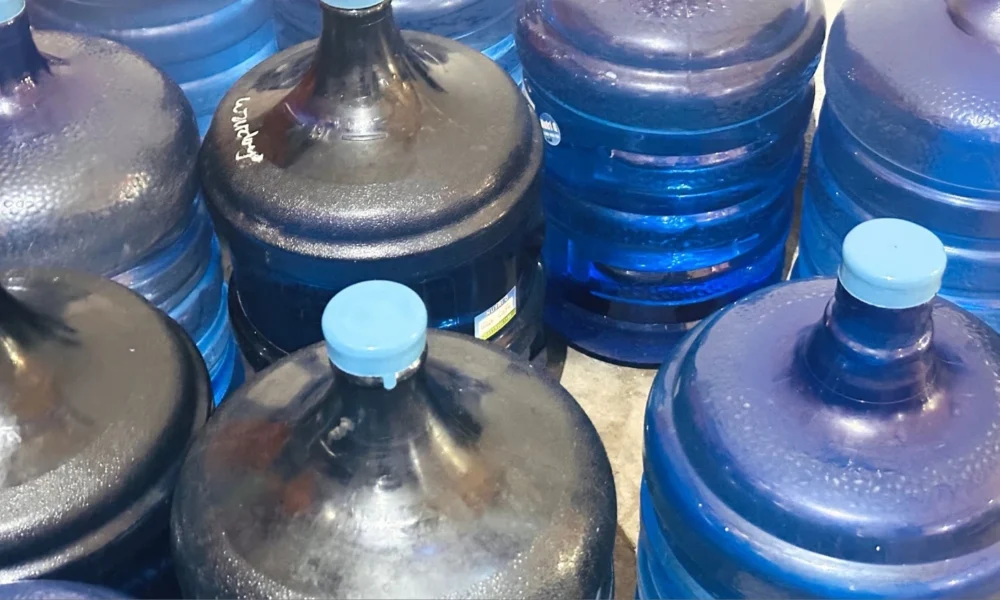
Galon guna ulang/ganula [reusable gallons] remain common because manufacturers can collect, clean and refill them. However, repeated handling and exposure to heat or ultraviolet light can affect their physical condition. This is particularly true when distributors store them improperly.
The Indonesian Consumers Community (KKI) said that there were complaints between 2024 and 2026 about cloudy, dirty and cracked containers.
The KKI has urged regulators to establish a measurable service life or refill-cycle limit.
In 2025, KKI inspected reusable gallons at 60 grocery stores across Jakarta, Bogor, Depok, Tangerang and Bekasi.
It reported that 57 percent were more than two years old, based on their production markings.
The KKI said 80 percent of the inspected containers appeared cloudy or dull. Its teams classified 55 percent as dirty or dusty, while 33.3 percent had damaged seals. Cracked and dented containers each accounted for 13.3 percent of the sample.
The inspection described the gallons’ age and visible condition. However, those findings alone do not establish that the water contained unsafe levels of Bisphenol A (BPA). This is because confirming chemical migration requires laboratory testing.
KKI subsequently collected 250 consumer reports from seven cities during March and April 2026. The organization said 92 percent of respondents reported that producers or sellers had not provided information about the containers’ service life.
Because the data came through a complaint channel, the results reflect participating consumers. Therefore, the results should not be interpreted as a representative national prevalence estimate.
“The state has a role through regulation and supervision to protect consumers, who are in a weaker position,” KKI head David Tobing said.
BPA is used to manufacture polycarbonate plastic, one of the materials used for reusable water gallons.
The presence of BPA in the material does not by itself determine whether drinking water is unsafe. Instead, the relevant issue is how much of the substance migrates into the water under actual conditions.
Under BPOM Regulation No. 6/2024, packaged-water producers using polycarbonate containers must carry a warning that the material can release BPA under certain conditions. In addition, labels must also provide storage guidance.
BPOM introduced a broader packaging standard through Regulation No. 11/2026, which took effect on June 30. It replaced the 2019 regulation.
The BPOM said the rule covers reusable and recycled packaging. Moreover, it gradually reduces the permitted BPA migration limit for polycarbonate packaging to 0.05 milligrams per kilogram by the fifth year of implementation.
However, the regulation does not set one universal retirement age or fixed refill limit for all reusable gallons. This leaves producers responsible for quality controls while regulators assess compliance with material and migration standards.
Consumers can avoid risks by not accepting cracked, heavily scratched or dirty containers and by making sure seals are intact. They should also follow the storage instructions and store packaged water away from direct sunlight.
More clear traceability and transparent retirement criteria can aid regulators and producers. These measures can help inform consumers when a reusable container has reached the end of its useful life.





No Comment! Be the first one.