



Palm farmers seek land reform and cooperative mills
JAKARTA, thekabarnews.com—Indonesian farmer groups and civil-society organizations called for land reform, legal protection and cooperative-owned processing facilities. The coalition made the call...

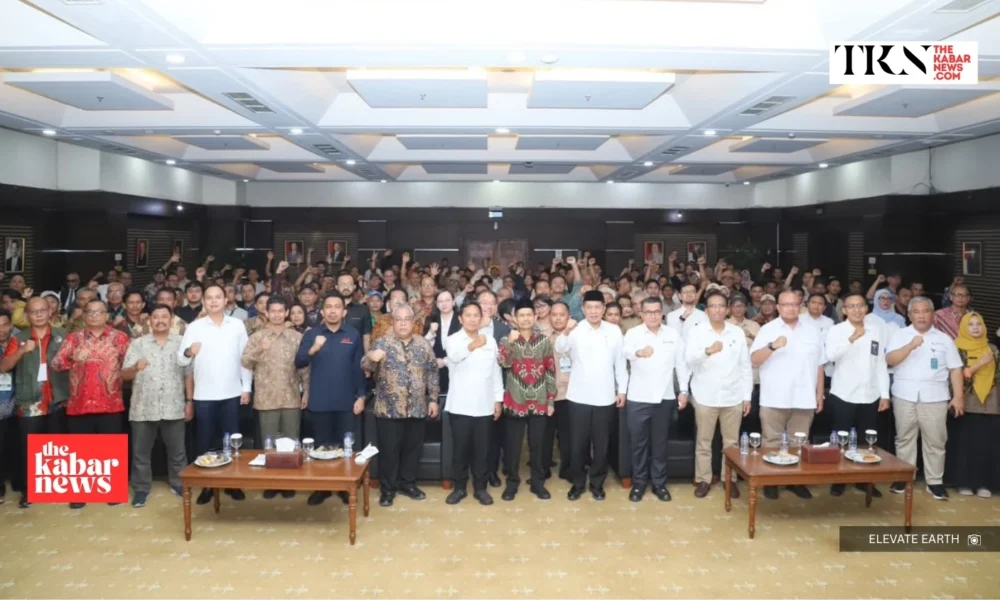
JAKARTA, thekabarnews.com—Indonesian farmer groups and civil-society organizations called for land reform, legal protection and cooperative-owned processing facilities. The coalition made the call during a national conference in Jakarta on Monday, September 21.
Hundreds of farmer representatives attended the second National Smallholder Plantation Conference at the Cooperatives Ministry.
The event had the theme “Building Sustainable Smallholder Palm Plantations Through Agrarian Reform and Growers’ Cooperatives.”
The participants were from the Indonesian Farmers Union (SPI) and the Indonesian Farmers Alliance (API). IHCS, POPSI, Sawit Watch and the Oil Palm Smallholders Union (SPKS) also participated.
Cooperatives Minister Ferry Juliantono opened the conference and said agrarian reform should extend beyond land redistribution.
“This forum is important because agrarian reform is not only about reforming land ownership but also reforming access,” Ferry said.
“Almost all crude palm oil mills are owned by large corporations. But cooperatives can own CPO mills.”
He said his ministry supported bringing palm-grower cooperatives into downstream processing. This could allow smallholders to retain more value from the fruit they produce.
SPI chairman Henry Saragih said the government must provide market stability and fair legal treatment. Otherwise, it will be unable to strengthen the domestic palm industry.
“This conference discusses how to build smallholder plantations through agrarian reform,” Henry said. “Smallholder plantations must be developed through cooperatives that actually carry out the mandate of agrarian reform.”
SPKS chairman Sabarudin said smallholders should participate directly in processing rather than serve only as suppliers of fresh fruit bunches.
“With smallholders managing around 40 percent of the country’s palm plantation area, they should be included in downstream development,” he said. “We are ready to build small-scale palm oil mills.”
The proportion broadly aligns with Statistics Indonesia’s 2023 data. Private estates controlled 8.61 million hectares, or 54.08 percent of Indonesia’s palm area. In contrast, smallholders managed 6.74 million hectares, or 42.29 percent.
Agriculture Ministry estimates published in August 2026 placed smallholder plantations at 6.93 million hectares and private estates at 8.40 million hectares. State plantations managed about 607,000 hectares.
Bappenas Food and Agriculture Director Jarot Indarto described palm oil as a national priority commodity because of its broad economic role.
He said ministries and government agencies should facilitate the support required by the sector.
The coalition also sought safeguards for farmers affected by the Forest Enforcement Task Force (Satgas PKH).
Presidential Regulation No. 5/2025 authorizes the government to collect administrative fines, retake forest land and recover assets from unauthorized activities.
Sawit Watch Executive Director Achmad Surambo said enforcement must not create opportunities to legitimate corporate violations or wrongly target smallholders.
“This measure must be accompanied by data transparency to guarantee communities’ rights to manage their land,” Surambo said.
He added that strong cooperatives could give farmers greater independence in downstream markets.
API secretary-general Muhammad Nur Uddin proposed Rp100 trillion in public funding for agrarian reform in designated priority areas.
“Without strong state-budget support for institutional development, agricultural infrastructure and assistance for growers’ cooperatives, agrarian reform risks remaining on paper,” Nur Uddin said.
The coalition also proposed connecting farmer cooperatives directly to Indonesia’s B50 biodiesel supply chain. Indonesia launched the mandatory 50-percent palm-based biodiesel blend in July 2026.
By mid-September, B50 had reached 6,050 of the country’s 6,412 fuel stations, according to the Energy and Mineral Resources Ministry.
The conference produced policy demands rather than binding government decisions. Their implementation will depend on land-verification rules, public financing and formal commitments. These must come from the ministries responsible for plantations, cooperatives and agrarian affairs.





No Comment! Be the first one.