



Asian Games medalists receive bonuses at State Palace
JAKARTA, thekabarnews.com—President Prabowo Subianto presented cash bonuses to Indonesia’s medal-winning athletes and coaches from the 2026 Aichi-Nagoya Asian Games and Asian Para Games at the...
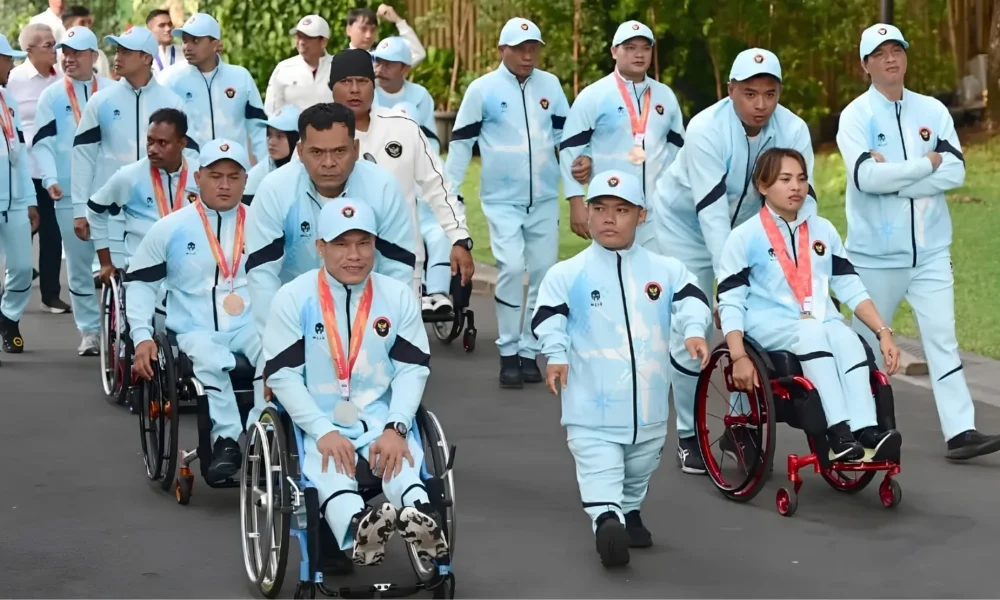
JAKARTA, thekabarnews.com—President Prabowo Subianto presented cash bonuses to Indonesia’s medal-winning athletes and coaches from the 2026 Aichi-Nagoya Asian Games and Asian Para Games at the Merdeka Palace in Jakarta on Thursday, Oct. 29.
The government awarded Rp3 billion (US$179,000) to each individual-event gold medalist. Individual silver medalists received Rp525 million, while bronze medalists received Rp262.5 million.
President Prabowo said the awards recognized the athletes’ work and their contribution to Indonesia’s standing in international sport.
“On behalf of the state, the nation and the Indonesian people, I thank all the athletes, coaches and everyone who took part in the Indonesian contingent,” Prabowo said during the ceremony.
Read also: Indonesia wins four medals at Chamonix Series 2026
Representatives receiving the awards included sport-climbing champion Desak Made Rita Kusuma Dewi and archer Nurisa Dian Ashrifah. Para-athletes from athletics, shooting, judo, wushu and table tennis also joined the symbolic presentation, according to the State Secretariat.
Indonesia completed the 20th Asian Games with five gold medals, 11 silver and 23 bronze. Its 39-medal total placed the country 16th in the final standings, according to the Youth and Sports Ministry.
The contingent exceeded the government’s target of four gold medals. Nurisa delivered Indonesia’s fifth gold by winning the women’s individual compound archery event. The result also marked Indonesia’s first Asian Games archery gold, according to the Olympic Council of Asia.
Indonesia’s other Asian Games gold medals came from badminton, weightlifting and sport climbing.
Read also: Gold and silver crash in 90 minutes, $3 trillion vanishes and global markets panic
The country performed more strongly in the fifth Asian Para Games. Indonesian para-athletes won 15 gold medals, 21 silver and 37 bronze for a total of 73 medals. The result placed Indonesia eighth overall and more than doubled its initial target of seven gold medals.
“At the Asian Para Games, we targeted seven gold medals but secured 15,” Prabowo said. “We also won 21 silver and 37 bronze medals, bringing the total to 73.”
The Indonesian government adjusted the bonuses according to whether athletes competed in individual, doubles or team events.
Doubles gold medalists received Rp2.4 billion each. Silver medalists in doubles events received Rp420 million, while bronze medalists received Rp210 million.
In team events, gold medalists received Rp1.5 billion. The government awarded Rp315 million for silver and Rp157.5 million for bronze.
Coaches also received bonuses. A coach responsible for an individual or doubles gold medal received Rp900 million. Coaches of gold-medal-winning teams received Rp1.2 billion, with separate payments available for additional medals.
Read also: Prabowo strengthens Indonesia’s sports development strategy, prioritizes athlete welfare
The government did not disclose the total budget required for all athlete and coach bonuses in the palace statement.
Prabowo instructed Youth and Sports Minister Erick Thohir to strengthen Indonesia’s athlete-development system. He called for systematic training that begins at school age, rather than relying mainly on preparations shortly before major competitions.
The instruction shifts attention from immediate rewards toward the next cycle of international events. Indonesia will need stronger talent identification and consistent coaching to improve its Asian Games ranking while sustaining the progress achieved in para-sport.
Prabowo described sport as part of the country’s dignity and international reputation. He said Indonesia should develop a culture that rewards achievement while preparing young athletes to compete over the long term.
The bonuses recognize the Aichi-Nagoya medalists’ results. Future progress, however, will depend on whether the government pairs financial rewards with accessible training facilities, qualified coaches and sustained competition opportunities.
No Comment! Be the first one.