



Margarito Kamis: Gibran ruling applies from the start
JAKARTA, The Kabar News—A Supreme Court ruling invalidated Vice President Gibran Rakabuming Raka’s high school equivalency letter, triggering competing legal interpretations. However, it does not...

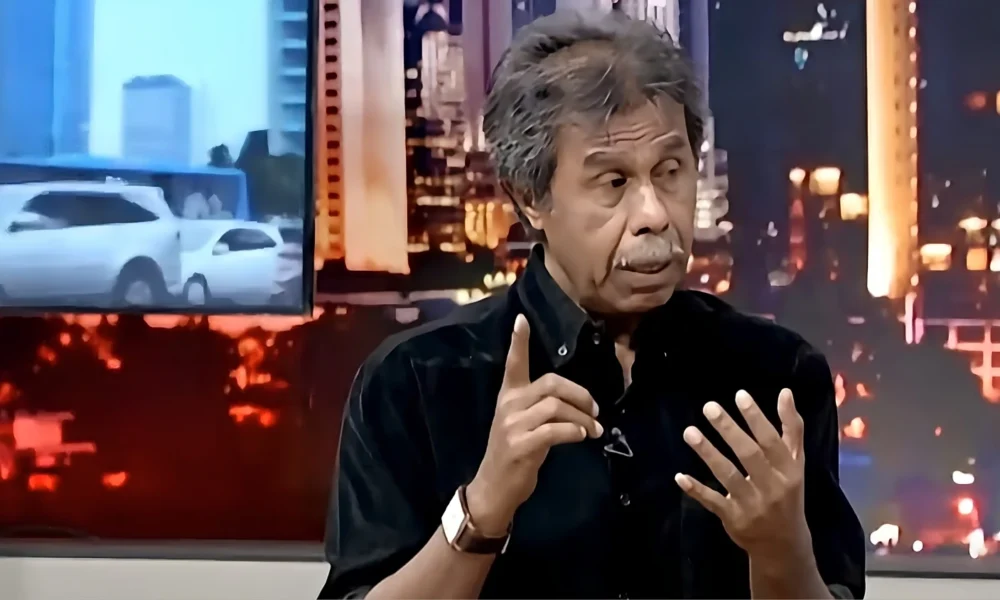
JAKARTA, The Kabar News—A Supreme Court ruling invalidated Vice President Gibran Rakabuming Raka’s high school equivalency letter, triggering competing legal interpretations. However, it does not automatically remove him from office under Indonesia’s Constitution.
In Decision No. 742 K/TUN/2026, issued on Oct. 30, the Supreme Court granted a cassation appeal filed by lawyer H.M. Subhan Palal. The court overturned the lower courts’ decisions and granted the plaintiff’s claims in full.
The lawsuit challenged Equivalency Letter No. 9149/D.D1/KS/2019, which the Directorate General of Primary and Secondary Education issued on Aug. 6, 2019, was declared invalid and legally void by the ruling.
The ruling declared the document invalid and legally void. It also ordered the Education Ministry to retrieve and destroy the letter.
Read also: Gibran pledges to focus on work after court ruling
Constitutional law expert and Presidential Advisory Council (Wantimpres) member Margarito Kamis argued that the ruling applied ex tunc, invalidating the administrative document from its date of issuance.
“It applies from the beginning. From the outset, the letter is considered never to have existed under that decision. Legal science has nothing to do with politics,” Margarito said.
When asked whether the ruling directly affected Gibran’s position, Margarito answered, “Yes.”
He compared the dispute to a person occupying a house. Later, a court may recognize another party as its lawful owner.
“Once the court rules that the house belongs to B, A no longer has a lawful claim to it and must leave,” he said.
Read also: Vice President Gibran supports temporary halt of free meals program
Margarito also argued that surrendering the physical letter would constitute an administrative formality rather than determine its legal status.
“Whether he hands it over or not is a separate matter. Legally, the letter is still considered to be nonexistent,” he said.
Margarito’s interpretation remains contested. This is because an administrative court ruling and the constitutional removal of a vice president operate through different legal mechanisms.
Articles 7A and 7B of the 1945 Constitution state that the People’s Consultative Assembly may dismiss a president or vice president only after the House of Representatives initiates the process.
The House must first ask the Constitutional Court (MK) to determine whether the officeholder committed a qualifying violation. Alternatively, the MK may decide if the person no longer meets the constitutional requirements for office.
If the MK upholds the House’s opinion, lawmakers may forward the dismissal proposal to the assembly. Moreover, the MK’s official explanation confirms that it must adjudicate any House opinion alleging that a president or vice president no longer meets the requirements for office.
Read also: Gibran orders stronger Kalimantan wildfire response
Gibran’s lawyer, Muhammad Rullyandi, has rejected claims that the Supreme Court decision automatically affects his client’s position. He said the case concerned the legality of an administrative document rather than the constitutional validity of Gibran’s mandate.
The dispute also remains difficult to assess fully because the Supreme Court had not released its complete legal reasoning as of Nov. 2. The court canceled a planned news conference after its Legal and Public Relations Bureau said it had not received the complete judgment. The court’s case-information system had published only the operative order.
The ruling therefore invalidates the education equivalency letter, but it does not by itself dismiss Gibran. Any attempt to end his tenure must proceed through the House, the MK and the People’s Consultative Assembly under Articles 7A and 7B. In addition, the complete judgment will be essential for determining the precise administrative consequences and the court’s reasoning.



No Comment! Be the first one.