



Youth protests put governance under fresh scrutiny
YOGYAKARTA, thekabarnews.com—Student demonstrations marking Indonesia’s Youth Pledge Day reflected growing concern among young people over governance, law enforcement and public policy. A prominent...

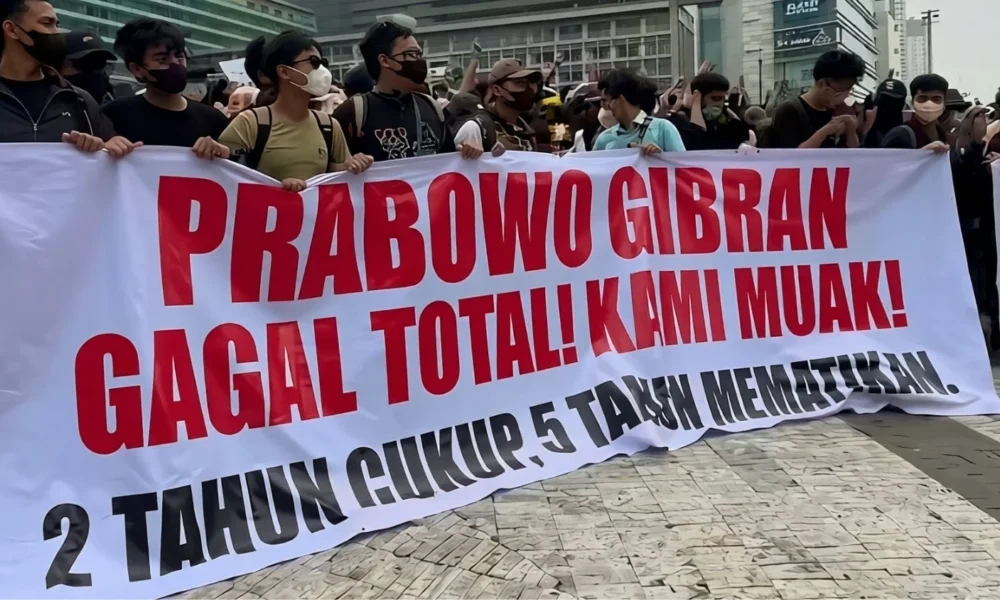
YOGYAKARTA, thekabarnews.com—Student demonstrations marking Indonesia’s Youth Pledge Day reflected growing concern among young people over governance, law enforcement and public policy. A prominent legal scholar said this as protests unfolded in Yogyakarta and Jakarta on Wednesday, Oct. 28.
Zainal Arifin Mochtar, a professor at Universitas Gadjah Mada’s Faculty of Law, joined demonstrators near Yogyakarta’s Malioboro area. UGM formally inaugurated him as a professor of state institutional law in January 2026. This was according to the university’s Faculty of Law.
“In simple terms, this is unrest,” Zainal said. “It reflects young Indonesians’ concern over poor governance, problematic law enforcement and the way the state exercises power.”
Read also: Pigai vs Zainal Arifin: Human rights debate sparks public discussion
His remarks represented his assessment of the political situation rather than independently established findings. He argued that unrest in different regions should not be viewed solely as a response to local problems. Instead, national policies and political decisions also affect conditions outside Jakarta.
Zainal also criticized several signature government programs, including the Free Meals (MBG) program. He criticized the Red and White Village Cooperatives (KDMP) program as well.
He alleged that the government had not adequately justified the programs or shown that they answered the public’s most urgent needs. Meanwhile, the administration has separately presented both initiatives as efforts to improve nutrition and expand village-level economic activity.
The protests coincided with the 98th anniversary of the 1928 Youth Pledge. Zainal said the commemoration should encourage young people to defend national unity while questioning the misuse of authority.
Read also: Prabowo strengthens Indonesia’s sports development strategy, prioritizes athlete welfare
In Jakarta, students from the University of Indonesia Student Executive Board (BEM UI) joined the Save the People’s Sovereignty Committee (SADAR). They participated in an #IndonesiaSadar demonstration at the Bundaran Hotel Indonesia.
The alliance presented five broad demands. It called on the government to declare the forest and land fires (karhutla) a national disaster. Moreover, it demanded that authorities prosecute responsible companies and restore damaged ecosystems. Protesters also demanded reforms to reduce economic inequality.
Their remaining demands focused on protecting civic space, eliminating corruption and lowering education costs. The demonstrators said the education system should give greater priority to public needs.
The demands constitute the alliance’s political position. Decisions on whether to designate an event as a national disaster require a government assessment under Indonesia’s disaster-management framework.
Read also: DPR leaders pledge to resign if asset bill misses deadline
Demonstrators assembled at several points around the roundabout, including near the Tosari bus stop. Some participants criticized inequality and the management of natural resources. Then, they sang a short passage from Iwan Fals’ protest song “Bongkar.”
Police anticipated congestion around Bundaran HI, Monas, Tugu Tani and the national legislature. Polda Metro Jaya deployed 1,249 traffic officers and introduced diversions according to conditions on the ground. This was according to the National Police.
Jakarta Governor Pramono Anung acknowledged that demonstrations form part of democratic life. However, he asked participants to remain peaceful, protect public facilities and avoid disrupting public order, according to Jakarta.go.id.
The Jakarta demonstration ended later that evening, and authorities reopened roads around Bundaran HI. Nevertheless, the rallies delivered a broader message: many young Indonesians want measurable policy responses rather than ceremonial recognition of their role in the country’s history.


No Comment! Be the first one.