



Why DeepMind CEO Demis Hassabis works until 4 a.m.
Google DeepMind CEO Demis Hassabis divides his working day in two: meetings during the day and research at night. He sleeps for about six hours, but he claims that this routine allows him to think...

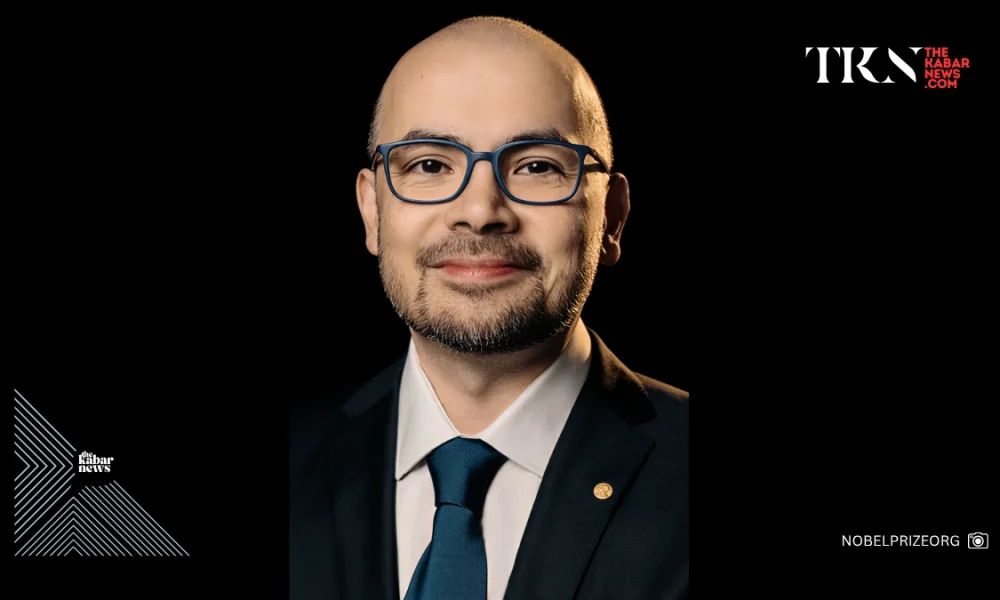
Google DeepMind CEO Demis Hassabis divides his working day in two: meetings during the day and research at night. He sleeps for about six hours, but he claims that this routine allows him to think creatively. That’s quite personal, not typical working advice, as most people are told to get at least seven hours.
Thekabarnews.com—Google DeepMind CEO Demis Hassabis follows an unconventional schedule that effectively divides each day into two separate working sessions.
Hassabis tries to squeeze in as many meetings as he can in the period of time between about 10 a.m. and 5 p.m. at Google’s office during his first session. After dinner and family time, he begins a second work session around 10 p.m.
He uses the quiet time from 10 p.m. to 4 a.m. to read research papers, think deeply, and complete creative work. This work does not involve the distractions that occupy his office hours.
“I’m much more of a night person,” Hassabis told Fortune editor Alyson Shontell while describing his daily routine. Shontell’s statement suggested the British AI researcher had kept a similar routine “for almost a decade.”
Hassabis says he tries to get roughly six hours of sleep after ending his second shift of work about 4 a.m. He rises at 10 in the morning. Then he returns to work.
The timetable is customized to his chronotype and duties but does not incorporate traditional health advice.
The US Centers for Disease Control and Prevention (CDC) recommends that adults from 18 to 60 years old receive at least 7 hours of sleep per night. In addition, health and performance also depend on good sleep quality, and regularity.
The CDC reported in 2026 that 30.5 percent of US adults slept fewer than seven hours per day in 2024. Insufficient sleep can impair concentration and increase the risk of physical and mental health problems.
Hassabis has also said that getting fewer than six hours of sleep harms the brain. So his routine is less a formula for productivity that others should blindly follow. Instead, it is more a look at how one executive spends his time.
DeepMind Hassabis co-founded DeepMind in 2010. Hassabis in 2010. In 2014, Google acquired DeepMind and in 2023, it merged with Google Brain to create Google DeepMind. Now he leads the integrated research section that develops conventional artificial intelligence (AI) systems, such as Gemini.
His work extends beyond business management. Scientists at Google DeepMind, John Jumper and Hassabis, have jointly received the Nobel Prize in Chemistry 2024. They were honored for their development of an AI system, AlphaFold2, that can predict the structure of proteins.
Hassabis separates meetings from creative work that demands deep concentration. These factors may help explain the difficulties of directing a large AI lab and undertaking scientific research.
But sleep needs are different for everyone, and health experts say adults should aim for enough and regular sleep. In other words, adults should not try to replicate the sleep patterns of high-profile tech CEOs.






No Comment! Be the first one.