



What Trump’s Hormuz blockade means for global oil trade
Renewed attacks have broken a fragile ceasefire and prompted President Donald Trump to order the United States to reinstate a naval blockade against Iran. Trump instructed the U.S. to take control...

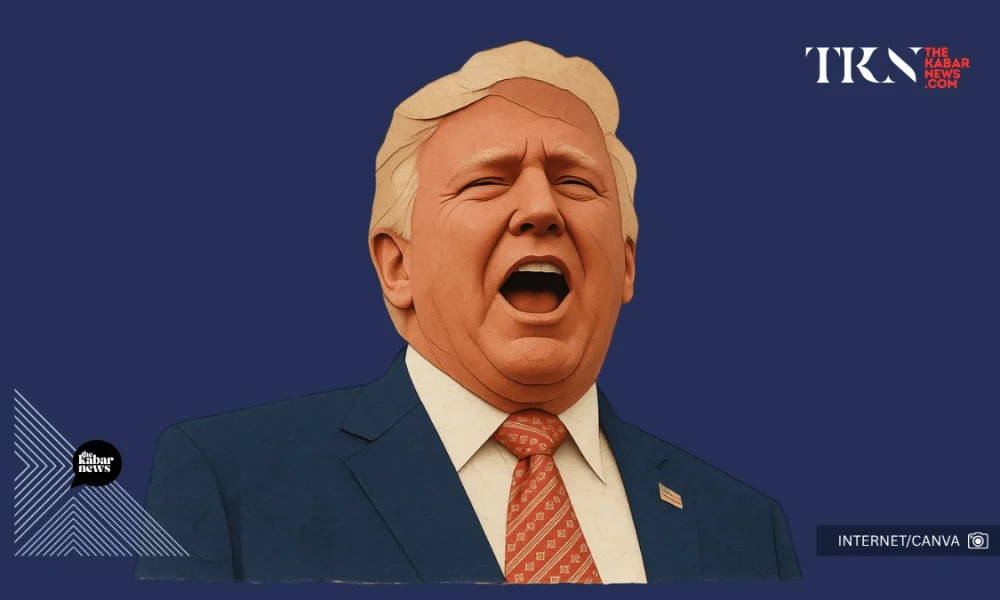
Renewed attacks have broken a fragile ceasefire and prompted President Donald Trump to order the United States to reinstate a naval blockade against Iran. Trump instructed the U.S. to take control over the Strait of Hormuz. The move risks more military escalation and disruption along a waterway that ships about one-fifth of global oil consumption each day.
Thekabarnews.com—President Donald Trump has ordered the U.S. military to restore the naval blockade on Iran. Trump announced that Washington will assume operational control of the Strait of Hormuz, escalating a renewed confrontation between the two countries.
The United States and Iran traded blows over the weekend. Trump announced the decision Monday, July 13. The fighting came after a breakdown of a fragile ceasefire. Iran renewed its claim that it had closed the strategic waterway.
“We are taking the straits. They’ve got nothing,” Trump said in a telephone interview with Fox News. He argued that Middle Eastern nations enjoying secure passage should pay Washington for safeguarding the shipping route.
Trump’s order does not call for a complete blockade of all international traffic. Instead, it focuses on ships entering or leaving Iranian ports. Fox News and Axios reported the US military would begin enforcing the measure at 4 p.m. Eastern Time on Tuesday, July 14.
Trump also proposed a 20 percent fee on eligible commercial cargo for passage protected by the US. But a Gulf official told Axios that Washington had not formally discussed the payment plan with regional partners.
The president said on Truth Social: “The Hormuz Strait is open and will remain open, with or without Iran. We are reinstating the Iranian blockade.” His statement came after US strikes on Iranian radar sites, air-defense systems, missile capabilities, and military boats. Iran retaliated with attacks across the Gulf region, the Associated Press reported.
Trump has said he would take over the waterway. Independent authorities have not confirmed that the US has taken full operational control.
The International Maritime Organization (IMO) still describes the conditions around Hormuz as volatile. As of July 8, the agency has recorded 52 maritime security incidents. It noted 14 seafarers’ deaths in the Strait of Hormuz and the wider Middle East region.
The IMO has called on governments and shipping operators to avoid unnecessary risks. It says that countries must not threaten, obstruct, or suspend transit rights through straits used for international navigation. This is in accordance with international law.
The Persian Gulf opens into the Gulf of Oman and the Arabian Sea via the Strait of Hormuz. It is the main export route for oil and liquefied natural gas from several key Gulf producers.
In the first half of 2025, some 20.9 million bpd of petroleum products passed through Hormuz, the US Energy Information Administration said. That volume represented some 20 percent of global petroleum consumption. It comprised a quarter of internationally traded seaborne oil.
More than 20 percent of global liquefied natural gas trade came via the strait, mostly from Qatar. Pipelines already in place in Saudi Arabia and the United Arab Emirates could bypass Hormuz. Together they have spare capacity to replace only a fraction of normal seaborne flows.
Any prolonged military confrontation could lead to delays in shipments, higher insurance and freight costs, and higher global energy prices.
Trump’s blockade order may aim to keep commercial traffic flowing. Its success depends on the ability of U.S. forces to deter Iranian attacks without sparking a wider regional conflict.




No Comment! Be the first one.