



Rial hits record low as US blockade and Strait of Hormuz closure deepen economic crisis
TEHRAN, Thekabarnews.com—The United States blockade on Iranian ports and the closure of the Strait of Hormuz pushed Iran’s national currency, the rial, to its lowest level ever on Wednesday, April...

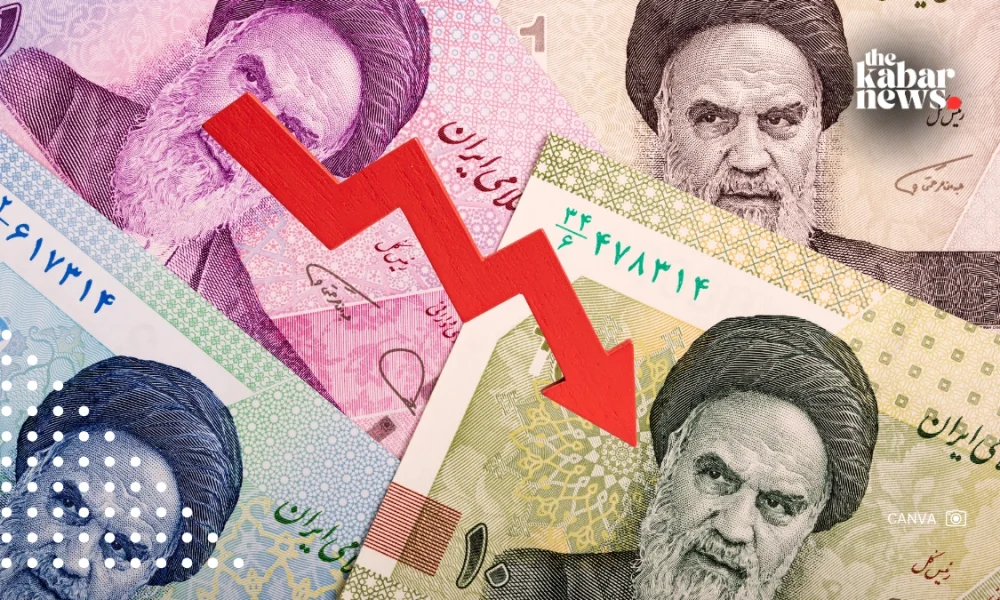
TEHRAN, Thekabarnews.com—The United States blockade on Iranian ports and the closure of the Strait of Hormuz pushed Iran’s national currency, the rial, to its lowest level ever on Wednesday, April 29. This increased pressure on the country’s already fragile economy.
The rial had fallen sharply in open market trading to 1.81 million rials per 1 U.S. dollar by Wednesday afternoon, according to Al Jazeera.
The currency had already plunged sharply earlier this week to 1.54 million rials per U.S. dollar. This shows increasing pressure on Iran’s financial system.
The rial hit a historic low. However, analysts said its exchange rate had been relatively stable in the past two months. This is in contrast to earlier periods of sharper volatility.
The most recent major variation was a time when U.S. military forces assembled in preparation for a U.S.-Israel military attack on Iran. This became a wider regional conflict.
The latest weekly decline is not just a result of geopolitical pressure but also of deep domestic economic problems. These problems include soaring inflation, sanctions, and long-standing structural mismanagement.
The Iranian economy is already under stress from years of international sanctions and poor fiscal management. As a result, the current blockade has exacerbated the crisis by curtailing trade and export routes.
The steep fall in the rial could stoke even higher inflation. Consequently, such a scenario would make imported goods much pricier for ordinary people.
All these essential products, like food, medicine, electronics, and raw material for industries, are highly sensitive to the rate of exchange of the U.S. dollar.
The ongoing decline of the rial is gradually eroding the purchasing power of Iranian households. Therefore, the situation increases living costs and threatens social stability.
At the same time, Iran is finding it increasingly difficult to sell crude oil, one of its most important export commodities. This is due to restrictions on maritime access and tighter U.S. pressure in international seas.
Tehran is struggling to send shipments abroad. This is because foreign buyers and shipping companies are increasingly cautious amid rising military tensions and legal risk.
Iran’s state income has for a long time been reliant on oil revenue. So, any significant disruption has a direct impact on government spending, foreign reserves, and confidence in the domestic market.
The combination of external sanctions and internal inflation creates a dangerous cycle. Currency weakness leads to higher prices. This then erodes public confidence in the economy, financial experts say.
Despite economic pressure, Iranian officials have continued to describe the situation as temporary and a result of external political aggression. They see it rather as a policy failure.
If oil exports remain blocked and inflation continues to soar, the country could face even deeper financial instability in the months ahead.
The collapse of the rial, for many Iranians, is not merely a financial headline; it directly impacts the cost of daily survival. Their situation is worsening in an increasingly difficult economic environment.





No Comment! Be the first one.