



New polling data shows Trump as least popular US president since 2009
Thekabarnews.com—President Donald Trump has won a string of Republican Party primary elections ahead of the upcoming U.S. midterm elections. However, new polling data shows his public approval...

Thekabarnews.com—President Donald Trump has won a string of Republican Party primary elections ahead of the upcoming U.S. midterm elections. However, new polling data shows his public approval ratings have dropped to their lowest point since taking office.
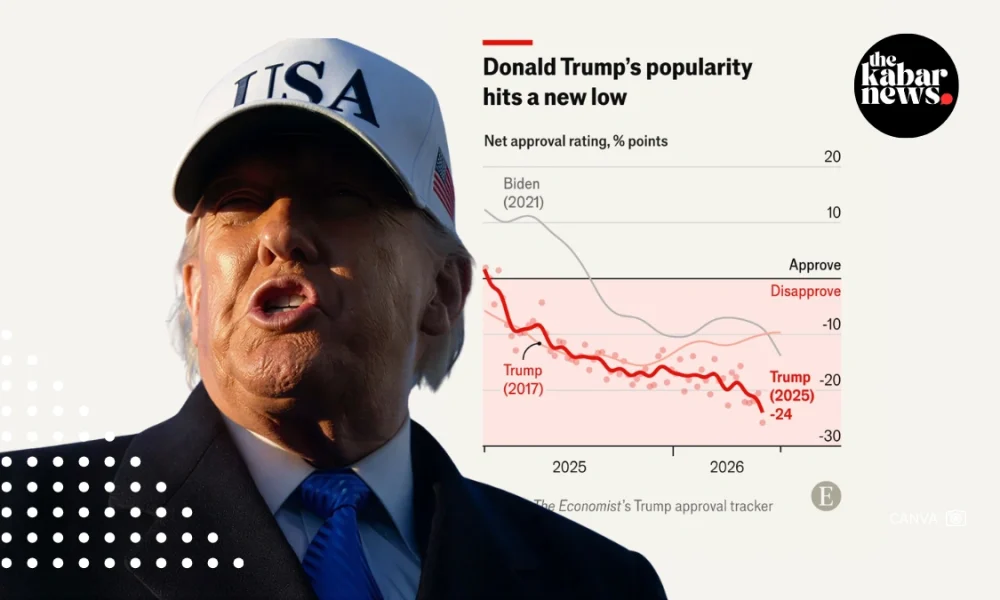
The president’s net approval rating has fallen to about -24 percentage points. This is the lowest approval rating he has had during his presidency and the lowest of any president since the polling series began in 2009. This information comes from data compiled by The Economist’s presidential approval tracker, as cited in The Economist.
The chart, using the most recent data, shows Trump’s popularity steadily declining throughout 2025 and into 2026. Trump entered the term with an unfavorable approval rating. Additionally, public opinion has only grown more sour over the last year.
The graphic also offers context for Trump’s current standing by comparing it to the standing of former President Joe Biden in 2021. Biden’s ratings were initially positive before falling off slowly. In contrast, Trump’s scores were mostly negative for the entire period shown.
The widening gulf between Republican electoral success and Trump’s personal popularity exemplifies a deepening divide between party loyalty and general public opinion.
The president’s approval ratings seem to be falling for various reasons. One of the most important developments has been the conflict with Iran.
As tensions between the United States and Iran increase, so do concerns about the impact of continued instability in the Middle East on U.S. foreign policy. There are also concerns about national security and the economic fallout from the ongoing unrest.
International conflicts tend to shape public perceptions of presidential leadership. This is especially true when the United States is at war or the world stage is uncertain.
Economics is still a factor that shapes voters’ thinking, beyond foreign policy. Concerns about inflation, housing affordability, healthcare costs, and other questions of economic stability remain among the most important issues for American voters.
Political strategists also cite increasing polarization as a factor. This trend has made it more and more difficult for modern presidents to sustain cross-party support.
Trump’s grip on the Republican Party remains solid, even as his national approval ratings have slipped.
GOP candidates still seek his endorsements, and recent primary wins show he still has a loyal following among Republican voters.
But approval ratings often serve as an important bellwether before big elections. Historically, low job approval has been a liability for a president’s party in congressional races. It also is relevant for independents in swing districts.
So the latest numbers present a mixed political picture for the White House. Trump remains king of Republican politics, and he still wins in the party. However, the general public seems to be becoming more skeptical.
As the United States nears the midterm elections, political analysts will closely monitor whether improving economic conditions, foreign policy developments, or campaign momentum can reverse the president’s declining approval trajectory.
The latest polling data shows Trump facing one of the greatest challenges of his presidency to his popularity, even as he remains the most dominant figure in Republican politics.





No Comment! Be the first one.