



Indonesia’s fire record spans three presidencies
JAKARTA, thekabarnews.com—Forest and land fires (karhutla) have remained a recurring national crisis across three Indonesian administrations, but differing timeframes, climate conditions and...

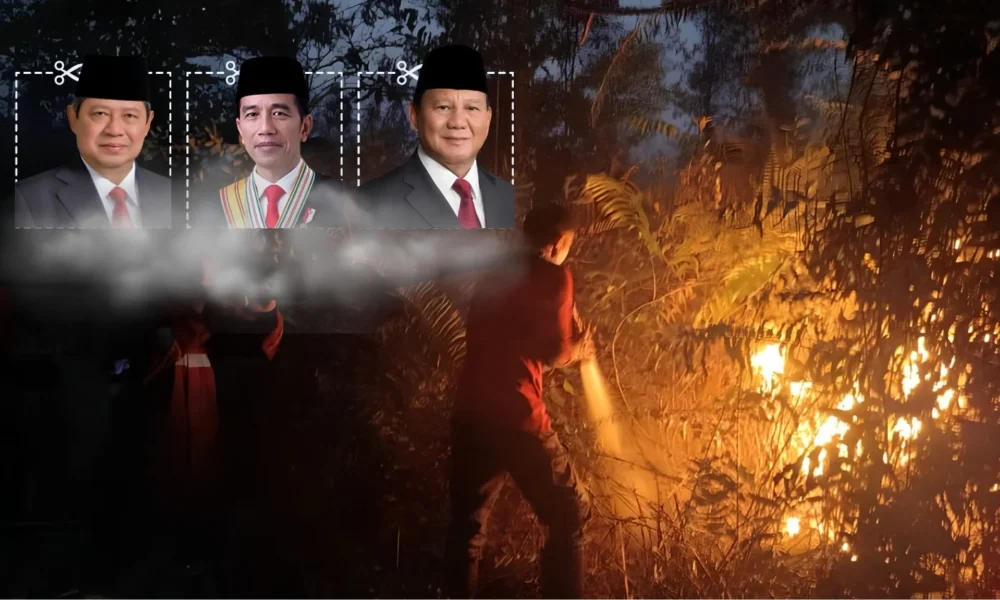
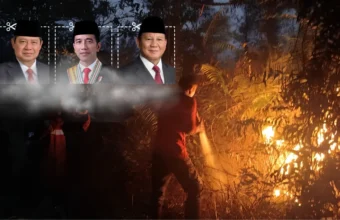
JAKARTA, thekabarnews.com—Forest and land fires (karhutla) have remained a recurring national crisis across three Indonesian administrations, but differing timeframes, climate conditions and monitoring methods make simple comparisons between presidents unreliable.
An aggregation of annual figures published by the Environment and Forestry Ministry, now partly succeeded by the Forestry Ministry, shows that fires affected about 9.32 million hectares during the nine full calendar years from 2005 to 2013 under President Susilo Bambang Yudhoyono (SBY).
The corresponding total for the nine full calendar years from 2015 to 2023 under President Joko “Jokowi” Widodo was approximately 7.41 million hectares. Those totals exclude the presidential transition years of 2014 and 2024 so as to avoid attributing an entire year to one administration.
Read also: KPK releases Prabowo Subianto’s 2025 wealth report, total assets exceed Rp2 trillion
On an annualized basis, the figures average roughly 1.04 million hectares during the selected SBY period and 823,000 hectares during the Jokowi period. However, those averages still cannot provide a definitive assessment of either administration.
Satellite coverage and burned-area mapping improved over time, and annual rainfall and peatland conditions varied widely. Major El Niño episodes also heightened the risk of drought and fire. The Meteorology, Climatology and Geophysics Agency (BMKG) declared the 2015–2016 El Niño as very strong.
That depends. You can see the evidence in the size of individual crisis years. Indonesia lost nearly 3.9 million hectares in 2006 and some 2.6 million hectares in 2015.
The World Bank estimated that the 2015 fires cost Indonesia at least US$16.1 billion. This amount is equivalent to Rp221 trillion or 1.9 percent of gross domestic product.
Read also: Indonesia’s population reaches 290.1 million in 2026
During President Prabowo Subianto’s first full calendar year, fires affected 359,619 hectares in 2025. This figure is down from around 376,805 hectares in 2024. The Forestry Ministry’s SiPongi monitoring system then recorded approximately 202,004 hectares burned between January and July 2026.
A comparison of SiPongi figures placed that total about 69 percent above the corresponding 2025 period. Nevertheless, the 2026 figure remains provisional and cannot be compared with complete annual totals.
The government has paired firefighting operations with a broader corporate investigation. National Police chief Gen. Suyudi Ario Seto said police had named 11 companies as suspects, including three foreign-investment companies. Authorities had not publicly identified them as of Oct. 22, and suspect status does not establish guilt.
“We have named 11 corporate suspects. Three of them are foreign-investment companies, while the cases remain under investigation,” Suyudi said.
Read also: Forestry Ministry freezes five permits in West Kalimantan
Separately, the Forestry Ministry imposed administrative measures on 32 companies connected to 12,926.74 hectares of burned concession areas.
The measures included permit suspensions, ecosystem-restoration orders and five permit revocations. The ministry also reported criminal proceedings against 125 legal subjects, comprising individuals and companies.
President Prabowo has ordered investigators to examine corporate responsibility rather than treat fires solely as natural events.
“I have asked the police, prosecutors and the Forestry Ministry, assisted by the military and intelligence services, to investigate because many corporations apparently share responsibility,” he said during a Cabinet meeting in Jakarta on Oct. 21.
The president has also criticized eight local regulations, which he said could justify burning up to two hectares under a local-wisdom exception.
“The first thing we must do is correct the regulations. We must be firm,” Prabowo said.
Indonesia’s falling fire total in some years is significant, but it does not end the policy test. Long-term progress will depend on consistent prevention, transparent measurements and whether criminal and administrative cases produce enforceable accountability.

No Comment! Be the first one.