



Drones and cloud seeding target Merauke wildfires
MERAUKE, The Kabar News—Indonesia’s disaster and weather agencies have intensified their response to forest and land fires (karhutla) in South Papua by combining cloud seeding with drones and digital...

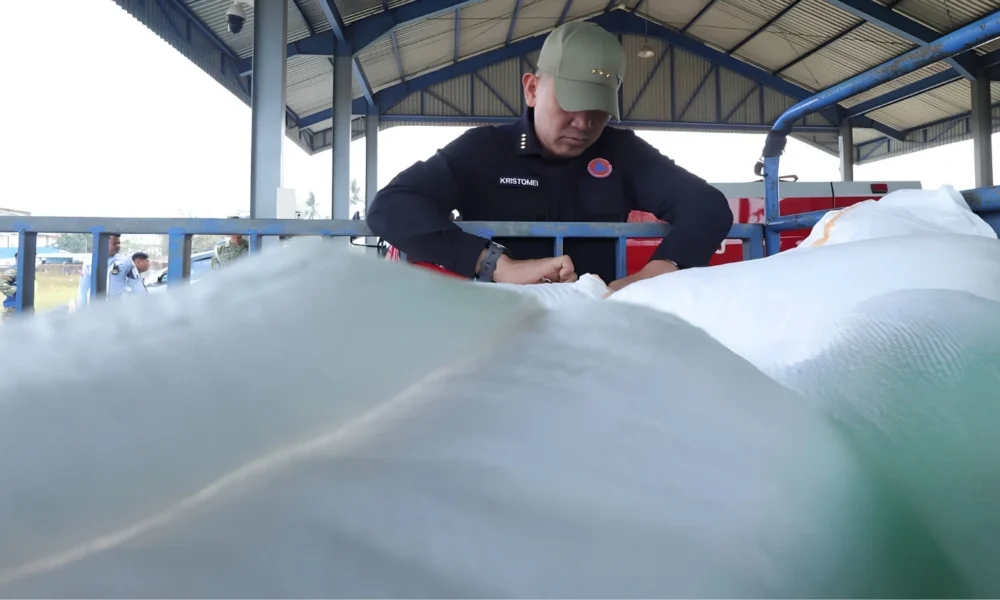
MERAUKE, The Kabar News—Indonesia’s disaster and weather agencies have intensified their response to forest and land fires (karhutla) in South Papua by combining cloud seeding with drones and digital hotspot monitoring.
National Disaster Mitigation Agency (BNPB) head Lt. Gen. Kristomei Sianturi and Meteorology, Climatology and Geophysics Agency (BMKG) head Teuku Faisal Fathani reviewed the weather-modification operation at Johannes Abraham Dimara Air Base in Merauke. The review took place on Saturday, Oct. 31.
The inspection sought to assess the aerial operation and identify additional support needed to contain fires in Merauke regency. Hotspots have appeared in Okaba and several other districts.
“Areas such as Okaba and several other parts of Merauke do have hotspots. However, our monitoring over the past three days showed that the largest number appeared inside the company’s concession,” Kristomei said in a statement published by BNPB.
Read also: BNPB reports floods and fires across Indonesia
Officials did not identify the private oil palm company concerned. The detection of hotspots also does not by itself establish that a fire occurred or determine who caused it. Investigators must verify satellite and drone findings on the ground before attributing responsibility.
BNPB is using drones and a digital monitoring system to determine the coordinates of suspected fires and establish the administrative or concession status of the affected land. Therefore, the agency has asked the local disaster management agency, territorial authorities and law enforcement personnel to inspect the detected locations.
The system is intended to shorten the interval between detecting a thermal anomaly and dispatching personnel. Faster verification could prevent a small fire from spreading, particularly in areas with limited road access.
Earlier in October, BNPB documented fires across 10 districts in Merauke. Its preliminary assessment recorded at least 63 hectares burned across nine measured locations. Meanwhile, officials were still calculating damage in Kampung Kondo, Nokenjere district. The cause remained under investigation, according to an Oct. 11 BNPB report.
Read also: Papua governor says locals feel like guests on own land
BNPB and BMKG scheduled the South Papua weather-modification operation from Oct. 22 to Nov. 5. A Cessna Caravan C208B aircraft, registered as PK-SCG, is conducting the missions from the Merauke airbase.
As of Oct. 30, crews had completed 13 cloud-seeding sorties and dispersed 13,000 kilograms of sodium chloride. The operation aims to increase the chance of rain over designated areas and help dampen fire-prone land.
Weather modification depends on suitable cloud formations and cannot create rain under all atmospheric conditions. BMKG must therefore assess moisture, wind and potential rain clouds before authorizing each flight.
The agency is also considering whether other seeding materials could support operations under different atmospheric conditions. Any use of dry ice would require a separate technical assessment. It would not serve as an automatic substitute for sodium chloride.
Read also: New studies say black cumin seeds can protect your joints
Fathani said weather-modification teams must generate enough rainfall to support firefighting without increasing the risk of flooding. South Papua’s recent wet-weather potential does not necessarily mean that Merauke has fully entered its rainy season.
BMKG will provide maps showing areas at risk of new hotspots. They will also issue district-level forecasts covering the next three to 10 days.
“Through BMKG’s monitoring system, we will also report when heavy rain could occur and which areas need to prepare,” Fathani said. “The forecast covers the next three to 10 days, with information available down to the district level.”
The technology can improve targeting, but it does not replace ground crews or investigations into the causes of fires. The effectiveness of the South Papua operation will ultimately depend on rapid field verification, reliable weather conditions and enforcement when investigators find evidence of negligence or deliberate burning.



No Comment! Be the first one.