



Sutarmidji urges firm action on corporate wildfires
PONTIANAK, thekabarnews.com—Former West Kalimantan governor Sutarmidji has urged authorities to act firmly against companies operating near forest and land fire (Karhutla) locations. He cited his...


PONTIANAK, thekabarnews.com—Former West Kalimantan governor Sutarmidji has urged authorities to act firmly against companies operating near forest and land fire (Karhutla) locations. He cited his administration’s use of satellite coordinates and an analytical monitoring room during the 2019 wildfire crisis.
Sutarmidji, who governed West Kalimantan from 2018 to 2023, said provincial officials routinely monitored hotspots to identify their locations, intensity and proximity to plantation or forestry concessions.
“Every morning, I usually checked where the hotspots were and what colors they showed,” Sutarmidji said in a video circulated on Facebook.
He said officials could compare satellite coordinates with concession maps. With this information, they could determine whether a heat anomaly appeared inside or near land controlled by a company.
Sutarmidji also described patterns that his administration used when assessing hotspot data.
Light-yellow points, he said, frequently appeared in areas where traditional farmers conducted limited burning and often disappeared by the afternoon. Red points, by contrast, commonly occurred around plantation areas.
“If it is red, we can be 90 percent certain that it is in a plantation,” Sutarmidji said.
Hotspot colors do not independently establish who caused a fire. Monitoring platforms may use colors to represent detection confidence, temperature intensity or other classifications.
A hotspot is a satellite-detected heat anomaly—not conclusive evidence of a fire or corporate responsibility.
Investigators must verify each detection on the ground and compare its coordinates with legally recognized concession boundaries.
Sutarmidji said his administration issued warnings to 157 companies in connection with hotspots detected in their operational areas in 2019.
“In 2019, 157 companies received warnings. The data are available at the Environmental Agency,” he said.
A West Kalimantan administration presentation from 2020 supports that figure. It recorded warning letters for 109 plantation companies and 48 forestry businesses.
Authorities also sealed areas linked to 67 companies. They imposed administrative enforcement measures on 20 businesses where fires had been confirmed.
The same document recorded approximately 151,070 hectares of burned land in West Kalimantan during 2019. Police and Forestry Ministry investigators handled 106 corporate and individual cases covering nearly 10,898 hectares, according to the presentation.
Sutarmidji said authorities took two corporate cases to court. This included one involving a company in Melawi whose judgment had become legally binding.
He also referred to other corporate criminal proceedings that had reached final judgments or remained before the courts.
The relevant agencies should verify the latest status of each case against official court records before publication of company names.
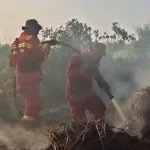
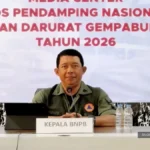
The issue has regained national attention as Kalimantan faces another severe fire season. BNPB reported that the NOAA-20 satellite detected 1,487 hotspots across Kalimantan on August 20, 2026, including 560 in West Kalimantan.
The Forestry Ministry has cautioned that one fire may generate several hotspot detections. Satellite totals can change rapidly because of cloud cover, observation times and sensor differences.
Sutarmidji argued that authorities should use monitoring technology to direct inspections and enforcement. He said such an approach is preferable instead of relying solely on aggregate hotspot totals.
Satellite data can identify where investigators should look. However, only field verification, concession mapping and legally tested evidence can establish responsibility.
That distinction remains essential to ensuring that enforcement targets proven violations without making unsupported accusations against companies or traditional farmers.

No Comment! Be the first one.