



Kalimantan fires renew scrutiny of captive coal
TANJUNG SELOR, thekabarnews.com—A civil society coalition has urged the Indonesian government to overhaul its wildfire and energy policies. This comes as extensive forest and land fires spread smoke...

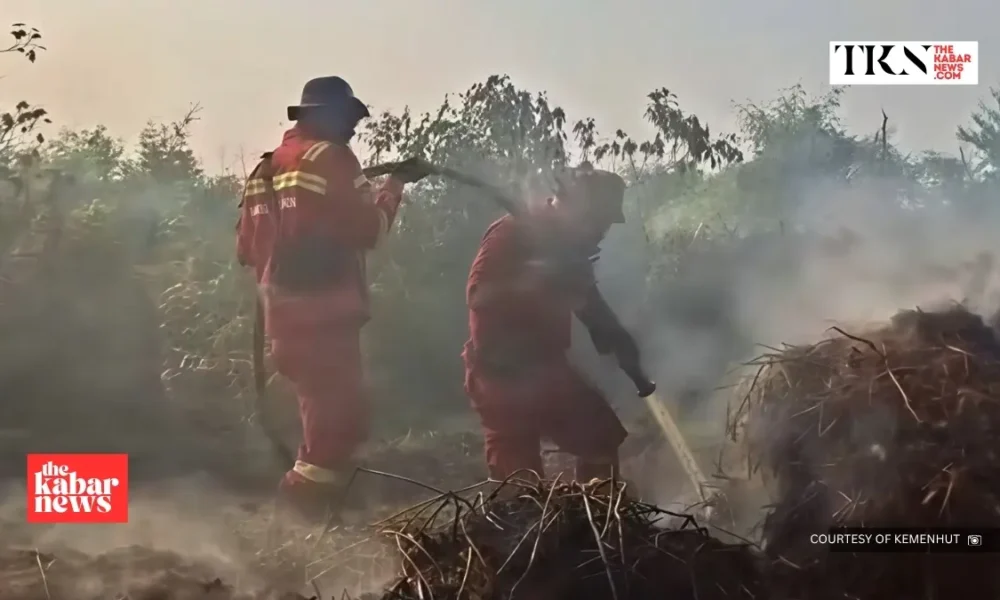
TANJUNG SELOR, thekabarnews.com—A civil society coalition has urged the Indonesian government to overhaul its wildfire and energy policies. This comes as extensive forest and land fires spread smoke across Kalimantan in August 2026.
The #KalimantanUtaraTanpaPolusi campaign said recurring fires and proposed captive coal-fired power plants in North Kalimantan reflected what it described as a broader failure of environmental governance.
The coalition called for stronger fire prevention, peatland restoration and a transition away from coal-based industrial power.
“True independence means having the freedom to breathe clean air and live on sustainable land. It is deeply ironic that while Kalimantan residents are forced to inhale wildfire smoke every dry season, the central government is welcoming new captive coal-fired power plants as National Strategic Projects,” coalition representative Nasrul said.
“This is not merely weak supervision. It is a governance crisis that prioritizes extractive-industry oligarchs over public safety,” he added.
The coalition issued its criticism after satellite monitoring showed a sharp increase in heat anomalies across Kalimantan.
The National Disaster Management Agency (BNPB) reported that the NOAA-20 satellite detected 1,487 hotspots across Kalimantan on August 20. Central Kalimantan recorded 767, while West Kalimantan accounted for 560. South and East Kalimantan each registered 74, while North Kalimantan recorded three.
Authorities stress that a hotspot is a satellite-detected surface-temperature anomaly and does not automatically represent a separate fire. One fire can produce several hotspots, and officers must verify satellite detections in the field.
Data can also vary between monitoring systems because satellites pass over areas at different times and apply different confidence thresholds.
The Forestry Ministry’s SiPongi system recorded 950 hotspots nationally on August 20, down from 2,170 the previous day.
The ministry said the decline did not mean that all fires had been extinguished or that the emergency had ended.
The government has deployed ground crews, patrols, water-bombing helicopters and weather-modification operations.
The Forestry Ministry said at least 12,880 personnel were involved in integrated operations across West, Central and South Kalimantan.
The coalition also questioned plans to use captive coal power for industries at Kalimantan Industrial Park Indonesia (KIPI), in North Kalimantan. Captive plants generate electricity primarily for industrial facilities instead of supplying the public grid.
The Centre for Research on Energy and Clean Air and Global Energy Monitor conducted a 2024 analysis that identified announced plans for up to 2.2 gigawatts of captive coal capacity. This capacity would support an aluminum-smelting project at KIPI.
The industrial development also includes a planned 1,375-megawatt hydropower project. However, the precise status and schedule of individual power units may change.
The coalition demanded that the government close regulatory exemptions for captive coal. They also asked to review national strategic projects that remain dependent on fossil fuels. They urged the prosecution of companies responsible for illegal burning and the acceleration of peatland restoration.
The government, meanwhile, says it has strengthened prevention, satellite monitoring and law enforcement.
The policy test will be whether those measures can reduce recurring fires. It must ensure that industrial development aligns with Indonesia’s emissions commitments and residents’ right to clean air.





No Comment! Be the first one.