



Russia and China move to abandon US dollar in bilateral trade
Thekabarnews.com—Russia and China announced a major change in their trade plan. They have decided to stop using the US dollar in bilateral trade. Instead, they will use their national currencies—the...

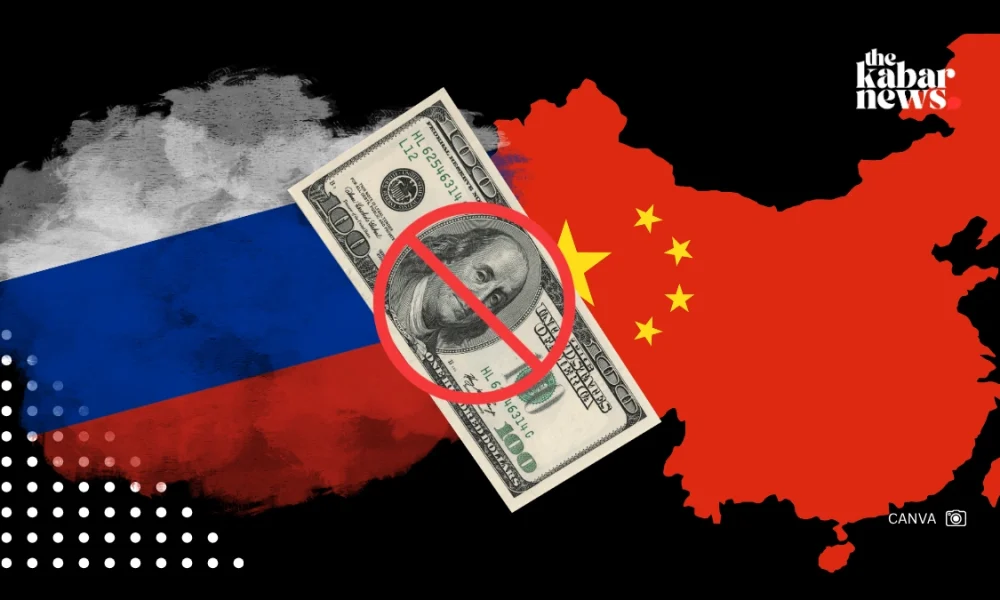
Thekabarnews.com—Russia and China announced a major change in their trade plan. They have decided to stop using the US dollar in bilateral trade. Instead, they will use their national currencies—the ruble and yuan.
The joint statement marks a major shift in the landscape of global commerce. Moreover, both countries are making a broader effort to reduce their reliance on the U.S. financial system.
The US dollar has been the world’s dominant reserve currency since the end of World War II. For many years, it has been the currency of international trade.
Moscow and Beijing have been working quietly to develop alternative financial channels to reduce their reliance on dollar-based systems.
The move gained momentum after the West imposed sanctions on Russia in response to its invasion of Ukraine. These sanctions cut off Russia’s access to global financial networks. As a result, Russia has responded by trading more in other currencies.
Meanwhile, China has intensified its drive for financial independence amid trade tensions with the United States. Beijing is developing alternative payment channels and promoting the international use of the yuan.
Under the new pact, the two countries will trade directly in rubles and yuan, cutting out the US dollar. It could help both economies cut transaction costs, reduce currency risks, and provide a buffer against external financial pressures.
The announcement has done little to quell the debate among economists about the long-term impact. Some say it’s symbolic, but the US dollar is still the king of global banking.
For some, it is part of a wider trend of de-dollarization that could eventually reshape international trade. The United States has yet to formally react to the announcement.
No currency has been able to challenge the dollar’s supremacy in the global arena. However, a concerted effort by large economies like Russia and China could erode its influence over time.
Together the two countries represent a big slice of the world’s energy resources, manufacturing output, and trade flows. This development raises serious questions for the future of the world financial system.
With rising geopolitical uncertainty and economic competitiveness becoming an increasing focus, countries will seek alternatives to the dollar for cross-border trade.
The dollar’s dominance as the world’s top reserve currency is no longer guaranteed, analysts say. At the same time, new challengers are emerging in an increasingly multi-polar financial order.






No Comment! Be the first one.