



Why are we getting stupider? Slavoj Žižek: Welcome to the post-human epoch
Thekabarnews.com—The world is in bad shape, but not due to war, inflation, or energy issues, as we usually discuss on TV. Today’s most distinctive philosopher, Slavoj Žižek, says the issue we face is...

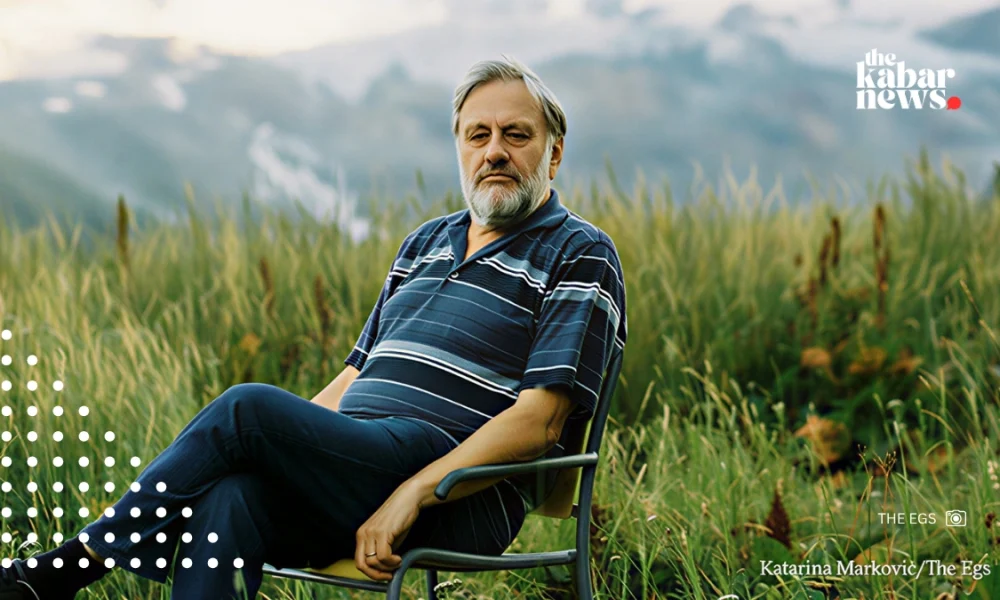
Thekabarnews.com—The world is in bad shape, but not due to war, inflation, or energy issues, as we usually discuss on TV. Today’s most distinctive philosopher, Slavoj Žižek, says the issue we face is even more profound, a crisis in humanity’s capacity to think as humans.
Žižek’s current interview suggests, essentially, a thesis that seems like a collective insult: that we are becoming more and more foolish. In the midst of the euphoria surrounding artificial intelligence, the digital economy, and the language of “freedom of choice,” the issue is not a lack of education but rather an excess of technology that thinks for us.
Žižek starts with statistics that often face dismissal. The average IQ in the world has been declining since roughly 2010, following decades of rising. This effect is called the reverse Flynn effect. This phenomenon, for Žižek, is not a coincidence of statistics but a symptom of culture.
The problem is not that people have suddenly lost their minds. The problem is that we have ceased using them actively. We delegate the thinking, writing, evaluation, and conclusion to algorithms.
In his typical ugly but ingenious way Žižek offers an extreme analogy: imagine a couple courting.
The man carried a plastic vagina, the woman an electric dildo. The two devices were joined up and left to ‘interact’ while they sat drinking tea and chatted normally.
People saw a machine having sex.
That is our intellectual universe today,’ says Žižek.
Text is written by ChatGPT. ChatGPT checks the text. ChatGPT summarizes the review results.
We already know that students use AI to do their assignments, teachers use AI to grade papers, and readers use AI to summarize journal articles. Everything in our lives has been turned into machines or algorithms.
Even we have sexual connections with machines, such as watching porn on electronic gadgets rather than with fellow humans.
We are no longer the objects of cognition but instead observers of a process that resembles us. This environment fosters a new form of ignorance—not stupidity from lacking knowledge, but ignorance arising from having no need to know.
Žižek then proceeds to deconstruct the most effective myth of contemporary capitalism: the freedom of work. The digital economy doesn’t sell base exploitation anymore. It offers the sensation of being your own boss.
Online motorcycle taxi drivers, couriers, freelancers, and content creators all consider themselves to be “partners” and not employees. People consider them tiny entrepreneurs, equipped with “means of production” such as motorcycles, laptops, and cell phones.
But this arrangement, says Žižek, is the most sophisticated type of exploitation. When you are a small capitalist and know it, you begin to see no oppressor in the corporation. Instead, you consider your coworkers competitors. Class solidarity is killed before it is born.
You can choose your working hours, but economic pressure forces you to work 14–16 hours a day. You are “free” to quit the system, but you have no savings to actually escape. This type of freedom is freedom that has become a jail without guards.
Slavoj Žižek aligns with feminist principles and supports the broader fight for equality. He condemns the kind of woke culture that has lost its material orientation.
Slavoj Žižek argues that public conversations today often focus too much on symbols, words, gestures, and representation. We occupy ourselves with discussions about pronouns, the ethics of humor, or conduct at elite parties, while the structural evils of everyday life remain unchanged.
Take #MeToo, for instance. It often involves the realm of celebrities, actors, directors, and producers. It is working-class women—cleaners, industrial workers, secretaries, and their domestic staff, who do not have the economic choice to oppose or quit—who suffer the most terrible violence and persecution.
Žižek argues that real ideology lies not in our social media posts, but in domestic responsibilities and financial constraints that trap individuals, particularly in abusive relationships. Criticism that does not engage with these practical actions is pure empty morality.
Here Žižek confronts the virtually unassailable modern dogma: the pursuit of happiness. For Slavoj Žižek, no ideology damages humanity more than the belief that life should aim at “happiness.”
Humans, Žižek writes, are “beings who systematically destroy their own happiness.” We are not built to be satisfied. Thus, when happiness becomes an end in itself, the result is dissatisfaction and worry and a persistent feeling of failure.
People should treat happiness as a byproduct of deep engagement in meaningful pursuits. Intellectual labor or political battle or love or a purpose in life. Žižek says he only feels close to happiness when he finishes a book, not when he actively tries to be happy.
In a society that teaches us we should be happy, misery is a moral failing. And that is where the humans really go to pieces.
If this all seems grim, Slavoj Žižek still has more to say. He does not see technology like Neuralink, produced by Elon Musk, as neutral advances but as ontological dangers.
When we connect the brain directly to a machine, the question shifts from data privacy to who controls the mind itself. If digital signals may interfere with neurological impulses, then the freedom of thought, the basis of modern ethics, could be an anachronism.
At this juncture, the machine supports humans but also extends and colonizes them. We are entering the post-human period, beings who are still physiologically alive but have lost symbolic autonomy.
For Žižek, philosophy is not there to offer quick fixes or a roadmap to a happy life. Philosophy is not a discipline but a disruption, a break in the way we pose problems.
Written by Harian Filsafat





No Comment! Be the first one.