



Rare solar alignment above Kaaba to occur during Eid al-Adha after 139 years
MAKKAH, Thekabarnews.com—Muslims around the world prepare to witness a rare astronomical phenomenon on May 27. On that day, the sun will be directly over the Kaaba at 12:18 PM Makkah time. During the...

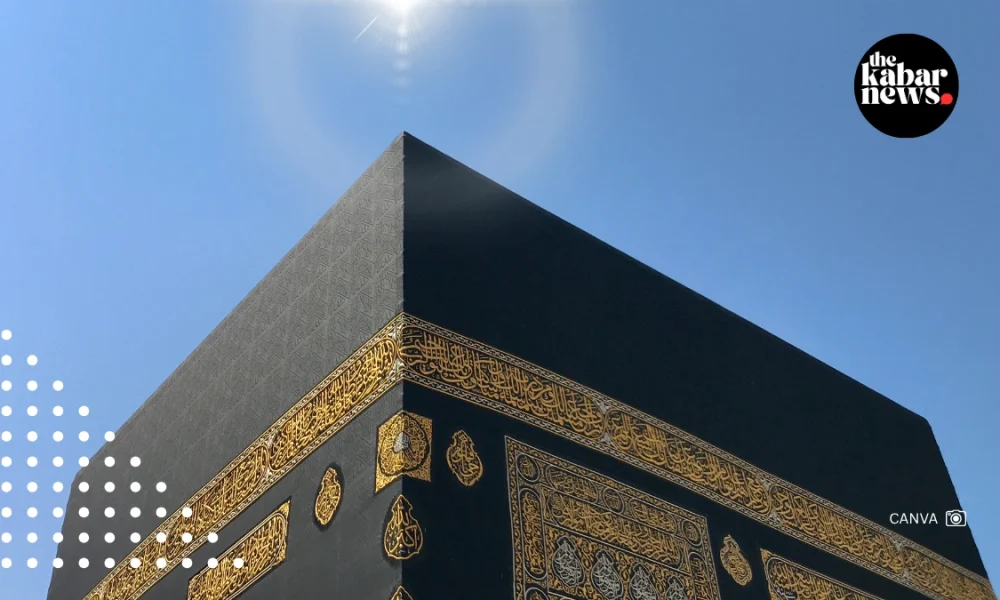
MAKKAH, Thekabarnews.com—Muslims around the world prepare to witness a rare astronomical phenomenon on May 27. On that day, the sun will be directly over the Kaaba at 12:18 PM Makkah time.
During the phenomenon, the sun will be overhead and the Kaaba will not cast a shadow.
Astronomers and Islamic scholars say the event provides a scientifically precise means for Muslims around the world to know the exact direction of the Qibla. This direction is determined by the direction Muslims face when they pray.
Outside of Saudi Arabia, the Qibla is by simply facing the direction of the sun at the moment of alignment. What makes this year’s event especially notable is its timing.
Among astronomers and Islamic observers, there are reports of the alignment occurring for the first time in around 139 years. This occurs during the period of Eid al-Adha.
The phenomenon has thus caught the attention of Muslim communities and social media sites around the world.
The position of the sun relative to the Kaaba is significant because Makkah is located between the Tropic of Cancer and the equator. Additionally, there is a reason why Makkah is situated between the Tropic of Cancer and the equator.
Twice a year the sun will be overhead, and vertical objects in the city will temporarily lose their visible shadows.
The event is part of the natural movement of the Earth around the sun. In addition, it is part of the seasonal shift of solar declination.
The alignment itself is an astronomical event. Historically, Muslims have used it as a practical way to confirm the direction of Qibla with outstanding accuracy.
Mosque observatories and astronomy institutions often call for Muslims to see the phenomenon as both a scientific and spiritual moment.
For many believers, the alignment is a symbol of the close ties between faith and astronomy. It also shows the long historical engagement of Islamic civilization with science.
Historically, Muslim scholars played an important role in the development of astronomical calculations for determining prayer times and the direction of the Qibla. Furthermore, they also contributed to lunar calendars.
The almost unique timing with Eid al-Adha adds greater significance. This is because millions of Muslims worldwide will already be turning their attention to Makkah during the annual pilgrimage and holiday season.
The holy city turns into the spiritual center of the Muslim world during the Hajj season. At that time, more than a million international pilgrims arrive in Makkah.
Astronomy lovers, religious scholars, and worshippers in several countries are expected to observe and record the event.
Astronomers warn that people should not look directly at the sun without proper eye protection. Direct sunlight can harm their vision.
Instead, they can safely establish the Qibla by the position of the sunlight and the shadows around them.
The alignment also highlights the way astronomical events continue to connect scientific observation with religious practice. This happens in many parts of the world.
To Muslims, the moment is more than a rare solar event. It’s a reminder of the lasting spiritual importance of the Kaaba—the sacred focal point to which millions pray each day around the world.






No Comment! Be the first one.