



Indonesian govt maps roles across priority programs
JAKARTA, thekabarnews.com—Indonesia has assessed the institutional capacity of 507 government bodies as part of a broader effort to align the state bureaucracy with President Prabowo Subianto’s...

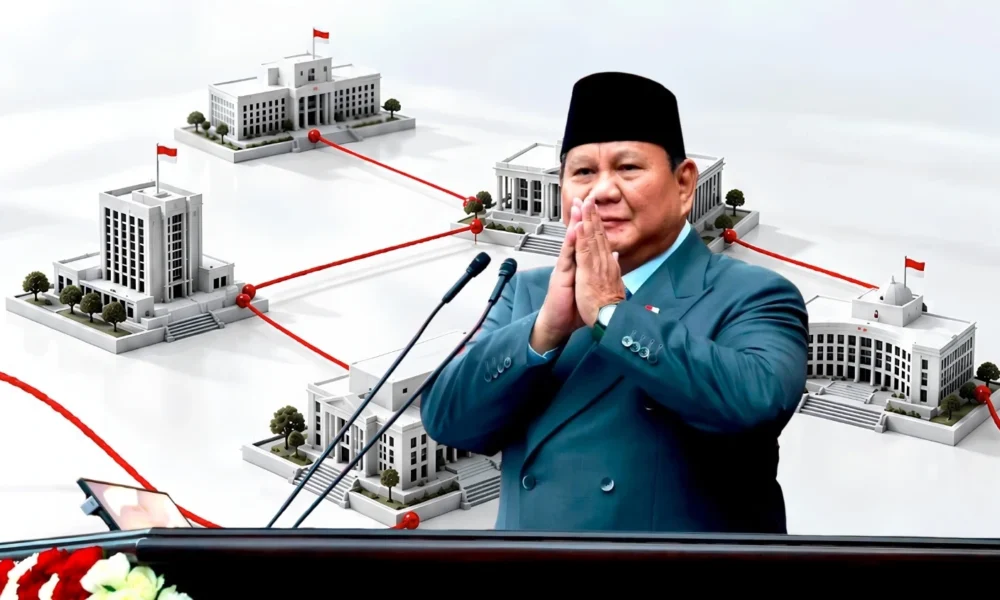
JAKARTA, thekabarnews.com—Indonesia has assessed the institutional capacity of 507 government bodies as part of a broader effort to align the state bureaucracy with President Prabowo Subianto’s development priorities, the Administrative and Bureaucratic Reform Ministry (PANRB) reported on Thursday, Oct. 22.
The completed reviews cover about 79 percent of the 640 institutions included in the program. The PANRB Ministry said the assessments would identify weaknesses in government structures, work processes and governance practices, including organizational culture.
The initiative follows Prabowo’s instruction that bureaucratic reform must produce tangible benefits for the public.
“The state must make things easier for the people, not more difficult,” Prabowo said in his state address on Aug. 14, according to the statement published by the State Secretariat.
Read also: Public feedback goes digital across Pontianak in 2026
During the transition to Prabowo’s Red and White Cabinet, the PANRB Ministry and State Secretariat coordinated the preparation of 69 presidential regulations on government institutions. This was accomplished in fewer than 100 working days.
The regulations provided an organizational and legal foundation for 48 ministries and 12 new agencies. The PANRB Ministry subsequently reported to the House of Representatives (DPR) that presidential regulations governing those institutions had been adopted. This allowed them to define their structures and responsibilities.
The government has also mapped seven cross-agency workflows covering poverty alleviation, investment and trade, energy self-sufficiency, food security, healthcare access, national nutrition and investment in special economic zones.
These workflow maps identify which institution leads each stage of a priority program and how other agencies contribute. The PANRB Ministry says the approach can reduce overlapping responsibilities. However, its effect will ultimately depend on implementation and measurable service outcomes.
Read also: BNPB maps 44 burned areas in South Sumatra
An earlier PANRB Ministry explanation described thematic workflows as integrated maps for coordinating ministries and agencies. The government has applied the model to programs such as free health checks, food security and the Free Nutritious Meals program.
The agency’s reviews are based on PANRB Ministerial Regulation No. 4/2026, which replaced the previous institutional evaluation framework. The regulation took effect after its promulgation on May 5, according to the ministry’s official legal database.
The new system assesses whether an institution has appropriate functions, size and processes. It also examines governance, including its use of information technology and working culture.
“The assessment is no longer focused only on structural and process dimensions,” PANRB Ministry Deputy Nanik Murwati said when introducing the regulation in May. She said the framework offered a more comprehensive picture of an institution’s actual capacity.
The government is also expanding flexible working arrangements for civil servants (ASNs). Agencies may adjust working hours or locations according to their responsibilities. However, they must monitor employee performance and maintain public services. The policy operates under PANRB Ministerial Regulation No. 4/2025 and subsequent implementation guidance.
However, issuing regulations and completing institutional assessments do not by themselves prove that public services have improved. The reform’s effectiveness will depend on whether agencies act on the findings. It will also depend on whether they eliminate unnecessary procedures and publish service-performance results that citizens can evaluate.


No Comment! Be the first one.