



Mount Ciremai fire persists as crews target hotspots
KUNINGAN, thekabarnews.com—Firefighters continued battling a forest and land fire (karhutla) in Mount Ciremai National Park (TNGC) on Saturday, Oct. 24, as steep terrain, strong winds and distant...

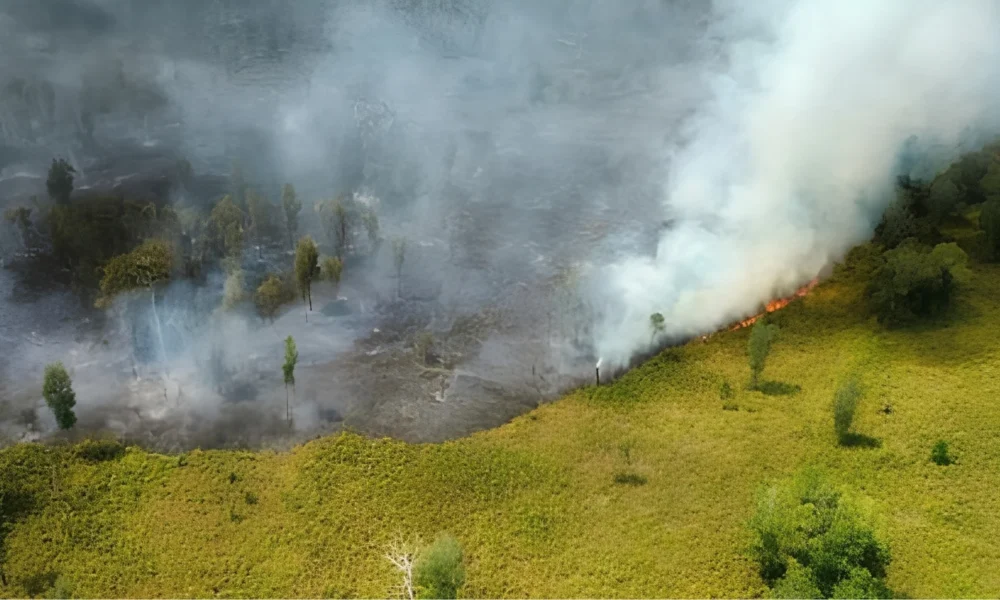
KUNINGAN, thekabarnews.com—Firefighters continued battling a forest and land fire (karhutla) in Mount Ciremai National Park (TNGC) on Saturday, Oct. 24, as steep terrain, strong winds and distant water sources complicated efforts to extinguish the remaining hotspots.
The fire began at about 8:44 p.m. on Wednesday near the boundary between the park’s traditional-use and wilderness zones. It later spread through several blocks in Kuningan and approached Majalengka, West Java, prompting authorities to deploy ground crews and a helicopter for water bombing.
Kuningan disaster mitigation agency head Indra Bayu Permana said thermal-drone monitoring detected 13 fire points on Thursday evening.
Firefighting operations reduced the number to 10 by 4 p.m. on Friday. However, authorities had not declared the fire fully extinguished by Saturday morning. Teams divided the affected area into three operational sectors: Bukit Seribu Bintang, Karang Dinding and Bintangot.
Read also: BNPB sends helicopter to Kubu Raya peat fires
Reports on the affected area varied because officials were still prioritizing firefighting over detailed mapping. TNGC Office head Toni Anwar initially estimated that the blaze had affected between 50 and 60 hectares.
West Java Governor Dedi Mulyadi later cited an aerial assessment of about 30 hectares. Meanwhile, the Kuningan disaster agency said on Saturday that it could not yet provide a definitive figure.
“Our current priority is extinguishing the fire. The main challenges are the rugged terrain, limited access to the hotspots and scarce water supplies,” Toni said.
Most of the affected landscape consisted of shrubs, savanna vegetation and dry ground litter, with some pine stands.
Toni said authorities had received no reports of significant harm to wildlife. He also said the burned locations were not considered primary habitat for priority species. Nevertheless, monitoring remained necessary because prolonged fire could still degrade vegetation and disrupt wildlife movement.
Read also: Kubu Raya police boost wildfire readiness with volunteers
“Thankfully, we have received extensive support from various parties. We ask all members of the community to support the firefighting operation so it can proceed smoothly and the blaze can be brought under control quickly,” Toni said.
More than 900 personnel from government agencies, the military (TNI), police, firefighting units and community groups joined Friday’s operation, according to Antara.
West Java officials subsequently dispatched 742 personnel on Saturday. They did this after dividing them into groups and recording each member for operational safety.
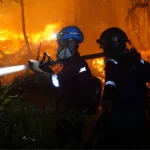
Ground crews used hand tools to suppress flames and build firebreaks. A helicopter conducted water bombing over locations that teams could not reach safely.
By Saturday afternoon, officials said firefighters had stopped the blaze from spreading farther into Majalengka. Although the fire was stopped, smoke and several fire points remained visible.
Read also: Indonesian govt confirms Eid date: 1 Shawwal 1447 H falls on Saturday, March 21
Governor Dedi offered residents Rp250,000 per person per day to support the operation. He asked village heads and district officials near Ciremai to mobilize residents while ensuring coordination with professional responders.
“We are providing Rp250,000 per person for each day of firefighting work. We will also offer a bonus if we extinguish the fire quickly,” Dedi said.
“If 1,000 residents come up here to help, we could put out the fire within an hour,” he added.
The West Java provincial administration confirmed the daily payment. In addition, it also stressed the need to construct firebreaks and protect the mountain’s water-catchment function.
Authorities had not announced the cause of the fire as of Saturday. Officials said they would investigate any indication of deliberate burning after emergency operations ended.
Until then, containing the remaining hotspots and preventing underground embers or dry vegetation from reigniting remained the immediate priorities.



No Comment! Be the first one.