



Indonesia enlists Posyandu cadres to monitor free meals
DENPASAR, thekabarnews.com—The National Nutrition Agency (BGN) has enlisted community health-post cadres nationwide to strengthen the monitoring and delivery of the Free Meals (MGB) program. BGN head...

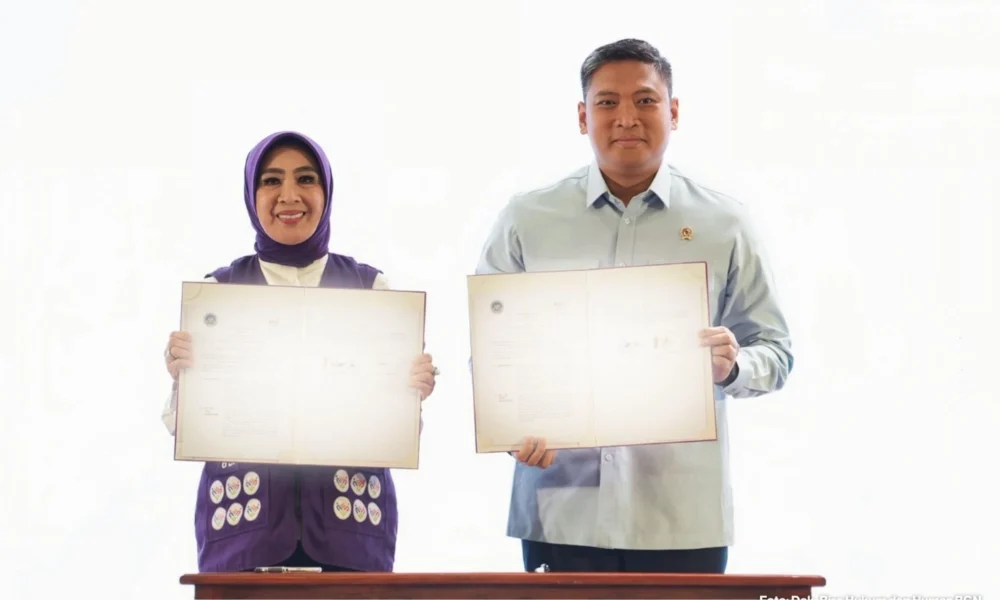
DENPASAR, thekabarnews.com—The National Nutrition Agency (BGN) has enlisted community health-post cadres nationwide to strengthen the monitoring and delivery of the Free Meals (MGB) program.
BGN head Sudaryono and Central Posyandu Supervisory Team chairwoman Tri Tito Karnavian formalized the partnership by signing a memorandum of understanding in Denpasar on Thursday, Oct. 22.
The agreement expands the role of Posyandu cadres in recipient verification, nutrition education and field-level monitoring.
“Under the additional MoU that I have just signed with the chairwoman of the Central Posyandu Supervisory Team, their role covers not only distribution but also nutrition education, data collection and ensuring the program reaches the right recipients,” Sudaryono said, as quoted by Antara.
Read also: Kubu Raya honors 1,946 faith workers despite budget cuts
Under the agreement, cadres may coordinate with managers of Nutrition Fulfillment Service Units (SPPG). They can observe food preparation, kitchen cleanliness and compliance with standard operating procedures.
They will also monitor meal quality and delivery times and report problems through a complaint mechanism prepared by BGN.
Tri said the cadres would help ensure meals intended for vulnerable recipients were not redirected to other family members.
“We will supervise distribution and provide education on the importance of nutritious food and help assess the quality of the meals provided,” she said.
Read also: A Look Inside Indonesia’s Free Meals Program (MBG)
The partnership gives BGN access to Posyandu’s community-level knowledge, particularly in villages where cadres already maintain direct contact with families.
BGN’s official technical guidelines identify Posyandu as a distribution point for MBG meals and nutrition education. The guidelines also require cadres to assist with delivery, consumption monitoring and daily record-keeping.
The government is prioritizing the so-called 3B group: women in pregnancy, breastfeeding mothers and children under five. BGN estimates that the group comprises about 21 million people nationwide. More than 10 million had received MBG assistance by October, leaving roughly half of the target population uncovered.
Many unserved recipients live in areas with high stunting prevalence. Others live in disadvantaged, frontier and outermost regions, commonly classified as 3T areas. BGN is working to activate additional SPPG kitchens in those locations.
Read also: Crews monitor Sanggau hillside after forest fire
Sudaryono said accurate name-and-address data remained essential because the program used public funds and must demonstrate measurable results.
Indonesia’s MBG technical framework requires SPPG operators and local cadres to verify recipients, document meal delivery and monitor nutritional progress.
The BGN distribution guidelines also designate Posyandu cadres as key community partners for women in pregnancy, nursing mothers and young children.
The agreement could add transparency as it allows the Posyandu cadres to monitor the program closer to the beneficiaries. But success will depend on good reporting, adequate training and rapid response to hygiene or distribution problems.

No Comment! Be the first one.