



Parenting lessons from Prophet Muhammad’s family life
Thekabarnews.com—Accounts of Prophet Muhammad’s ﷺ relationship with his daughter Fatimah and grandsons Hasan and Husayn offer Muslim parents examples of affection and emotional attentiveness. But...

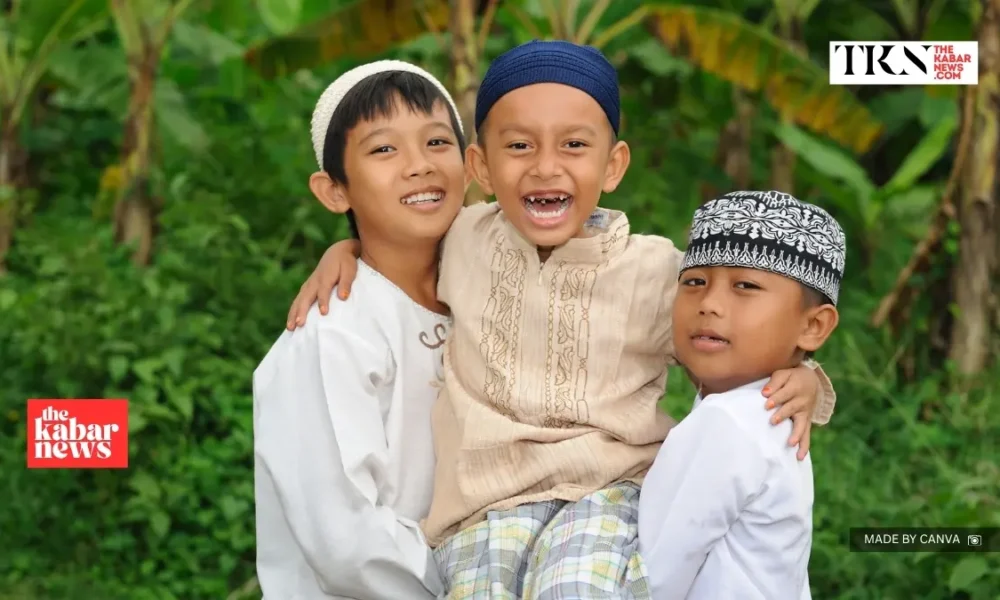
Thekabarnews.com—Accounts of Prophet Muhammad’s ﷺ relationship with his daughter Fatimah and grandsons Hasan and Husayn offer Muslim parents examples of affection and emotional attentiveness.
But some popular social media interpretations differ from the wording of the authenticated Hadiths.
One well-documented incident occurred when members of the Quraysh placed camel remains on the Prophet Muhammad ﷺ’s back while he was prostrating near the Kaaba. Fatimah came and removed them, according to Sahih al-Bukhari 240.
The narration tells of Fatimah’s courage and her concern for her father. Some of the modern posts suggest that the Prophet Muhammad ﷺ deliberately drew her into his hardship or sought solace in her company. However, it does not say so.
Those ideas represent contemporary parenting interpretations rather than the hadith’s precise wording.
Another report provides clearer evidence of mutual affection. Aisha narrated that when Fatimah entered, the Prophet would stand, welcome her, and kiss her before offering her his seat.
Fatimah showed him similar respect when he visited her. The account appears in Jami’ at-Tirmidhi 3872.
For modern parents, the interaction may illustrate how adults can make children feel valued through consistent attention. Respect did not flow in only one direction: father and daughter openly welcomed one another.
The Prophet Muhammad ﷺ also stated, “Fatimah is a part of me, and whoever makes her angry makes me angry,” according to Sahih al-Bukhari 3767.
The statement establishes Fatimah’s importance to him. However, readers should understand it within the original hadith context rather than treat it as a general parenting slogan.
Later biographical literature frequently refers to Fatimah as Umm Abiha, meaning “mother of her father.”
Scholars record the title, but no authenticated report conclusively establishes who gave it to her. Moreover, no report proves that it arose specifically because she cared for the Prophet Muhammad ﷺ like a mother.
It should therefore be presented as a traditional honorific, not a verified prophetic declaration.
The Prophet Muhammad ﷺ also expressed affection for his grandchildren. Referring to Hasan and Husayn, the prophet said, “Indeed, Al-Hasan and Al-Husain—they are my two sweet basils in the world,” according to the sahih narration in Jami’ at-Tirmidhi 3770.
These reports support a broader lesson: family authority does not require emotional distance. Parents can show affection openly, welcome their children warmly and maintain close relationships as they mature.
Modern child-development guidance reaches a compatible conclusion without equating psychological research with religious evidence.
UNICEF says sensitive and responsive caregiver interactions are central to children’s social, emotional and cognitive development.
The Prophetic accounts therefore offer Muslim families a model rooted in visible affection and respect. Writers strengthen these lessons by clearly separating authenticated narrations from later traditions and modern interpretations.



No Comment! Be the first one.