



West Kalimantan protesters defend traditional farming
PONTIANAK, thekabarnews.com—A coalition of Indigenous groups, students and other civil-society organizations rallied outside the West Kalimantan Legislative Council (DPRD) on Thursday, August 27....

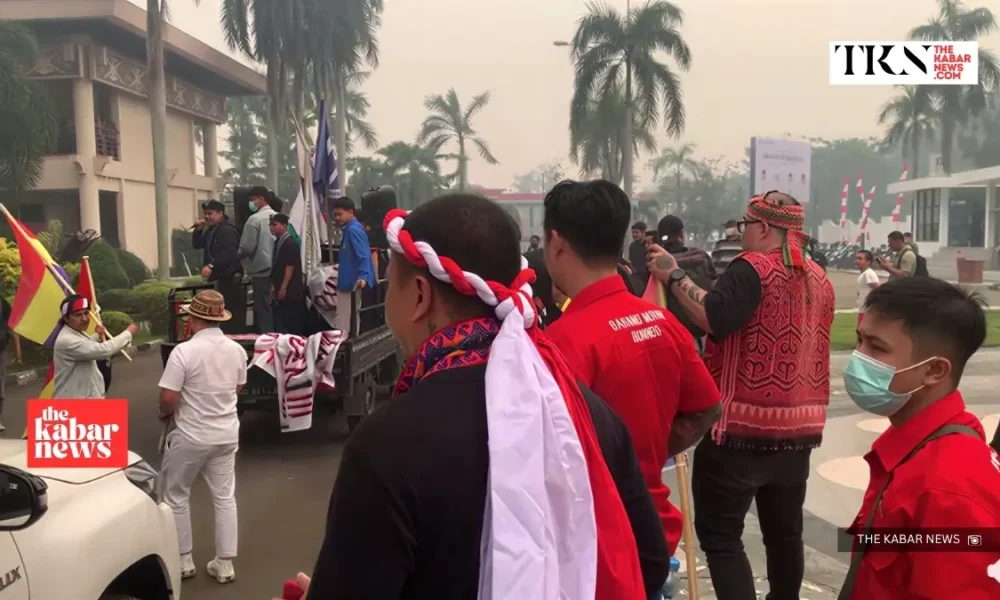
PONTIANAK, thekabarnews.com—A coalition of Indigenous groups, students and other civil-society organizations rallied outside the West Kalimantan Legislative Council (DPRD) on Thursday, August 27. They aimed to oppose the proposed repeal of a regulation governing traditional land clearing.
The demonstrators, organized under the Aliansi Masyarakat Kalimantan Barat Menggugat, urged provincial authorities to retain Regional Regulation No. 1/2022. This regulation concerns land clearing for shifting cultivation based on local wisdom.
Local reports described the crowd as numbering in the hundreds. However, authorities had not released an independently verified attendance figure when this article was prepared.
West Kalimantan Governor Ria Norsan, DPRD Speaker Aloysius and several provincial legislators met the protesters.
Action coordinator Endro Ronianus said the coalition opposed any repeal carried out without a lawful procedure. They required comprehensive assessment or public consultation.
“We ask the government and the West Kalimantan DPRD not only to carry out enforcement but also to ensure that every policy protects people’s rights, living space and interests,” Endro said.
The coalition submitted seven demands. Beyond protecting traditional farmers, it called for evidence-based investigations into forest and land fires.
The protesters also sought greater transparency in regional spending and faster recognition of customary communities.
The dispute emerged after President Prabowo Subianto instructed the provincial government to repeal the regulation. This took place during his inspection of forest and land fire operations in Kubu Raya on August 22.
Norsan later said the government needed to act urgently because fires and haze had disrupted communities across the province.
The regulation permits limited burning for traditional cultivation under strict conditions. Farmers may clear no more than two hectares per household to grow local plant varieties. They must prevent the fire from spreading.
The national legislation database still listed the regulation as effective when this report was prepared. Therefore, the repeal remained a proposal rather than a completed legal action.
The Forum Pemuda Dayak (Fopad) in Melawi separately warned officials against assuming that customary farmers caused the wider wildfire crisis.
“Do not let the current forest and land fire problem turn customary farmers into scapegoats,” Fopad Melawi Chair Saleh Tapa said.
“Dayak communities protect nature, especially forests, because forests are one of our sources of life,” he added.
Saleh said traditional cultivation follows customary rules and differs from uncontrolled burning. He also supported legal action against anyone who deliberately starts a fire or allows it to spread.
The protesters asked authorities to address wildfire risks. They demanded investigations based on fire origins, land control and verifiable evidence.
They said enforcement should also cover companies and concession holders when investigators find evidence of negligence or unlawful burning.
The provincial administration and DPRD must now determine whether to repeal, revise or retain the regulation. Any decision will need to balance stronger wildfire prevention with legal protection for communities that depend on traditional cultivation.




No Comment! Be the first one.