



Yale University’s secret collection reveals centuries of alchemy, magic, and occult history
Thekabarnews.com—Behind the marble walls of one of America’s most prestigious universities lurks a remarkable collection. It has fascinated historians, scholars, and inquisitive readers for decades....

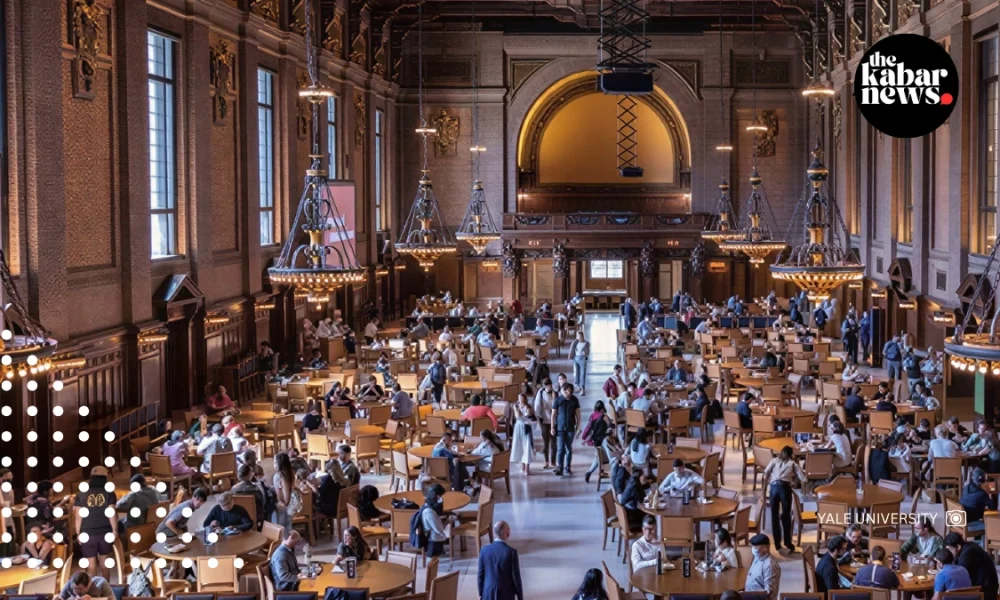
Thekabarnews.com—Behind the marble walls of one of America’s most prestigious universities lurks a remarkable collection. It has fascinated historians, scholars, and inquisitive readers for decades.
Yale University researchers have preserved over 300 medieval and Renaissance manuscripts on alchemy, magic, mysticism, and occult traditions. These subjects interested kings, scientists, philosophers, and religious authorities alike.
The Mellon Collection of Alchemy holds some of the rarest writings on early scientific experimentation and esoteric thought in the world.
These include accounts of efforts to transform lead into gold and directions for conversing with spirits. They also contain formulas for the celebrated Philosopher’s Stone and actual alchemical writings of Isaac Newton.
Historians attribute Newton credit for changing mathematics and physics. But he also spent years studying theology and alchemy. Some have claimed that he devoted as much time to studying alchemy as he did to science.
Mary Mellon began it after meeting the influential Swiss psychologist Carl Jung in the 1940s. At that time, she became interested in alchemy.
Jung’s study of the symbolic and psychological significance of alchemy gave rise to a renewed academic interest in the subject.
This obsession prompted Mary Mellon to begin collecting rare manuscripts from Europe and North America. She quietly amassed one of the most important private collections of alchemical literature in the world.
At the age of 41, she passed away. Her husband, philanthropist Paul Mellon, donated the collection to Yale University in her memory. He did so to honor her love of scholarship and preservation of history.
Today the manuscripts are housed in the Beinecke Rare Book & Manuscript Library—a six-story marble-clad building. This building contains some of the university’s most valuable literary and historical treasures.
It has now become a popular attraction for its unusual design. For a long time, people believed that the building was intended to protect rare manuscripts from the outside elements. Additionally, people believed it was to defend against possible dangers such as fire.
The importance of the collection today is that it exists. Yale has made much of the archive available online. Furthermore, the university has made many of the manuscripts available to researchers, students, and the public free of charge.
The digital preservation effort has made materials that were once available only to elite collectors and scholars available worldwide.
It also reveals the complicated relationship between science, philosophy, religion, and mysticism throughout the ages.
Much of the alchemy of the past eventually helped create modern chemistry and scientific experimentation.
The Mellon Alchemy Collection is more than just a few odd texts for the historian.
It offers a fascinating insight into centuries of human curiosity. The collection shows how ancient civilizations sought to understand nature, matter, spirituality, and the mysteries of the universe long before the advent of modern science.
Once hidden away in archives and coveted by powerful rulers, this fascinating chapter of intellectual history is now the domain of anyone with an internet connection. It is to be preserved for future generations.






No Comment! Be the first one.