



Muzdalifah reflects the deepest meaning of equality and unity during Hajj
MAKKAH, Thekabarnews.com—The night spent in Muzdalifah is one of the many holy stages of Hajj. It continues to be one of the most intense spiritual occasions for millions of Muslim pilgrims around...

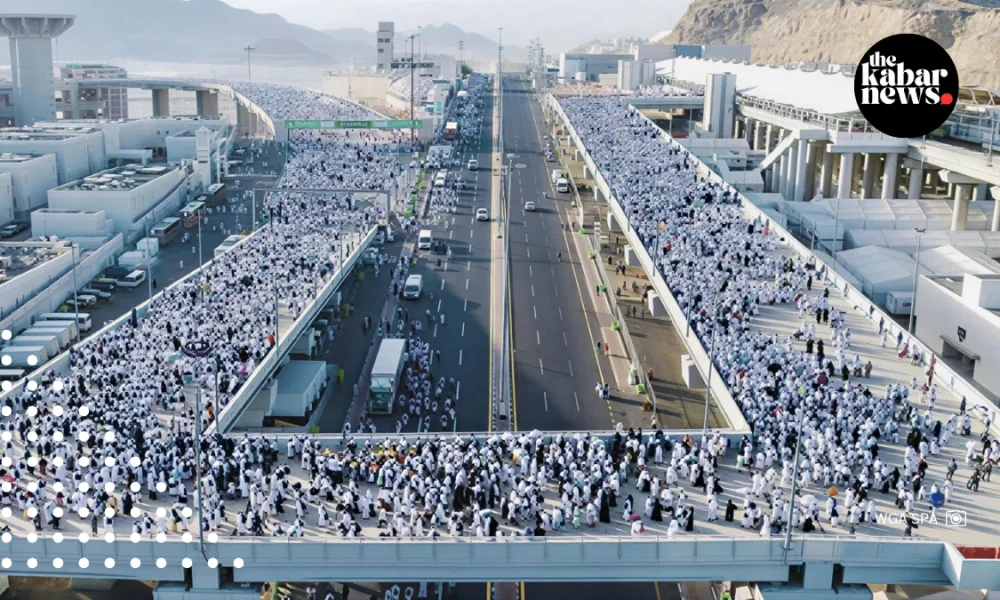
MAKKAH, Thekabarnews.com—The night spent in Muzdalifah is one of the many holy stages of Hajj. It continues to be one of the most intense spiritual occasions for millions of Muslim pilgrims around the world.
Every year, after the Wuquf ceremony in Arafah, during the Hajj trip, travelers from different countries, cultures, social classes, and origins come together. They meet in the wide plains of Muzdalifah.
Unlike modern towns, Muzdalifah is a remarkable symbol of simplicity and equality. There is no luxury or class distinction in Muzdalifah.
All pilgrims, rich or poor, from any country, any profession, and any social class, sleep beneath the same open sky. They rest on the same ground and wear the same modest white Ihram dress.
For many Muslims, the atmosphere in Muzdalifah embodies one of Islam’s most potent doctrines. That belief is that all human beings are equal in the eyes of Allah.
This is frequently an intensely emotional period for pilgrims. Worldly differences do not count for anything when everyone is gathered.
Rich and poor, leaders and common folk, business people and workers all know the experience of humility and devotion.
Many Islamic scholars regard Muzdalifah as a reminder that the dignity of man does not rest on material goods, power, or prestige. Instead, it rests on faith and devotion.
The white Ihram clothes worn on Hajj reinforce this message by stripping away the physical differences between people.
The sight in Muzdalifah is an example of amazing togetherness in the entire Muslim community. Millions of Asians, Africans, Europeans, Middle Easterners, and Americans meet together in peace with the same spiritual goal.
On the way, many pilgrims also meditate on mortality, simplicity, and the transience of worldly life.
Without luxury or comfort, sleeping outdoors is a reminder to believers of their vulnerability as human beings. Likewise, it is a reminder of their dependence on Allah ta’alaa.
After the emotionally charged meeting at Arafah—the climax of the Hajj ceremonies—the spiritual mood at Muzdalifah becomes even more important.
After sunset the pilgrims leave Arafah for Muzdalifah. There, they pray and collect pebbles for the symbolic stoning of the devil in Mina. Then they spend the night in prayer and reflection.
The gathering also highlights the huge logistical effort that Saudi Arabia undertakes during the Hajj season.
The authorities coordinate transport, security, health, sanitation, and crowd management. They provide for millions of pilgrims going between the locations at the same time.
Many pilgrims describe Muzdalifah as one of the quietest and most spiritually intimate moments of the entire trip. This is true despite the grandeur of the ceremony.
The image of Muzdalifah is a powerful symbol of unity, brotherhood, and common humanity. This sentiment is especially true in a world that is becoming more fragmented.
For Muslims, the sacred night is far more than just a pause in the Hajj trek around the world. In fact, it is a perennial reminder that all humans finally go back into the same simplicity, humility, and equality before Allah ta’alaa.





No Comment! Be the first one.