



Prabowo launches Indonesia’s 100 GWp solar program
BALI, thekabarnews.com—President Prabowo Subianto has launched Indonesia’s national 100-gigawatt-peak solar power program in Gilimanuk, Jembrana regency, Bali. The government seeks to reduce...

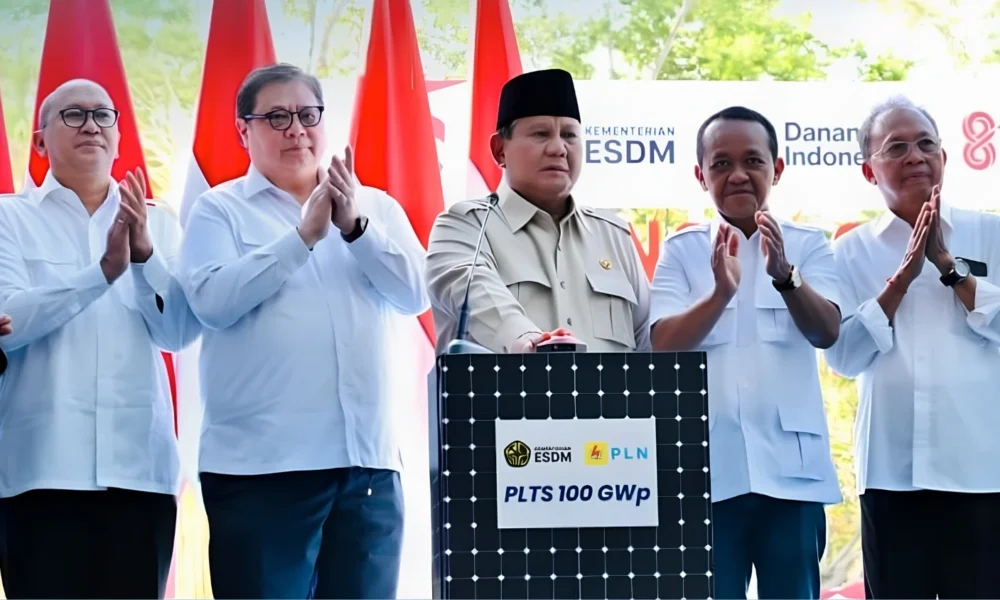
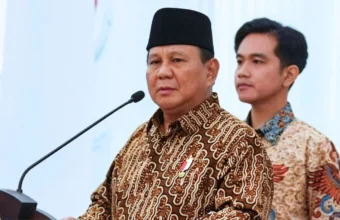
BALI, thekabarnews.com—President Prabowo Subianto has launched Indonesia’s national 100-gigawatt-peak solar power program in Gilimanuk, Jembrana regency, Bali. The government seeks to reduce dependence on imported fuel and expand access to cleaner electricity.
Prabowo inaugurated the program and marked the start of construction on Aug. 25, 2026. The first phase covers 14 solar power plants across West Java, Central Java, East Java, Bali, the Bangka Belitung Islands and the Riau Islands. Together, the initial projects have a planned capacity of approximately 5.3 GWp, according to the Cabinet Secretariat.
The ceremony in Gilimanuk launched the nationwide program rather than a single 100 GWp facility in Jembrana. The Bali project itself will have a capacity of 300 megawatt-peak.
Read also: Prabowo launches Indonesia’s 100 GWp solar push
Other projects in the opening phase include a 134 MWp floating solar plant at Gajah Mungkur Reservoir in Central Java. Additionally, it includes a 0.92 MWp facility in Sembur village and a 0.078 MWp plant on Rengit Island.
“We will build 100 gigawatts, and we are serious about it. Our target is 100 gigawatts within three years,” Prabowo said during the launch.
Prabowo linked the program to Indonesia’s energy-security agenda. He argued that domestic solar generation could limit the country’s exposure to fuel imports and international price volatility.
“The point is that with 100 gigawatts, we will truly become a nation that stands on its own feet. We will not fear any developments anywhere in the world,” the president said.
Read also: Singapore turns rain into electricity in breakthrough energy study
The government plans to combine solar generation with battery energy storage systems (BESS). Batteries can store surplus electricity produced during daylight hours and release it when solar output falls. This includes at night or during cloudy weather.
Authorities are also considering rooftop installations and floating solar facilities to reduce pressure on productive land. However, reaching the national target will require substantial investment in transmission networks, storage capacity and project delivery.
The scale exceeds Indonesia’s existing medium-term electricity plan. The 2025–2034 power procurement plan (RUPTL) schedules 17.1 GW of new solar capacity through 2034. This is part of 42.1 GW of planned renewable generation.
The new 100 GWp goal is nearly six times that solar allocation. It illustrates how much faster development would have to proceed. The Energy and Mineral Resources Ministry said renewable plants accounted for 15.63 GW of installed capacity in 2025. They also supplied 16.25 percent of the country’s electricity mix.
Read also: Rare solar alignment above Kaaba to occur during Eid al-Adha after 139 years
Smaller projects show how solar generation can support remote communities. On Rengit Island, an upgraded solar system has extended daily electricity service from about 12 hours to 24 hours. The government says the project also reduced the cost of supplying electricity by around 26 percent.
In Sembur village, solar power supports a five-ton cold-storage facility and a four-ton ice-making machine used by fishing communities. These facilities can help fishermen preserve their catch and reduce losses before products reach the market.
The Energy Ministry estimates that the full program could cut diesel consumption by up to 6 million kiloliters annually. In addition, it could avoid 140.16 million tonnes of carbon dioxide emissions each year. These remain government projections and will depend on how much capacity enters operation.
The Bali launch establishes the political target. Delivering 100 GWp within three years will depend on whether the government can align financing, land access, battery deployment and grid construction with the pace promised by Prabowo.


No Comment! Be the first one.