



Prabowo pushes Single National ID for public services
President Prabowo Subianto has ordered faster government digitalization, regulatory simplification and implementation of a single national identity card. The initiative aims to connect public...

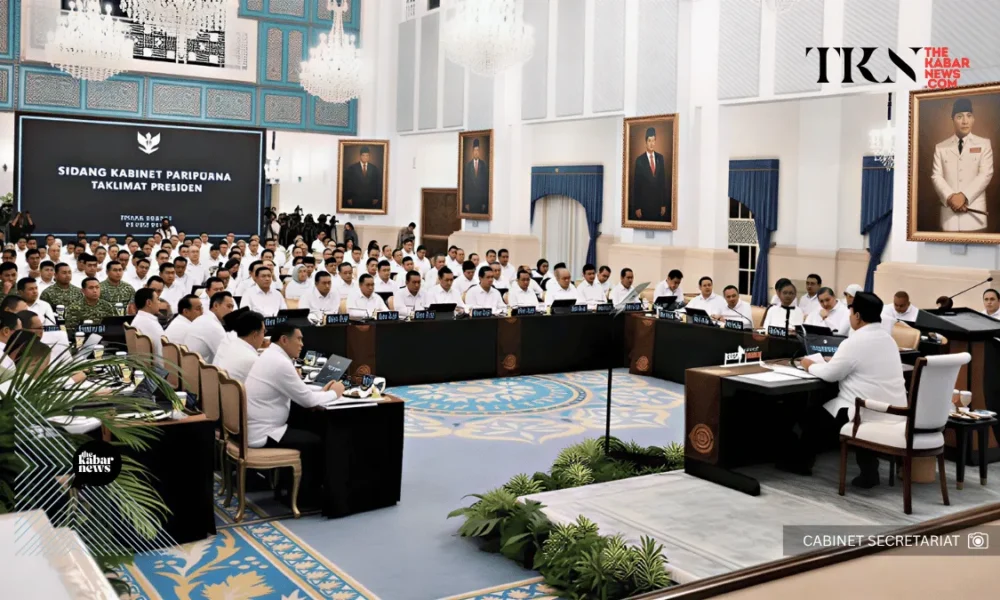
President Prabowo Subianto has ordered faster government digitalization, regulatory simplification and implementation of a single national identity card. The initiative aims to connect public services, prevent repeated data submissions and improve social aid targeting. The government has not yet announced a rollout timetable or whether citizens need a new card.
JAKARTA, thekabarnews.com—Indonesian President Prabowo Subianto has called for Indonesia to accelerate its transition toward integrated digital government. The president urges the country to do this by simplifying regulations, strengthening GovTech and implementing a single national identity card.
Prabowo delivered the directive during a plenary Cabinet meeting at the State Palace in Jakarta on Monday, July 20. He said fragmented applications and repetitive administrative requirements had made public services less efficient.
“We are confident that we are moving in the right direction, but we must remain vigilant and evaluate ourselves. We know we still operate inefficiently and enforce too many regulations and rules,” Prabowo said.
The proposed single national identity system would allow government agencies to use verified population data across multiple public services.
Citizens would no longer need to repeatedly submit the same information when applying for social assistance, health care, education support or administrative documents.
“I hope the Single National Identity Card can be properly executed and implemented. We will continue simplifying ministerial regulations and other rules,” Prabowo said.
The government has not publicly announced a detailed rollout schedule, technical design or whether the initiative will create a new physical card. Officials should describe it as an implementation plan, not a fully operational national system.
President Prabowo said digital transformation should consolidate government applications that currently operate separately.
“Government digitalization is an absolute necessity. We must not have dozens of applications that cannot communicate with each other,” the president said.
According to the State Secretariat, by July 20, 43 regencies and cities across 26 provinces had introduced digital social-assistance services. About one million families had registered against an initial target of 12.5 million.
The government has also established public-service malls in 313 regencies and cities. These locations offer as many as 150 services at one place, according to the State Secretariat.
Earlier, the National Economic Council reported that the government had connected approximately 80% of the GovTech infrastructure for digital social assistance.
Data from eight major ministries and agencies was integrated into one system on June 1. AI is being used to identify and clean inconsistent records, as reported by the State Secretariat.
The Communications and Digital Ministry says an integrated system requires a reliable “single source of truth.” It must also have secure data exchange and interoperability between agencies.
Prabowo also described Indonesia’s social-protection system as “one of the strongest in the world.” That is the president’s assessment; the government did not provide an international comparative ranking during the meeting.
The 2026 state budget allocates Rp508.2 trillion for social protection. This includes assistance for 10 million families under the Family Hope Program (PKH). It also covers food assistance for 18.3 million households, according to the Finance Ministry.
President Prabowo credited previous administrations for building the programs his government is continuing to expand. He described national development as a long-term effort across successive presidencies.





No Comment! Be the first one.