



Gerindra explains why MBG program prioritizes food over cash assistance
Thekabarnews.com—Recent public debate has reignited discussion about Indonesia’s Free Meals (MBG) program. Some citizens have proposed that the government should give out cash instead of prepared...

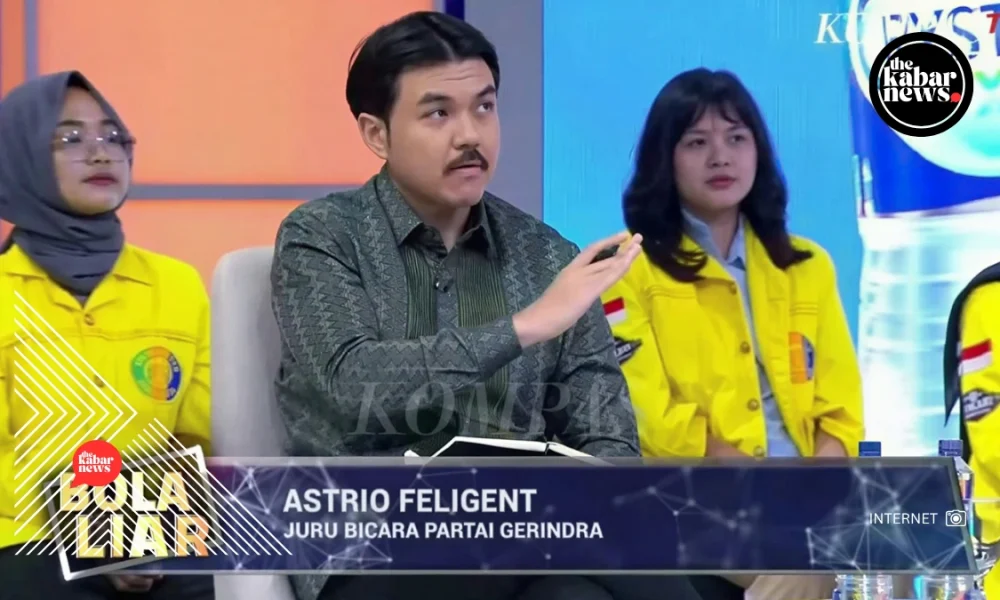
Thekabarnews.com—Recent public debate has reignited discussion about Indonesia’s Free Meals (MBG) program. Some citizens have proposed that the government should give out cash instead of prepared meals.
The program is deliberately designed to provide food. Therefore, its nutritional targets are met, Gerindra Party spokesman Astrio Feligent said in response to the debate.
The conversation drew attention after Bali resident Ketut Alit Sriyani said she would prefer cash assistance over prepared meals. She claimed that direct financial assistance would enable families to purchase food ingredients. They could then prepare meals that catered to their needs and preferences.
“Sometimes, the value or quality of third-party meals is not what the recipients expect,” she said.
The government has prioritized food distribution. This is so that the authorities will be able to better control the program’s objectives, Astrio told CNN Indonesia’s YouTube channel on Tuesday, June 9.
He acknowledged that some members of the public had asked why the government did not simply hand over cash to beneficiaries.
“It’s not about distrusting the parents,” Astrio said. “It’s a way of making sure that the help goes directly to the nutrition of children.”
“We’re not assuming that parents would necessarily spend the money irresponsibly,” Astrio added. “But cash assistance runs the risk of some recipients using it for things not related to children’s nutrition, such as online gambling or cigarettes,” Astrio said.
He emphasized that the primary purpose of the MBG program is to achieve concrete nutritional benefits, not general financial support.
The MBG program requires detailed nutritional planning when preparing each meal, Astrio said.
Dietitians calculate the calorie, protein, and other nutritional needs of children according to their age groups. As a result, each meal is in accordance with the country’s standards.
If every household cooked its meals, he said, it would be a lot harder to maintain those standards.
If the government fully decentralizes meal preparation, it is difficult to set up a reliable supervision mechanism.
“We wouldn’t be able to guarantee that every child would receive the minimum calorie and protein intake that is right for their age,” he said.
Centralized meal preparation, he said, also helps ensure the quality of the food. In addition, the nutritional value is consistent across all participating regions.
Astrio admitted that some families are unhappy with the current system. He said the government understands the concerns of beneficiaries.
But he said the choice to distribute prepared meals instead of cash is consistent with the original policy design of the program.
“The idea behind giving food instead of cash is to ensure that the nutritional standards are measurable, uniform, and fair for every child,” he said.
One of President Prabowo Subianto’s main social programs, MBG aims to improve child nutrition, support learning outcomes, and reduce malnutrition in Indonesia.
As public discussion about the program goes on, the policymakers will have to struggle to maintain a balance between flexibility for beneficiaries and the government’s goal of providing uniform nutritional assistance across the country.
The discussion also raises broader questions about the most effective form of social assistance. This is especially relevant when governments are looking for specific public health and nutrition outcomes.



No Comment! Be the first one.