



Nuramma, the AI app helping Muslim children memorize the Quran
Thekabarnews.com—One Indonesian student demonstrated that artificial intelligence can enhance religious education. Moreover, AI continues to transform the educational landscape. Nuramma is an...

Thekabarnews.com—One Indonesian student demonstrated that artificial intelligence can enhance religious education. Moreover, AI continues to transform the educational landscape.
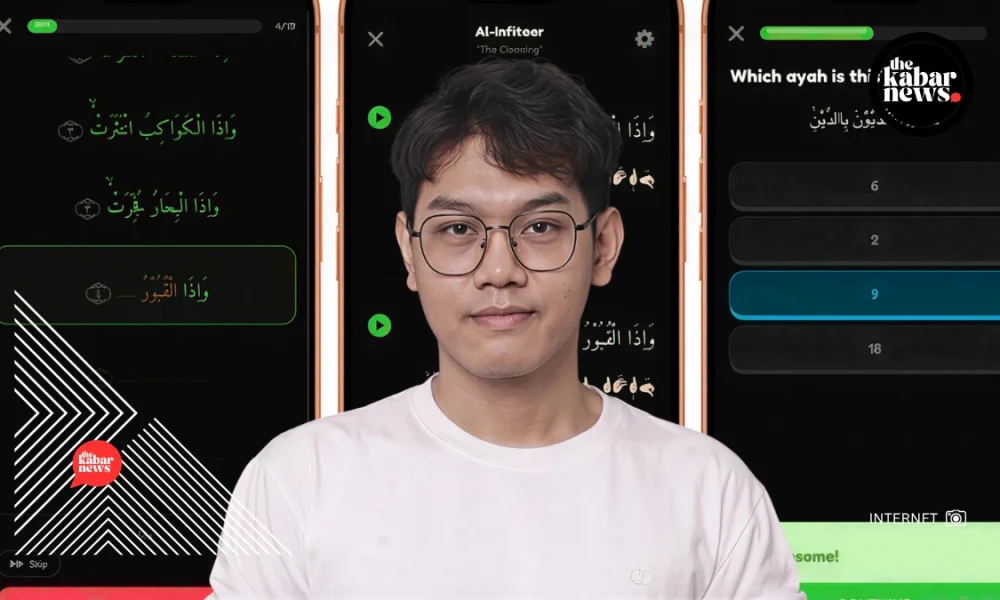
Nuramma is an AI-powered program built by Ali An Nuur, a student at the University of Mataram, West Nusa Tenggara. The program aims to help children memorize the Quran.
Apple also gave Nuramma’s creativity global recognition when it named her as one of the winners of the Swift Student Contest 2026. That is a global contest that honors exceptional apps built using the Swift programming language.
Apple said the 2026 challenge recognized 350 innovative ideas from 37 countries and regions. Apple also evaluated the entries based on technical excellence, creativity, innovation, accessibility, and social impact.
Nuramma is a solution to a problem faced by many families. Children want to memorize the Quran but are not always able to practice with parents. Sometimes, Quran teachers are not ready to listen and correct their recitation. Therefore, this program is a digital assistant for memorization.
The kids read the Quranic verses using the device’s microphone and software. Then, the program analyzes the kids’ pronunciation with voice recognition technology and compares it with the intended recitation in real time.
The technology provides rapid visual feedback so children can see what they’ve recited correctly. In addition, it shows them where they still need to study.
The software provides instant feedback, encouraging children to practice alone, without waiting for a teacher or family member. Ali wanted Nuramma to be a vehicle of education, not a substitute for religious teaching.
Islamic scholars emphasize that Quran recitation must be learned under the guidance of qualified teachers. These teachers can teach tajwid (proper pronunciation), makhraj (right pronunciation), decorum, and improved comprehension of the Quran.
Nuramma, on the other hand, provides for more room for revision and daily practice in between official learning sessions.
Digital tools could supplement traditional instruction. In particular, they can increase students’ confidence and regularity of practice while keeping the vital role of human teachers.
Nuramma is special since it has artificial intelligence on the device. The app operates locally on the user’s device and does not send children’s voice recordings to remote servers.
The approach provides privacy benefits and reduces concerns around holding sensitive voice data, especially for minors.
The program can also be run offline. As a result, it is more accessible for families living in areas with poor and unreliable internet access.
“Youngsters all around Indonesia may still keep learning even if there is no network, thanks to offline features,” developers explain.
Nuramma also gamifies the memorization of the Quran to make it more entertaining. Visual rewards, progress markers and interactive feedback keep children engaged throughout the process of learning.
The app also provides Quran Sign Language to help young people with hearing problems learn the Quran and make it more accessible. Additionally, the feature is part of a broader effort in Indonesia to encourage more inclusive religious education.
The Ministry of Religious Affairs, through the Institute for Quranic Studies (LPMQ), has issued official guidelines for Quran sign language. These include standard hand signals and etiquette for reciting them for deaf students.
Nuramma proves that AI can tackle real educational challenges, not just business productivity and enjoyment.
The tool is designed to assist teachers, not supplant them. As a result, children will have more opportunities to practice their memorization. They will also receive rapid feedback and practice on their own in a safe learning environment.
Its international recognition underscores Indonesia’s increasing clout in edtech. Furthermore, it demonstrates how locally developed concepts may meet a community’s needs and attain international recognition.
As artificial intelligence becomes increasingly integrated into our daily lives, projects like Nuramma illustrate how the technology can also create inclusive, accessible and meaningful learning experiences. These are based on local culture and religious education.





No Comment! Be the first one.