



Indonesian govt plans to convert 3 kg of LPG to CNG
Thekabarnews.com—For millions of Indonesian families, the ubiquitous 3-kilogram subsidized LPG cylinder, colloquially known as the “green cylinder,” is a fixture of everyday life. It fuels...

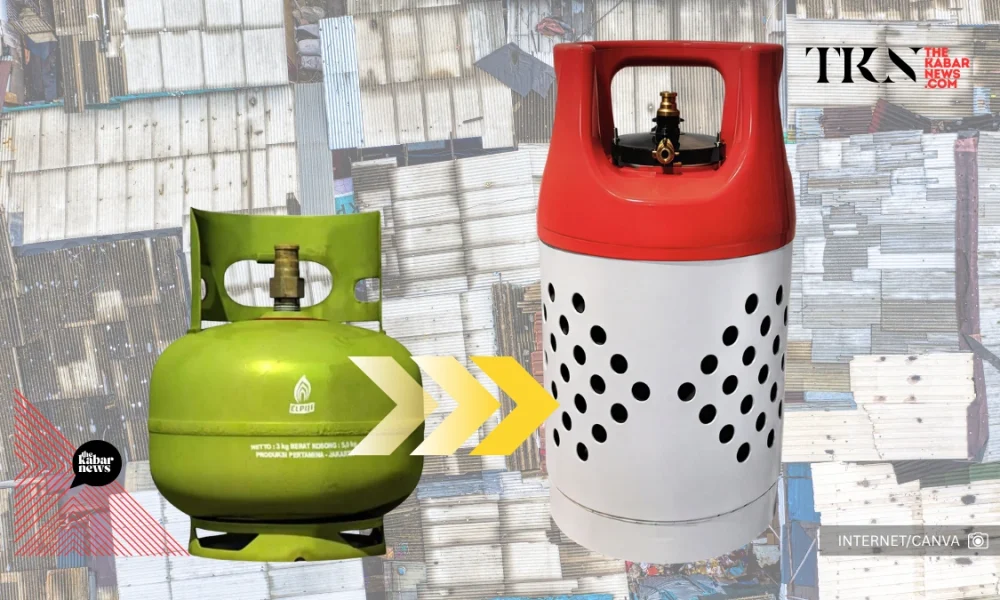
Thekabarnews.com—For millions of Indonesian families, the ubiquitous 3-kilogram subsidized LPG cylinder, colloquially known as the “green cylinder,” is a fixture of everyday life. It fuels meals and supports small businesses. Furthermore, it is a reliable energy source for homes across the country.
Now the government is planning a gradual transition. This transition could change how Indonesians use energy in their daily cooking and energy management.
Officials are working on CNG Merah Putih, a compressed natural gas (CNG) canister, as a long-term substitute for the subsidized 3-kilogram LPG canister. The rollout will be gradual in 2026. It will begin in major cities on the island of Java before spreading to other areas.
The scheme is still in its infancy but is part of a wider effort by Indonesia to boost its national energy security and cut reliance on imported fuel.
The government said the new CNG cylinder would have the same cooking capacity as the current 3-kg LPG cylinder. Therefore, households could switch to the new system without making any major changes to their daily cooking regime.
Manufacturers in different countries produce the product’s components. Manufacturers in China produce the cylinder and its protective housing. In addition, manufacturers in Germany produce the key safety component, which is an automatic pressure-reducing valve.
The cylinders are then ready for distribution in Indonesia, even if the final assembly takes place in China. But the technical specs are just one part of a much larger national challenge.
Indonesia now imports more than 80 percent of its LPG needs, and the importation is estimated to cost about US$5 billion a year. Meanwhile, the government’s subsidy program for 3-kilogram LPG cylinders has cost the state more than Rp80 trillion per year.
Reducing those costs and improving long-term energy resilience have become more important goals for policymakers.
The move to CNG is part of a broader strategy to leverage more locally sourced energy. It also seeks to avoid exposure to fluctuations in global LPG prices.
But for many families, the practical questions remain. Families are concerned about the availability, affordability and safety of the new cylinders for use in homes and small businesses.
Street food vendors, home-based entrepreneurs, and neighborhood restaurants—many of them dependent on subsidized LPG on a daily basis—will be watching the implementation closely.
It will have to be put in place nationwide after several preparations, officials say. The authorities are still working out the details of the distribution, the supply chain, the supporting infrastructure, and the technical readiness of the cylinders.
The government designed these preparations to ensure a smooth transition and minimize disruption to consumers as much as possible. Public confidence will be as important to successful adoption as technology.
Households will need clear information, reliable distribution networks, and consistent safety standards to help them adopt the new system. But for millions of Indonesians, the switch is more than a change of gas cylinders.
This is an attempt to create a more sustainable energy future that is affordable, fiscally responsible for the nation, and independent of long-term energy.
If successful, CNG Merah Putih could be more than just a new household fuel. It could also be a step for Indonesia towards a more resilient energy system. This system seeks to reduce import dependence, while still being able to cater to the daily needs of families across the archipelago.



No Comment! Be the first one.