



How the Assad family rose to power and lost Syria
French colonial rule, successive military coups and Ba’ath Party consolidation shaped Syria’s contemporary power structure. Hafez al-Assad seized power in 1970, and Bashar in 2000. In December 2024,...

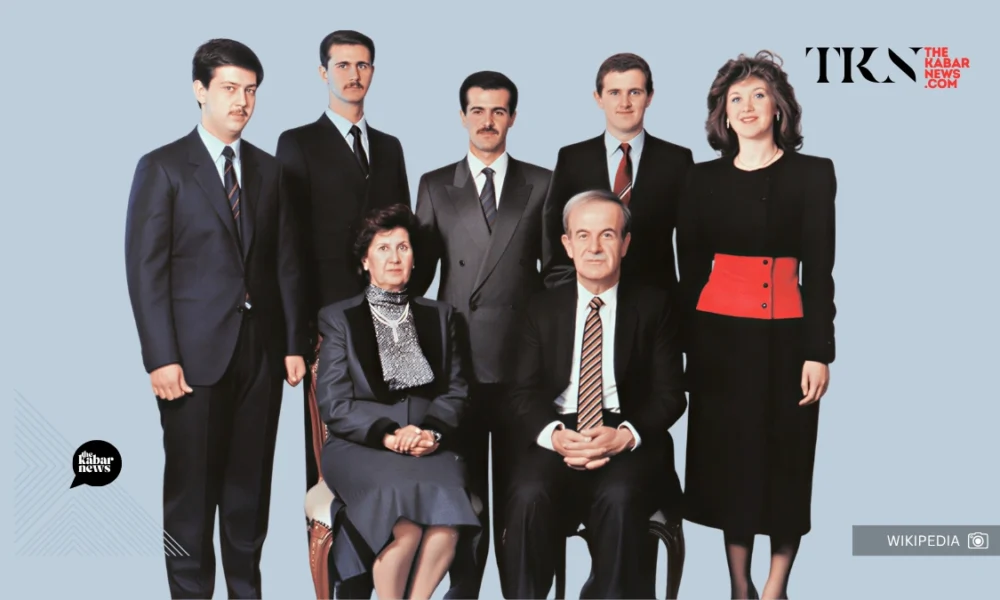
French colonial rule, successive military coups and Ba’ath Party consolidation shaped Syria’s contemporary power structure. Hafez al-Assad seized power in 1970, and Bashar in 2000. In December 2024, an opposition offensive ended the family’s five decades of rule. As a result, President Ahmed al-Sharaa’s transitional government began rebuilding institutions and protecting Syria’s communities.
Thekabarnews.com—The Assad family’s rise in Syria was the result of colonial military policies and decades of political instability. In addition, the Ba’ath Party’s transformation of the country into a centralized security state contributed significantly.
But it would be wrong to call this history merely an Alawite coup. The Assad family is of Syria’s Alawite minority, a group whose religious tradition is based in Shiite Islam. The previous regime also depended on alliances and patronage networks that crossed religious and social groups.
Ottoman rule in Syria ended in the First World War. The secret 1916 Sykes–Picot Agreement influenced British and French plans for the former Ottoman territories but did not legally establish the French Mandate.
In 1920 the San Remo Conference granted France authority over Syria and Lebanon. In 1922, the League of Nations officially confirmed the terms of the mandate. Historical documents published by the US Office of the Historian show that France received permission to organize locally recruited forces.
The French authorities recruited personnel from the rural and minority communities—Alawites, Druze, Christians and Circassians—into the Troupes Spéciales du Levant. For communities that had been long familiar with poverty and political marginalization, military service offered income. Moreover, it provided social mobility.
This policy increased minority representation in the armed forces, but its implementation did not automatically and immediately lead to Assad’s later rule. Other decisive factors included economic inequality, access to military education, party organization, and post-independence instability.
Syria was subjected to several military interventions and coups after the last French troops left in 1946. The Arab Socialist Ba’ath Party grew in power by advocating Arab nationalism, socialism and secular government.
In March 1963 the Ba’ath officers seized power. Another coup from within followed in 1966, aggravating the rivalry between military and party leaders.
On 13 November 1970, Defense Minister Hafez al-Assad seized power in a bloodless coup, the “Corrective Movement,” removing his rivals.
He took over the presidency in 1971 and established an authoritarian system centered on the presidency, the Ba’ath Party, armed forces and intelligence agencies.
Assad entrusted many senior security positions to Alawite officers while also bringing Sunni business leaders, officials and members of other communities into his political coalition. The system was based more on loyalty to the presidency rather than religion alone.
When Hafez died in June 2000, parliament lowered the minimum age for the presidency to allow his 34-year-old son, Bashar al-Assad, to succeed him. Bashar held on through the Ba’ath Party and a large security apparatus.
Protests that started in 2011 challenged Bashar’s government and turned into a devastating civil war. But with Russian and Iranian help, Assad’s rule collapsed when an opposition offensive reached Damascus on Dec. 8, 2024. He then fled to Russia, ending some 54 years of family rule.
Syria’s new authorities named former opposition leader Ahmed al-Sharaa transitional president in January 2025. According to the AP news, a temporary constitutional declaration set up a five-year transition period. Syria inaugurated its first post-Assad People’s Assembly in July 2026, comprising 210 members, including 22 women.
There is still a “critical transition” underway in Syria “with opportunity and fragility existing side-by-side,” the UN said.
Success will require accountable institutions, inclusive representation, transitional justice and credible protection for the Alawites and Syria’s other communities.






No Comment! Be the first one.