



Anak Krakatau eruption disrupts Indonesian airports
JAKARTA, thekabarnews.com—Indonesia temporarily closed several airports on Sunday, September 6. This action followed an ongoing eruption of Mount Anak Krakatau that sent volcanic ash across the Sunda...

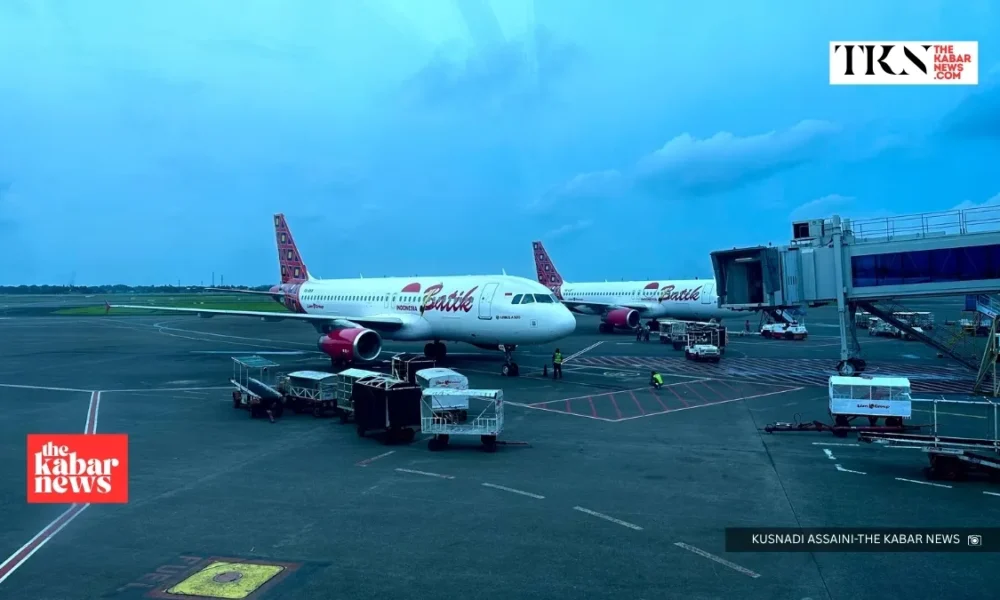
JAKARTA, thekabarnews.com—Indonesia temporarily closed several airports on Sunday, September 6. This action followed an ongoing eruption of Mount Anak Krakatau that sent volcanic ash across the Sunda Strait and into the airspace over parts of western Indonesia.
The continuous eruption began at approximately 11:07 p.m. on Friday, September 4, according to the National Disaster Management Agency (BNPB).
Observers recorded glowing lava, lava fountains and rumbling or booming sounds near the volcano, which lies between Java and Sumatra.
An initial BNPB update listed temporary closures at Soekarno-Hatta International Airport, Halim Perdanakusuma Airport, Radin Inten II Airport in Lampung and Budiarto Airport in Curug.
Authorities later expanded the disruption as winds carried ash farther across the region.
The latest Transportation Ministry update said Soekarno-Hatta would remain closed from 1:23 p.m. until an estimated 5:30 p.m. on September 6.
The ministry also reported temporary closures at Halim Perdanakusuma, Radin Inten II, Husein Sastranegara, Budiarto, Pondok Cabe, Taufik Kiemas and Atung Bungsu airports.
Officials said the expanding closures had affected approximately 467 flights and 150,000 passengers.
Travelers should confirm their flight status directly with airlines. Airport operating times may change as authorities conduct further ash tests.
“If the ash distribution remains extensive and the paper tests continue to return positive results, we will not force the airport to reopen or allow aircraft to operate,” Transportation Minister Dudy Purwagandhi said while inspecting Soekarno-Hatta Airport.
Volcanic monitoring showed sustained activity at Anak Krakatau. During the six-hour observation period ending at 6 a.m. on September 5, instruments recorded continuous eruption tremors with a maximum amplitude of 70 millimeters, BNPB reported.
Satellite data initially placed the ash cloud as high as flight level 480, or about 14.6 kilometers above sea level. However, a later BMKG assessment detected two ash clusters. One extended eastward at up to 20,000 feet, while another spread westward at up to 50,000 feet.
Ashfall affected parts of Banten and Lampung, including coastal districts around Anyer and Cinangka.
Authorities had received no reports of deaths or structural damage in the early impact assessment. Meanwhile, emergency teams continued distributing masks and monitoring exposed communities.
Residents also reported booming sounds and vibrations in several areas. Volcanologists linked sounds near the Sunda Strait to acoustic energy from the eruption.
BMKG said it had not conclusively established Anak Krakatau as the source of similar sounds reported in Greater Bandung.
Anak Krakatau remains at Level III [Siaga]. Authorities prohibit people, tourists and vessels from entering a three-kilometer radius around the active crater. B
MKG detected no abnormal sea-level changes around the Sunda Strait as of 7 a.m. Sunday, but it continues round-the-clock tsunami and volcanic monitoring.
The eruption and shifting ash cloud remain dynamic. Residents should use masks during ashfall, protect food and water supplies, and follow updates from BNPB, BMKG, PVMBG and transportation authorities.






No Comment! Be the first one.