



Govt weighs BPJS aid expansion to decile 8
JAKARTA, The Kabar News—The Indonesian government is studying a plan to extend state-funded BPJS Kesehatan contributions to eligible residents in socioeconomic deciles one through eight. The proposed...

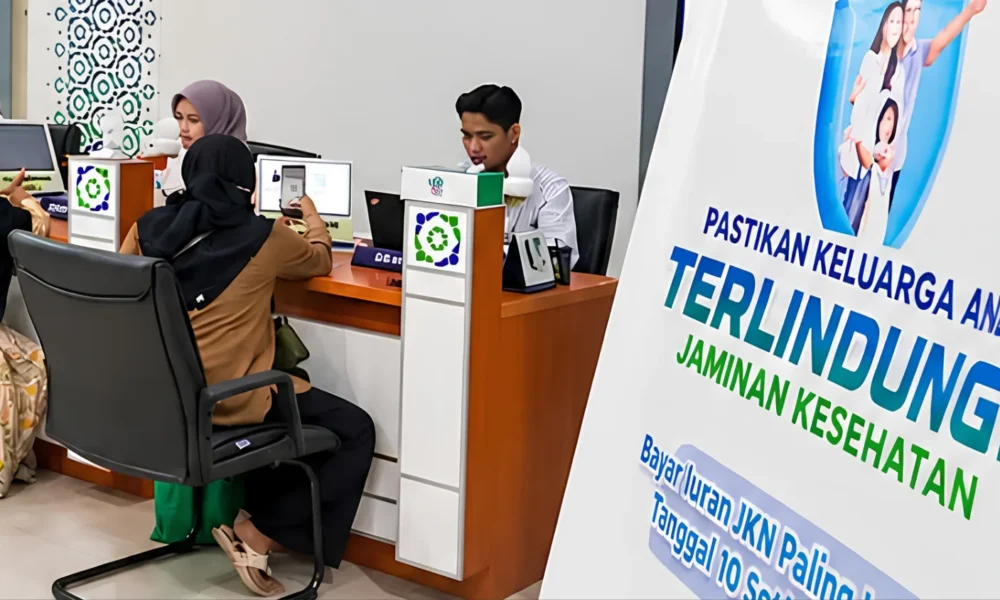
JAKARTA, The Kabar News—The Indonesian government is studying a plan to extend state-funded BPJS Kesehatan contributions to eligible residents in socioeconomic deciles one through eight. The proposed scheme could cover about 188 million people if the government approves its current design.
Social Affairs Minister Saifullah Yusuf (Gus Ipul) said the government was developing the proposal with the Health Ministry and BPJS Kesehatan. Officials are also consulting the Finance Ministry and the Home Ministry. The government involves regional administrations because different levels of government would share the funding responsibilities.
“I need to say at the beginning that what we are presenting remains at the simulation and discussion stage,” Gus Ipul said. “We are continuing to examine several options, and this is one of them.”
The proposal aims to protect low-income households and families vulnerable to falling into poverty when they face serious medical expenses. President Prabowo Subianto has instructed ministries to improve the accuracy of social assistance data and expand protection for people most in need, Saifullah said.
Read also: Indonesia eyes Pertalite curbs for wealthiest 20%
“The aim is broader protection,” he added. “We hope residents in deciles one through eight will be covered, including vulnerable groups that can easily fall into poverty because of illness.”
The government uses the National Socioeconomic Single Data system (DTSEN) to group households into 10 welfare deciles. Decile one represents the lowest economic group, while decile 10 represents the highest.
Current mapping records about 223.4 million people in deciles one through eight. However, the government does not intend to subsidize every person in these categories automatically.
Approximately 35.3 million already receive health coverage through employers or pay independently under BPJS Kesehatan’s higher contribution classes.
The simulation therefore identifies about 188.05 million prospective recipients of government-paid contributions. Officials would still need to verify individual eligibility and remove overlaps before implementation.
Read also: DJP offers up to 100% relief on tax penalties
Under the proposed financing model, the Indonesian government would cover 104.15 million people in deciles one through four at an estimated annual cost of Rp52.49 trillion (US$3.1 billion). District and municipal governments would finance an estimated 46.06 million people in deciles five and six, at an estimated cost of Rp23.22 trillion.
Provincial administrations would cover about 37.84 million residents in deciles seven and eight at an estimated cost of Rp19.07 trillion. The complete scheme would require Rp94.78 trillion annually, based on an assumed contribution of Rp42,000 per person each month.
The proposal would substantially expand Indonesia’s government-funded health insurance system. Nevertheless, implementation would require agreement on regional funding capacity, eligibility rules and a schedule for moving participants into the revised system.
Read also: BPJS Kesehatan no longer covers victims of sexual violence and domestic abuse
Accurate data will also be essential. DTSEN updates can move households between deciles as their recorded circumstances change. The government therefore needs a clear appeals process for residents who believe officials have classified or removed them incorrectly.
Gerindra has promoted the proposal as part of Prabowo’s social-protection agenda. However, the party’s campaign material should not be interpreted as a final government decision. The Social Affairs Ministry has explicitly described the figures as a working simulation.
Read also: Discover promotions available today
The plan’s effectiveness will ultimately depend on whether the central and regional governments can secure the required funding. They must also prevent duplicate coverage and ensure that data updates do not interrupt patients’ access to medical care.




No Comment! Be the first one.