



How AMSI’s 2026 UKJ can rebuild trust in journalism
23 journalists gathered in Pontianak for the 2026 Journalist Competency Test (UKJ). AMSI West Kalimantan conducted the 2026 UKJ in Pontianak. Kompas examiners assess the two-day program as...

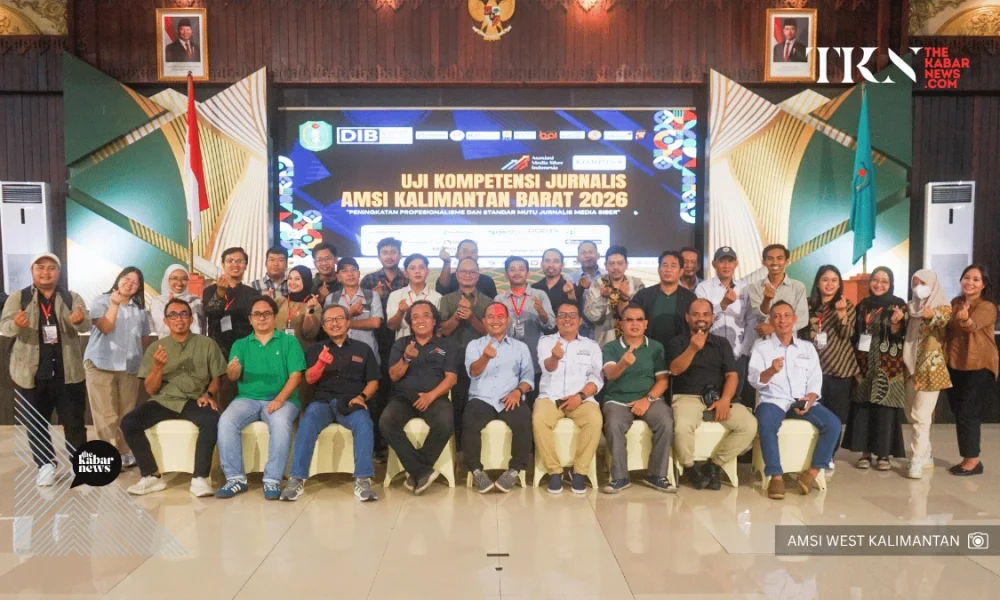
23 journalists gathered in Pontianak for the 2026 Journalist Competency Test (UKJ). AMSI West Kalimantan conducted the 2026 UKJ in Pontianak. Kompas examiners assess the two-day program as Indonesia’s digital news industry faces the rise of AI disruption. There are also verification demands and a growing number of complaints.
PONTIANAK, Thekabarnews.com – The Indonesian Cyber Media Association (AMSI) West Kalimantan chapter has rolled out the 2026 Journalist Competency Test (UKJ). This move emphasizes the necessity of professional standards. These standards are necessary to restore public confidence in online news.
The program was opened on Thursday, July 9, at the Governor’s Pavilion of West Kalimantan in Pontianak. Twenty-three journalists from various parts of the province and examiners from the Kompas testing institution attended the event.
AMSI West Kalimantan chairman Muhlis Suhaeri stated that the participants are at junior (Muda), intermediate (Madya), and senior (Utama) levels of competency.
“This test was not only a technical assessment. Journalists have a moral responsibility to the public. As the information industry changes, media workers should keep updating their knowledge,” Muhlis said.
Muhlis said journalists have to constantly improve their abilities and learn new things. He added that the press must keep its watchdog role on those in power.
The aim of certification is to demonstrate that a journalist has the professional knowledge and practical reporting skills. Certification shows the ethical judgment required to do the job.
The testing is conducted by an institution approved by Dewan Pers. It is divided into three competency levels, i.e., Muda, Madya, and Utama.
The national data shows the scale of the effort. Indonesia’s Press Council (Dewan Pers) reported in June 2026 that there are 16,245 certified journalists in Indonesia. It also held 145 competency test sessions in 2025, and the testing institutions independently organized 138 of them.
The same Dewan Pers report also demonstrated why the need for stronger standards is time-sensitive. In the first five months of 2026 the council received 573 complaints about news coverage and journalistic practices. The council resolved 326 of these cases, while 247 remained pending.
West Kalimantan Regional Secretary Harisson, who officially opened the program, said that in a VUCA (volatility, uncertainty, complexity, and ambiguity) environment, the importance of journalists is especially high.
Audiences need credible professionals who can separate verified facts from false claims. In a VUCA environment, journalists have a crucial role.
“Journalism needs to develop recognized standards of competence, just like medicine and engineering, to build public confidence and to advance the profession,” he said.
Harisson also said that the provincial government welcomed criticism as long as the reporting was factual and balanced. It needs to comply with Indonesia’s journalistic code of ethics.
Private-sector support came from Sinar Mas Agribusiness and Food. “Competency testing is important to safeguard accuracy, quality, and ethics and also contributes to a healthier media ecosystem,” said Ananta Wisesa, the company’s head of corporate communications in Indonesia.
The AMSI West Kalimantan program, which involved government institutions, police, and private sector partners, sent a clear message in an AI-powered information environment.
Public trust depends not only on quick publishing but also on journalists’ ability to verify and explain reports. Additionally, journalists must take responsibility for their reports.





No Comment! Be the first one.