


Christopher Nolan says Gen Z is rejecting AI slop
Filmmaker Christopher Nolan says younger audiences are quickly losing interest in generative AI content and rediscovering the importance of practical and tactile storytelling. His comments come as...

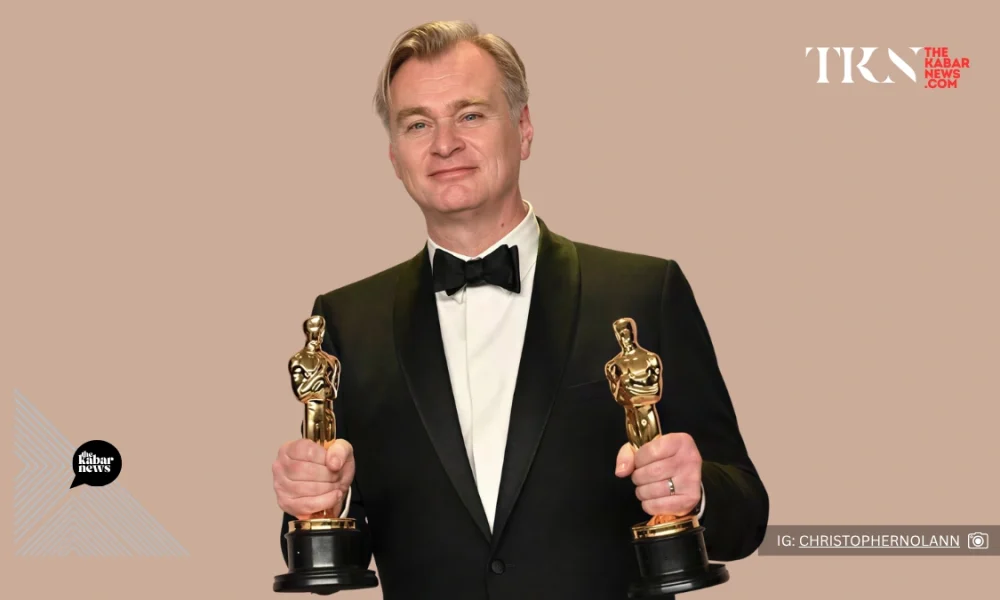
Filmmaker Christopher Nolan says younger audiences are quickly losing interest in generative AI content and rediscovering the importance of practical and tactile storytelling. His comments come as Meta is deleting a controversial Muse Image feature that used public Instagram profiles as visual references. This decision follows concerns from actors, talent representatives, and privacy advocates about consent for digital likenesses online.
Thekabarnews.com—Oscar-winning director Christopher Nolan said the aggressive push of generative artificial intelligence (AI) in Hollywood may have come at a time when younger audiences are rejecting synthetic content. They are looking for more authentic filmmaking.
“I’ve never seen a more rapid wholesale dismissal of a supposedly foundational jump in technology in my lifetime,” Nolan told The Telegraph.
Studios and tech companies have poured money into AI. However, the filmmaker said many younger viewers can tell low-quality generated material almost immediately.
Part of that assessment came from the reactions of his four children, who are in their late teens to early 20s, Nolan said. Moreover, that instant, harsh judgment of so-called “AI slop” is because they are familiar with the online culture that spawned it.
Nolan did not go so far as to say that every AI application was useless. Instead, he asked if generative AI could meet the needs of audiences. This question comes at a time when filmmakers and audiences are rediscovering an interest in physical sets, practical effects, and tactile environments.
The technology was coming “exactly at the wrong time” in filmmaking. The shift happened after years in which productions became more and more reliant on virtual environments, he said.
Nolan also pointed to young filmmakers Kane Parsons and Curry Barker as examples. They show that younger audiences still enjoy mysterious, patient, and visually inventive storytelling.
Parsons garnered a following with his experimental Backrooms videos, while Barker was known for independent horror films.
Nolan said their work defied the idea that younger audiences have a shorter attention span for slower, more demanding stories. Nolan has a reputation for large-format film, practical stunts, and physical production methods.
His comments, therefore, are consistent with his long-standing approach to cinema. However, they are not evidence of a broader industry-wide view that all Gen Z viewers are against AI.
The comments by Nolan came at the same time a controversy was swirling around Meta’s new Muse Image model. Meta released the system on July 7. They described it as its most advanced image generator, which includes integrations across Meta AI and Instagram.
One feature let people pull public adult Instagram accounts and use those people’s likenesses in AI-generated images. Before Meta made public profiles available as visual references, critics said an opt-out system did not constitute meaningful consent.
Meta should require clear, documented permission before anyone can use someone else’s name, image, voice, or creative work, said the Creative Artists Agency. Meanwhile, SAG-AFTRA also advised performers and Instagram users to turn off the feature.
Meta has since removed the public-profile reference feature, admitting it had failed to meet expectations. The underlying Muse image generator.
The company kept the underlying Muse image generator active. SAG-AFTRA welcomed Meta’s removal of the narrower feature, citing the dangers of nonconsensual digital replicas.
Nolan’s criticism and Meta’s reversal underscore Hollywood’s ongoing struggle. The industry is still trying to figure out if generative artificial intelligence can assist human creativity without sacrificing consent, jobs, and audience trust.




No Comment! Be the first one.