



Trump warns he could resume military action if US-Iran peace deal fails
Thekabarnews.com—President Donald Trump said on Wednesday, June 17, the United States could resume military operations against Iran. He explained this could happen if the two countries do not reach a...

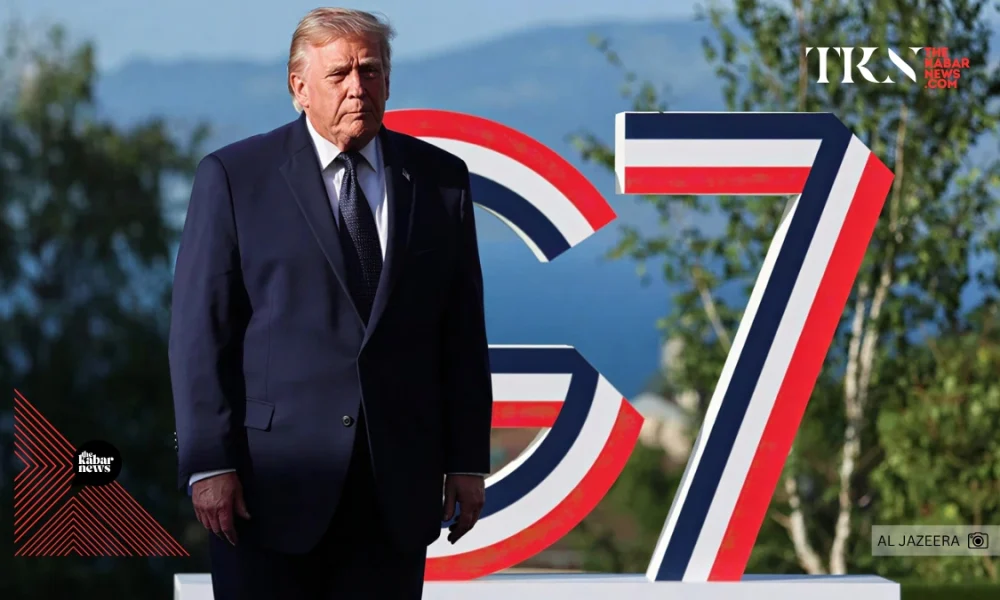
Thekabarnews.com—President Donald Trump said on Wednesday, June 17, the United States could resume military operations against Iran. He explained this could happen if the two countries do not reach a final agreement to end hostilities.
In addition, he said the U.S. could act if they do not reopen the Strait of Hormuz. This signaled Washington’s readiness to use force if diplomacy fails.
Trump made the remarks at a meeting with Egyptian President Abdel Fattah el-Sisi on the sidelines of the Group of Seven (G7) summit in France. Additionally, his remarks came as world leaders were considering a draft deal. The United States and Iran hope to finalize this deal later this week.
Trump said if he does not like the deal, the United States will go back to bombing. He signaled that military action remains an option if negotiations do not go the way the United States wants.
“It’s a memorandum of understanding. And if I don’t like it, we’ll go back to shooting at them, dropping bombs on their head,” Trump said, as quoted by USA Today.
The proposed agreement is meant to put an end to the ongoing hostilities between the United States and Iran. It is also meant to reopen the Strait of Hormuz. The Strait is a vital maritime artery for the global energy supply.
The negotiators also want to establish a framework to deal with concerns over Iran’s nuclear program. Furthermore, they want to try to reduce tensions across the Middle East.
Leaders attending the G7 summit broadly welcomed the progress in negotiations. They described the draft agreement as a significant opportunity to restore regional stability and reduce the risk of further conflict.
Diplomatic sources said the United States and Iran plan to sign the agreement formally later this week. This will happen if both sides finalize remaining technical and political details.
It is said to include provisions on a ceasefire, maritime security in the Persian Gulf, and mechanisms for future talks on nuclear-related issues.
The Strait of Hormuz continues to be one of the world’s busiest energy transit corridors. It carries a large share of the world’s crude oil exports.
Any interruption of shipping through the waterway can have an immediate impact on international energy markets and global supply chains.
Trump’s comments put a spotlight on the administration’s two-track approach to Iran, combining diplomatic talks with continued military pressure.
The president said Washington would continue to pursue a negotiated settlement. However, he said the U.S. would be ready to act decisively if talks failed or if Iran violated any future deal.
A successful deal could ease geopolitical tensions and increase stability throughout the Middle East. Therefore, governments, investors, and energy markets around the world have watched it closely.
However, a breakdown in negotiations would create uncertainty in global oil markets and heighten security concerns throughout the region.
But despite Trump’s warning, the G7 leaders cautiously expressed optimism that the two countries could make a lasting deal.
A successful deal, they said, would help end months of fighting and safeguard international shipping routes. In addition, it would create conditions for wider diplomatic engagement on regional security and Iran’s nuclear activities.
If concluded, the deal would be among the most significant diplomatic moves between Washington and Tehran in years. It could also redraw the geopolitical map of the Middle East, easing concerns over global energy security.




No Comment! Be the first one.