



Historian Anhar Gonggong questions active military officer’s role as cabinet secretary
Thekabarnews.com—The current status of Lieutenant Colonel Teddy Indra Wijaya, who is serving as cabinet secretary while still an active officer in the Indonesian military (TNI), has renewed the...

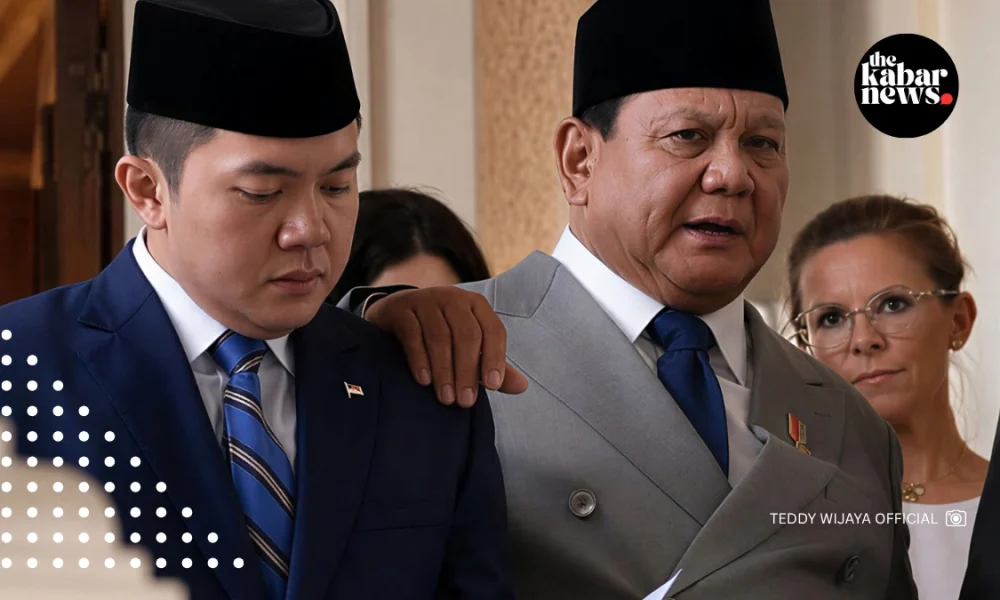
Thekabarnews.com—The current status of Lieutenant Colonel Teddy Indra Wijaya, who is serving as cabinet secretary while still an active officer in the Indonesian military (TNI), has renewed the debate on civil-military relations in Indonesia. This development happened after historian and political observer Prof. Anhar Gonggong questioned the matter.
The key question is whether the Cabinet secretary post is a civilian post or a military-related post in the government structure, Anhar said.
“If the post of cabinet secretary is a civilian post, then the officer holding it should resign or retire early from active military service,” Anhar said at a discussion published on his official YouTube channel on May 28, as cited in Tribunnews.
Anhar said that Indonesia’s legal framework post-Reformasi clearly regulates the placement of active military personnel in civilian institutions.
“The reforms that were done after 1998 were meant to strengthen civilian supremacy and to draw sharper lines between military rule and civilian rule,” he said.
Those principles require active duty military officers to leave military service before taking civilian government positions.
Moreover, the debate reflected the continuing ambiguities surrounding Indonesia’s democratic development. It also exposed issues regarding civil-military separation in practice, said the historian.
He linked the controversy to the historical legacy of the “Dwifungsi ABRI” doctrine. This doctrine marked Indonesia during the New Order era under former President Soeharto.
Anhar said the idea was originally rooted in General A.H. Nasution’s “middle way” doctrine, which prescribed limited military involvement in national affairs under specific circumstances.
But he said later administrations expanded the idea considerably. In fact, they included a broad spectrum of civilian jobs for active-duty military officers.
Indonesia’s democratic reforms after 1998 sought to end that arrangement by strengthening civilian control over state institutions.
“The issue now is how we define democracy clearly and how we place the military in the equation,” Anhar said.
The discussion also mentioned President Prabowo Subianto’s earlier remarks. He said Indonesia should create its own model of democracy, not copy others.
Anhar said Indonesia must clearly define democratic principles, constitutional governance, and civilian supremacy to prevent public confusion.
Anhar, however, said that Indonesia’s democratic journey is an ongoing process. He called on the public to watch how the current administration implements its vision.
The controversy surrounding Teddy Indra Wijaya’s appointment has been there since he took over the cabinet secretary post in October 2024.
At the time, special advisor to the president for communications Hasan Nasbi said active military personnel could legally hold the position. The government made this arrangement possible by restructuring the cabinet secretary position under the state secretary and classifying it below the ministerial level.
The current setup makes the cabinet secretary subordinate to the state secretary and not a minister.
“I’ve also heard the issue raised by former Coordinating Political, Legal, and Security Affairs Minister Mahfud MD, who admitted that Indonesian law does regulate the placement of active military personnel in some government posts,” he added.
However, he did not draw any firm conclusions about the post of Cabinet Secretary. He said that the administration should be given time to demonstrate how it would handle the issue.
As the debate goes on, the public will likely be watching closely to see how Indonesia manages military professionalism. They will also observe how the country preserves democratic governance and constitutional principles in the years ahead.
The debate has moved from the single appointment to more general concerns. These concerns are about the future of civil-military relations in one of Southeast Asia’s largest democracies.




No Comment! Be the first one.