



Scientists reconstruct face of Jesus Christ using forensic anthropology
Thekabarnews.com—For hundreds of years, pictures of Jesus Christ have looked entirely unique in different cultures and areas. These differences often show how people in those areas see themselves...

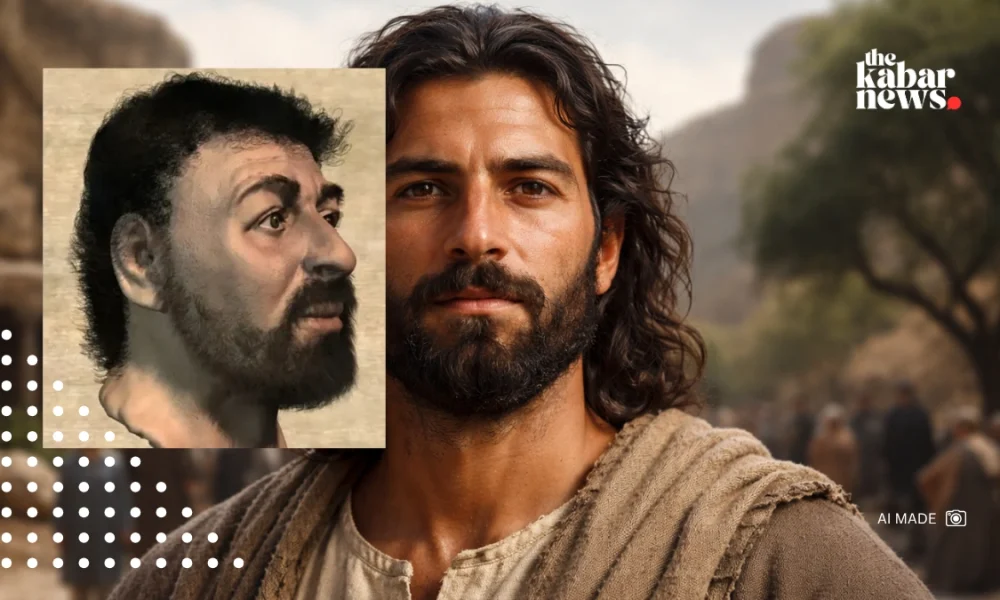
Thekabarnews.com—For hundreds of years, pictures of Jesus Christ have looked entirely unique in different cultures and areas. These differences often show how people in those areas see themselves rather than how he really looked.
For a long time, art from other parts of the world has depicted Jesus as Black, Arab, or Hispanic, according to scholars. Western art typically depicts him with European features.
Now, modern science is offering a more evidence-based perspective on what Jesus may have actually looked like.
Carlos F. Cardoza-Orlandi, associate professor of world Christianity at Columbia Theological Seminary in Atlanta, says that cultural interpretations have had a big impact on how people see Jesus.
But new developments in forensic anthropology are bringing researchers closer to a historically accurate picture.
Richard Neave, a retired medical artist from the University of Manchester, led one of the most important efforts. Neave’s team used criminal investigation methods to create one of the most accurate reconstructions of Jesus.
Israeli archaeologists found three ancient Semitic skulls dating back to the time when Jesus lived. This discovery formed the basis for the team’s work.
Archaeologists did detailed X-ray scans of the skulls and looked at cross-sections to figure out how thick the soft tissue was at different points on the face.
The team used special computer software to put together the facial muscles and skin over a Semitic skull that was a viable example. In the end, they made a three-dimensional digital image.
The reconstruction looks very different from how people in the West usually see things. It indicates that Jesus probably had a wide face, dark eyes, short dark hair, a thick beard, and tanned skin. These are all traits of people who lived in the Middle East at that time.
The archaeologists also looked at biblical texts to figure out how long hair was. The Apostle Paul, in the First Epistle to the Corinthians, stated that society frowned upon men with long hair. According to the evidence, the team arrived at the conclusion that Jesus probably had short hair.
Archaeological evidence suggests that the typical Semitic male of that era was approximately 5 feet 1 inch in height and weighed around 110 pounds. This provides further context for the reconstruction.
Neave stressed that the picture is not a true likeness of Jesus but rather a scientifically based guess of a man from the same area and time.
Alison Galloway, professor of anthropology at the University of California, Santa Cruz, agreed with this perspective. She said that the reconstruction is probably much closer to reality than many artistic representations made throughout history.
Scientists want to improve historical reconstructions even more as scientific methods continue to change. This will help researchers better understand figures who have shaped world history and culture.






No Comment! Be the first one.