



Cultural heritage on the edge of danger: Between risk and legacy
Thekabarnews.com—Disasters do not just kill people; they also erase the history of the country. As part of the lecture “Disaster-Resilient Cultural Heritage,” the National Disaster...

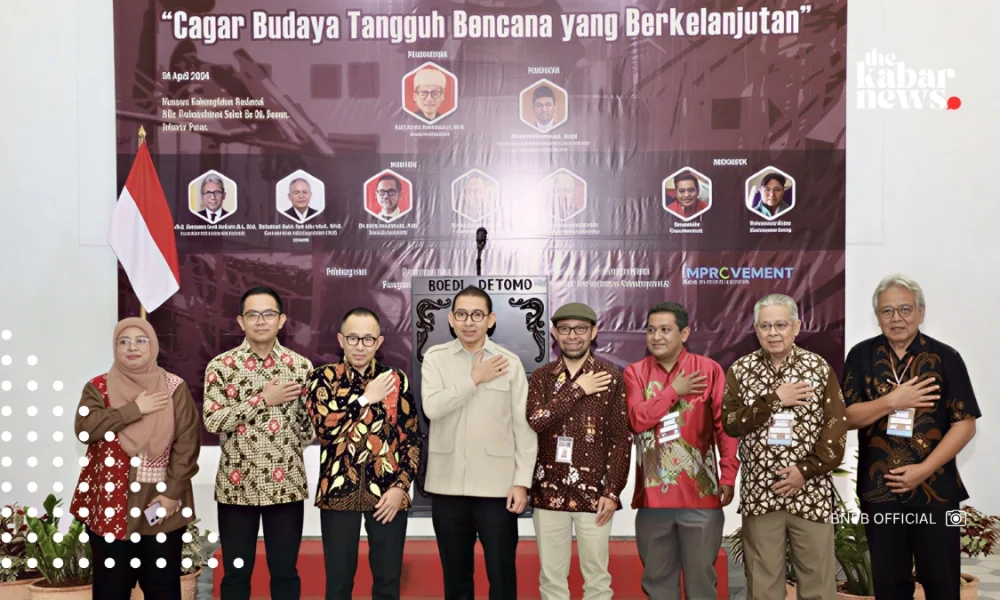
Thekabarnews.com—Disasters do not just kill people; they also erase the history of the country. As part of the lecture “Disaster-Resilient Cultural Heritage,” the National Disaster Mitigation Agency (BNPB) spoke at the Museum of National Awakening in Jakarta on Tuesday, April 14.
The Indonesian Culture Minister Fadli Zon began the event by emphasizing that calamities do not simply affect individuals; they also change the way people live, including their cultural heritage.
“Disasters can also impact cultural heritage,” he stated.
Indonesia is a weird place. Indonesia has a rich history and culture, but it also experiences many terrible events. By April 13, BNPB stated there had been 748 disasters. The main reasons were floods and harsh weather.
The BNPB Center for Data, Information, and Disaster Communication Head, Abdul Muhari, stated that wars and catastrophes can damage or destroy locations that are significant to culture.
What truly happened is what history tells us. The Aceh tsunami in 2004 devastated more than 50 cultural landmarks. The earthquake in Yogyakarta in 2006 hurt the buildings of the Borobudur and Prambanan temples.
Floods and landslides hurt many regions in Aceh, North Sumatra, and West Sumatra in November 2025. The floods that arise every rainy season still threaten the colonial buildings in Semarang’s Old Town. These buildings have been around for more than 100 years.
Abdul Muhari adds that there is more than one approach to keep cultural heritage sites safe. People should also utilize them to learn about disasters. Old documents and artifacts provide a lot of vital historical information that helps us understand how disasters have changed over time.
Japan is a wonderful example. Plans were developed for recovery after the Tohoku tsunami in 2011 destroyed hundreds of cultural sites, and it happened rapidly. To be effective, you need to work together across industries, employ technology, and stick to your budget.
Two programs that help conserve artifacts from the emergency period are Cultural Properties and Shiryō Net Doctor. Japan also uses the phrase “build back better.” It implies rebuilding with stronger standards of resilience.
BNPB believes that Indonesia has to improve how it safeguards its cultural heritage assets. The plan is no longer to respond; instead, it is to minimize risk.
The measures that are advised are to establish a list of things, use spatial data to map out dangers, make buildings stronger, help the community cope with problems better, and put up a system for continuing monitoring.
The public believes that InaRISK and similar technologies are very significant for gathering all the information regarding risks, weaknesses, and strengths in one location. This strategy not only keeps cultural heritage safe, but it also helps it confront threats from calamities.
Cultural legacy is not merely something that happened in the past. Keeping a country’s identity and shared memories alive is crucial. It is not solely the government’s job to keep it safe from disasters.




No Comment! Be the first one.