



Kemenag expands education aid across faith groups
JAKARTA, thekabarnews.com—The Religious Affairs Ministry (Kemenag) has expanded financial assistance for students, upgraded educational facilities and increased funding for teacher professional...

JAKARTA, thekabarnews.com—The Religious Affairs Ministry (Kemenag) has expanded financial assistance for students, upgraded educational facilities and increased funding for teacher professional allowances. These improvements occurred during the first two years of President Prabowo Subianto’s administration.
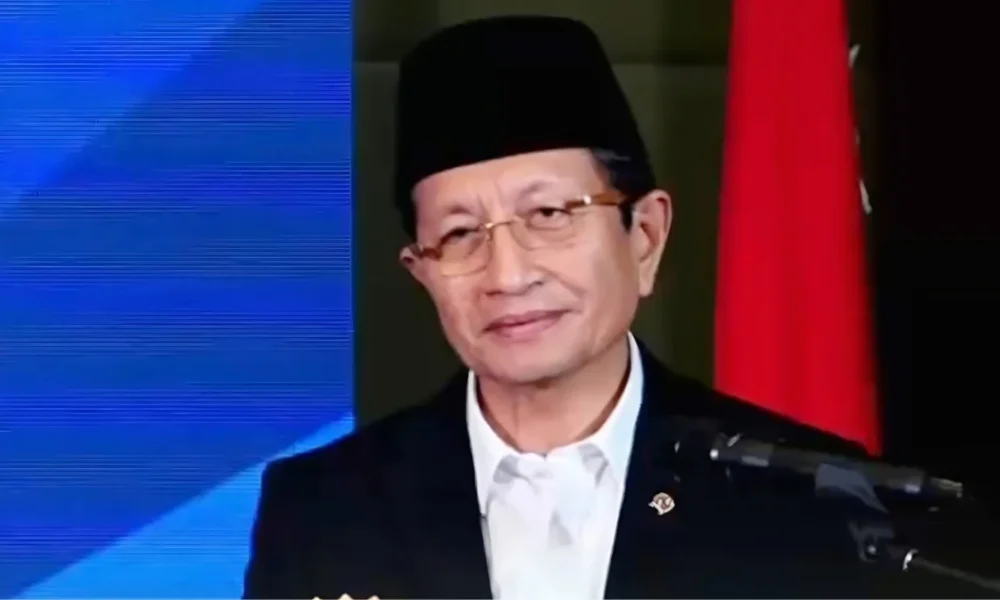
Religious Affairs Minister Nasaruddin Umar presented the figures at a government performance briefing in Jakarta on Monday, Oct. 19. The programs seek to prevent financial hardship from interrupting students’ education while improving working conditions for teachers.
“Our priority in education is to ensure that financial hardship does not end an Indonesian child’s opportunity to learn,” Nasaruddin said.
The Smart Indonesia Program (PIP) reached 5.21 million students at madrasahs and Christian, Catholic and Hindu schools in 2025 and 2026, according to the ministry. Moreover, the government allocated Rp4.07 trillion (US$243 million) to the program.
Read also: Kemenag Pontianak, DBS Foundation partner to build financially resilient families
At the university level, KIP Kuliah assistance reached 289,255 students at Islamic, Christian, Catholic, Hindu and Buddhist higher-education institutions. Funding for this program totaled Rp3.03 trillion.
The ministry and the Indonesia Endowment Fund for Education also awarded Indonesia Bangkit scholarships to 3,659 students in 2024 and 2025, worth Rp1.38 trillion. In addition, Kemenag’s official release confirmed the figures.
“Thank God, the PIP assistance has helped us greatly. After the funds were disbursed, we immediately bought the school supplies our child needed, including shoes and stationery,” said Kusnandi, guardian of a student at MI Karamah in South Kalimantan, in a ministry testimonial.
I Wayan A., a student at STKIP Agama Hindu Amlapura in Bali, said the ministry’s scholarship had enabled him to remain at university.
Read also: It’s quite heartless of the govt to pay PPPK teachers only Rp200,000 a month
“I come from a modest family and have big dreams. The ministry’s KIP scholarship has allowed me to continue my studies and develop my potential,” he said.
Teacher welfare formed another major part of the ministry’s education spending. In 2025, Kemenag distributed Rp19.15 trillion in professional allowances to 452,796 madrasah and religious-education teachers. For 2026, it recorded 671,704 teachers under an allocation of Rp26 trillion.
The 2026 figure represents the program’s recorded coverage and budget allocation. However, it does not confirm that every payment has already been completed.
Under Religious Affairs Ministerial Decree No. 646/2025, eligible non-civil-service teachers without civil-service rank equivalency receive Rp2 million per month.
“We are truly grateful for this professional allowance. It improves our welfare and allows us to focus more fully on teaching,” said Silvy Okta Erviana, a non-civil-service teacher at MA PSA Nurul Amal in Semarang regency.
Read also: Teachers in Kapuas Hulu await unpaid allowances despite funds transfer
Kemenag has also invested in classrooms and learning technology. Ministry data show that it supplied 2,180 interactive smartboards to 551 madrasahs. Furthermore, Kemenag established 1,547 disability-service units supporting 2,000 inclusive madrasahs.
Separately, an official infrastructure assessment cleared 1,414 madrasahs for construction or rehabilitation under the government’s PHTC program. Kemenag said 556 projects used single-year contracts, while 858 used multiyear contracts.
“Rehabilitation through the PHTC program has greatly helped MTsN 8 Indramayu. The repaired classrooms can now support teaching and learning more effectively,” principal Dudi Iswandi said.
The reported figures demonstrate the scale of Kemenag’s assistance and infrastructure programs. In addition, further public reporting on disbursement, student retention and learning outcomes would show how effectively that spending translates into lasting improvements in Indonesian education.




No Comment! Be the first one.