



Police deny closure order amid Kalbar parts checks
PONTIANAK, thekabarnews.com—West Kalimantan Police have denied ordering automotive-parts shops and repair workshops to close. This came after product-standard inspections prompted several businesses...

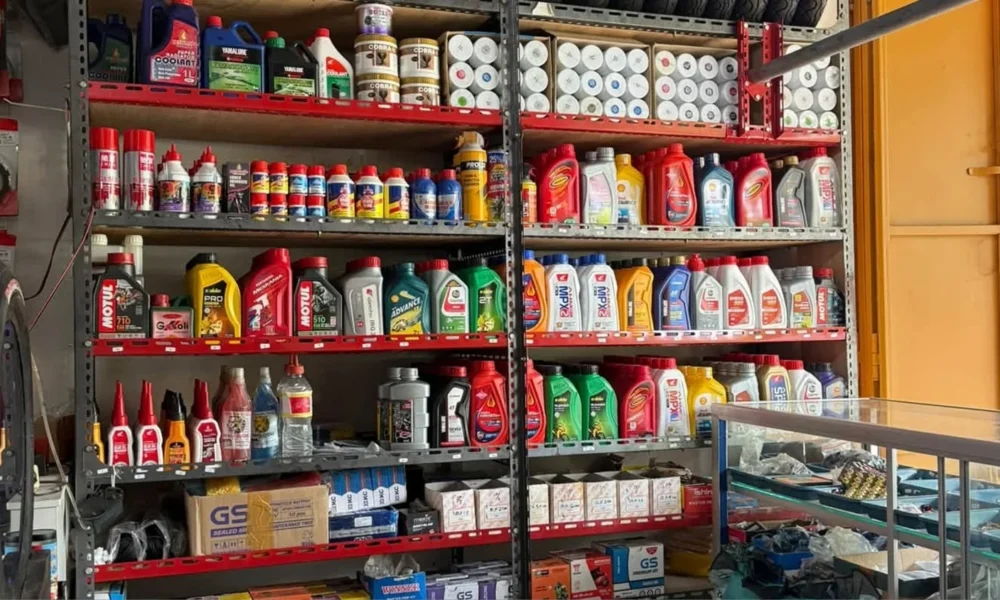
PONTIANAK, thekabarnews.com—West Kalimantan Police have denied ordering automotive-parts shops and repair workshops to close. This came after product-standard inspections prompted several businesses to suspend operations temporarily.
The provincial police’s Special Criminal Investigation Directorate inspected selected businesses in Pontianak, Singkawang and Kubu Raya from Oct. 8 to 14. Officers conducted the checks after receiving public reports about automotive components that allegedly failed to meet mandatory standards.
West Kalimantan Police spokesperson Sr. Comr. Bambang Suharyono said the operation examined products including tires, automotive lubricants, safety glass, wheel rims and vehicle batteries.
Police found preliminary indications that some products might not comply with government requirements. However, authorities have not publicly disclosed the number of businesses or products involved.
Read also: Malaysia surpasses Indonesia to become ASEAN’s largest car market in 2025
“The inspection aims to protect consumers’ rights to obtain safe spare parts that comply with applicable quality standards,” Bambang said, as quoted by Antara.
Reports about the inspections spread among automotive traders and triggered fears of a large-scale raid. Consequently, some shop and workshop owners reportedly closed temporarily. This was because they lacked clear information about which components authorities were examining and what documents traders needed to prove compliance.
The West Kalimantan Auto Parts Association chairman Fuadi said the group had contacted the relevant authorities to clarify the operation.
Read also: Indonesia to make English a mandatory subject in schools starting 2027
“We have conducted inquiries and communicated with the relevant parties. They stated that the activity was an inspection to ensure that automotive components complied with mandatory standards,” Fuadi told the media.
He said the uncertainty, rather than an official closure order, had prompted some traders to suspend business. The association encouraged its members to resume normal operations while checking the origin, certification and labeling of their merchandise.
Bambang stressed that the police had never issued a written or verbal instruction requiring automotive businesses across West Kalimantan to close.
“We urge all workshop and spare-parts business operators to continue their trading activities as usual and not to panic,” he said.
Read also: CELIOS survey: 75% report stress over Prabowo’s policies
The inspections refer partly to Article 8(1)(a) of Indonesia’s 1999 Consumer Protection Law. This article prohibits businesses from selling goods that fail to meet legally required standards.
Article 62 provides a maximum penalty of five years’ imprisonment or a fine of Rp2 billion for violations covered by Article 8, according to the official legal database of BPK.
However, not every automotive component is subject to an identical requirement. Product obligations depend on the component category and applicable technical regulation.
The Industry Ministry, for example, lists mandatory Indonesian National Standards for specified vehicle rims. Additionally, separate rules govern products such as tires and lubricants. The Trade Ministry also maintains a list of products subject to mandatory standards and registration requirements.
Read also: Police name two suspects in Bengkayang audit case
Police said they would continue monitoring the trade in noncompliant components and could take legal action against parties found to have deliberately sold products that breach mandatory standards.
Bambang also urged the public not to circulate unverified claims about the inspections.
“We ask the public to remain calm and act wisely, and not to let misleading issues or hoaxes provoke them,” he said.
The clarification allows shops and workshops to continue operating. However, traders still need detailed guidance from regulators to identify which products require certification and how they can verify compliance.




No Comment! Be the first one.