



Suahasil says APBN efficiency must deliver results
JAKARTA, thekabarnews.com—Indonesia’s newly appointed Finance Minister Suahasil Nazara said efficient management of the state budget (APBN) should focus on maximizing public benefits. Rather than...

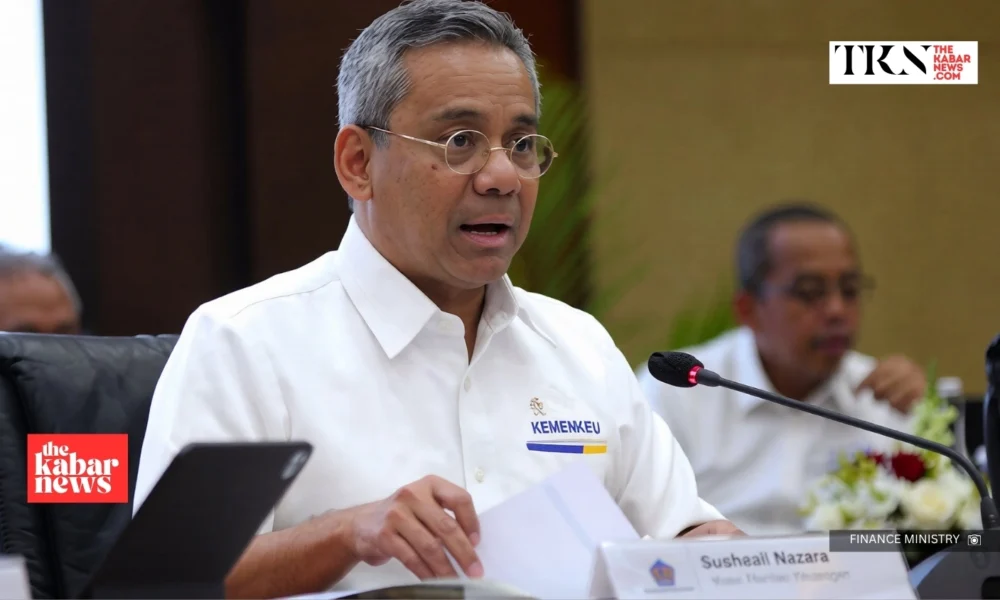
JAKARTA, thekabarnews.com—Indonesia’s newly appointed Finance Minister Suahasil Nazara said efficient management of the state budget (APBN) should focus on maximizing public benefits. Rather than simply cutting government spending, this should be the goal.
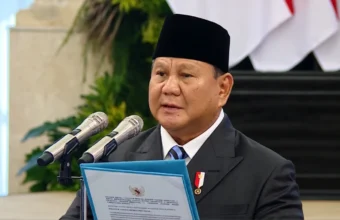
Suahasil delivered the remarks after President Prabowo Subianto inaugurated him at the Presidential Palace in Jakarta on Monday, September 14. He replaced Purbaya Yudhi Sadewa as the government’s chief fiscal policymaker.
“Efficiency is not simply about cutting the budget. It means optimizing budget allocations so they produce the maximum possible output. And it should deliver a direct impact to the public,” Suahasil said, according to a video reviewed by The Kabar News.
His statement indicates that the Finance Ministry will assess spending according to the results generated by each program.
Under this approach, the government can redirect funds from activities with limited impact. Instead, these funds can support services and development programs that produce measurable benefits.
The policy is particularly relevant as the government prepares the 2027 state budget.
Indonesia’s proposed 2027 budget assumes economic growth of 6 percent, inflation of 2.5 percent and a fiscal deficit equivalent to 2.4 percent of gross domestic product.
The proposed deficit is lower than the 2.68 percent target in the 2026 state budget.
Before becoming finance minister, Suahasil said the combination of faster economic growth and a narrower deficit would signal more effective government spending.
“A lower deficit does not restrain growth; instead, growth increases. This means our state budget is becoming more efficient,” he said in August.
“Taxpayers’ money has a much greater multiplier effect on the economy,” according to the Finance Ministry.
Budget efficiency under the Prabowo administration has generally targeted nonpriority expenditure, including official travel, consultancy services and ceremonial activities.
The government has used the fiscal space created through those measures to support priority programs. At the same time, it protects basic public services and social assistance.
Suahasil also recently said Indonesia’s state budget remained resilient despite global economic uncertainty. He explained that the APBN had built-in room to absorb external risks while maintaining fiscal credibility.
The new minister now faces the task of translating that principle into spending decisions across ministries and government agencies.
Transparent performance indicators will be essential to show whether each rupiah of public money produces the promised economic and social outcomes.




No Comment! Be the first one.