



New agency to lead Indonesia’s peat-fire prevention
JAKARTA, thekabarnews.com—President Prabowo Subianto has decided to establish a national peat and mangrove management agency. Indonesia seeks to shift its response to forest and land fires (karhutla)...

JAKARTA, thekabarnews.com—President Prabowo Subianto has decided to establish a national peat and mangrove management agency. Indonesia seeks to shift its response to forest and land fires (karhutla) from emergency suppression toward science-based prevention.
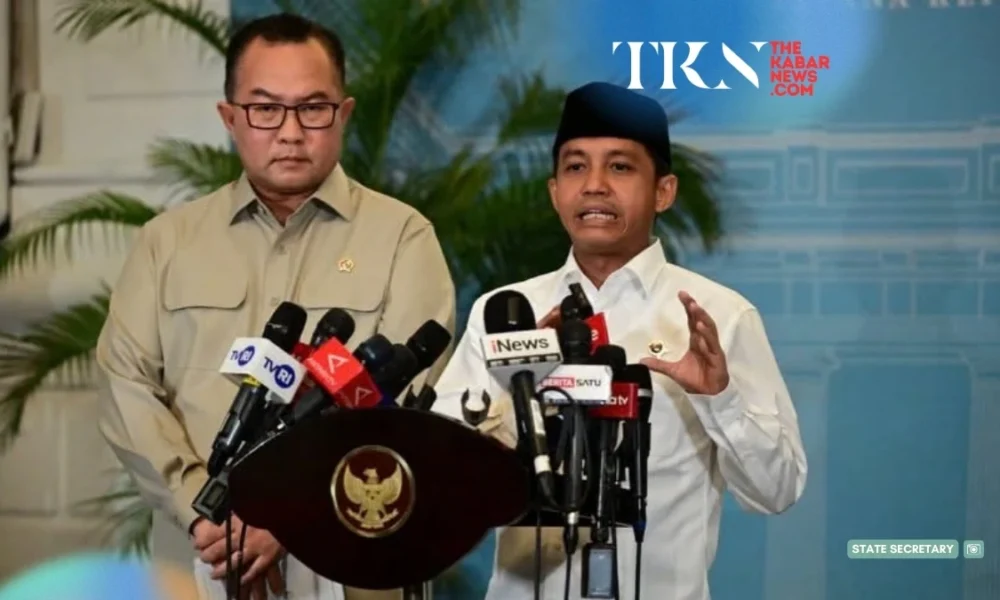
The government announced the decision after Prabowo met researchers and university academics at the Merdeka Palace in Jakarta on Thursday, September 24.
The planned National Peat and Mangrove Management Agency (BPGMN) will report directly to the president. Forestry Minister Raja Juli Antoni confirmed this news.
Officials said scientists and other professionals would manage the agency. Additionally, it would initially focus its fire-prevention work on six peat-rich provinces. These are Riau, Jambi, South Sumatra, West Kalimantan, Central Kalimantan and South Kalimantan.
Raja Juli said the government wanted to establish the body “as soon as possible” while authorities continued battling fires in several regions. When asked whether its responsibilities would overlap with those of the Forestry Ministry, he said, “No, not at all.”
However, the government’s announcement did not specify when BPGMN would begin operating or identify its leadership, detailed budget and implementing regulation.
Those details will determine how the new body divides responsibilities with ministries and existing peat-and-mangrove management units.
The proposed agency will prioritize early intervention because extinguishing fires after they spread across dry peatland requires far more resources.
Prabowo also wants prevention to reach the village level through community fire groups known as Masyarakat Peduli Api.
The National Research and Innovation Agency (BRIN) plans to support BPGMN with artificial intelligence for early-warning systems and hotspot detection.
The government also intends to involve universities in continued peat research and public education, according to the presidential office.
Higher Education, Science and Technology Minister Brian Yuliarto said that comprehensive mapping would help authorities identify peatland characteristics. This would help determine which areas could support cultivation, fisheries.
Such decisions will require safeguards because drainage and unsuitable land use can dry peat, increasing its vulnerability to fire.
The policy comes as dry conditions intensify the fire threat. The Meteorology, Climatology and Geophysics Agency (BMKG) recorded 5,283 high-confidence hotspots in Central Kalimantan. This was during the 10 days preceding September 21.
It also identified 1,485 in South Sumatra and 1,357 in West Kalimantan. Meanwhile, it warned that strong El Niño conditions were contributing to unusually dry weather.
Indonesia’s current response illustrates the scale of the challenge. Since August, the government has deployed 64 aircraft and 54,394 personnel for firefighting operations, according to the State Secretariat.
BPGMN’s effectiveness will therefore depend on more than its formal creation. In addition, a clear legal mandate, reliable financing and transparent data sharing will be essential. These factors are crucial for the agency to detect risks early and help villages prevent recurring peat fires.





No Comment! Be the first one.